On Oct. 1, the Maintenance Implementation Procedures (MIP) between the United States and Brazil entered into force. The FAA confirmed the agreement’s status in a Sept. 30 Information for Operators (InFO).
The MIP between the FAA and Brazil’s National Civil Aviation Agency (ANAC) was signed on Nov. 5, 2018; the related Maintenance Annex Guidance (MAG) was signed June 15, 2023. However, it was not until Aug. 2 that the FAA notified ANAC it had completed the procedures, guidance, and training necessary to implement the MIP.
The MIP establishes terms and conditions for mutual acceptance of maintenance facility inspections and evaluations by the FAA and ANAC in the United States, its territories, and Brazil. The InFO explains that effective Oct. 1, 2024, a maintenance facility certificated by the FAA as a 14 CFR part 145 repair station and certificated by ANAC as a Brazilian Regulation of Civil Aviation (RBAC) 145 maintenance organization, must comply within two years with all the requirements of the MIP and MAG.
The InFO recommends impacted repair stations begin planning now to implement an acceptable supplement as specified in the MAG. These maintenance organizations will receive a letter from the FAA or ANAC outlining the conditions for transfer of oversight, which will occur within 24 months after the MIP’s entry into force (i.e., by Oct. 1, 2026).
In the United States the MIP’s entry into force primarily impacts repair stations working on products (aircraft, engines, and propellers). Brazil takes a very enlightened perspective on accepting work by repair stations whose local civil aviation authorities are the FAA, Transport Canada Civil Aviation, the UK Civil Aviation Authority, and the national authorities of European Union Aviation Safety Agency member states. Brazil does not require such repair stations to have separate ANAC certification to perform maintenance, preventive maintenance, rebuilding, and alterations on components and approve them for return to service for installation on Brazilian registered aircraft.
For more information on ANAC’s acceptance of foreign component maintenance, click here.
More from ARSA
February 17, 2026 | Categories:
ARSA News & Updates
On Feb. 17, an invitation to complete ARSA’s member survey was sent to the email address of every primary contact. The message was subjected “ARSA 2026 Member Survey Invitation” and…
Read More
On Feb. 10, ARSA and the Aircraft Electronics Association presented the fifth of six planned webinars – a monthly series concluding in March – explaining effective integration of a safety…
Read More
February 10, 2026 | Categories:
Act Now,
ARSA News & Updates,
ARSA Works,
Aviation Policy,
Drug and Alcohol,
EASA,
FAA,
Legislative,
Operations,
Press Releases,
Regulatory,
Rulemaking
In its ongoing work to mitigate issues related to the FAA’s new rule imposing drug and alcohol testing requirements outside the United States, ARSA has released for industry comment a…
Read More
ARSA and the Aircraft Electronics Association have produced an updated matrix supporting compliance of U.S. repair stations with the special conditions of the Maintenance Implementation Procedures (MIP) issued under the…
Read More
February 10, 2026 | Categories:
Act Now,
ARSA News & Updates
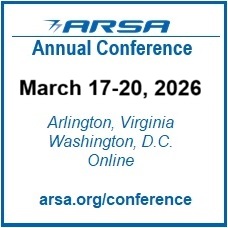
March 17-20, 2026
Event Information | Registration | Hotel
Arlington, Virginia and Washington, D.C. with Livestream Options for Online Participants
The ARSA Annual Member Meeting is held in conjunction with the…
Read More