


2026 – Edition 8 – September 4
Table of Contents
Note: The order of material varies in hotline emails, but is always presented the same on this landing page. Readers scrolling through content on or printing this page will find it organized consistent with the table of contents.
Sarah Says
Persona Non Grata
By Sarah MacLeod, Executive Director
The aviation safety system is run by the government, but it depends upon certificate holders’ knowledge, compliance, and integrity to be successful. When a certificate holder calls upon the association or its management firm for advice or representation, I ask the certificate holder to provide a letter to the FAA allowing me to be involved in the matter.
That wasn’t always the case. Back in the day, the agency was much more capable of having productive discussions regarding compliance. Inspectors, front line managers, and office managers were willing to hold conference calls to discuss trends or a certificate holder’s issues with all the parties without having to obtain permission.
Today, seeking advice from a lawyer or consultant and requesting a meeting to discuss an issue can invoke negative reactions from agency personnel. Certainly, lawyers are persona non grata without permission from an applicant or certificate holder. Even when permission is obtained, the fact that there may be a “lawyer” involved invokes a delay because the FAA’s Office of Chief Counsel must be queried by the inspector to ensure the agency lawyers don’t have to be involved.
These actions are completely opposite of the exchanges ARSA and I have with agency leadership. The claim from the top is that the agency is open to discussion and resolution. Unfortunately, the top isn’t where the work is done, certificate holders deal with aviation safety inspectors and engineers. Those individuals have not been given the tools necessary to do their jobs effectively and efficiently, thus, when a certificate holder can show compliance, but it doesn’t look like an advisory circular, or it doesn’t match an “order,” the matter grinds to a halt. Discussions do not resolve the matter, rather they merely delay it.
When the association or I become involved in a matter, the request to the agency is to focus on the regulation – that doesn’t happen. When the request persists, and the “order” doesn’t align with the regulation, it can take a request to “deviate” from the guidance to move the matter forward. On the other hand, when certificate holders take up the mantle and demand recognition in their own rights, matters can be moved along or resolved. It takes knowledge and persistence, but when business will be eliminated because of inappropriate agency action, the decision to fight the government is easier to make.
There are several issues that the association has taken on with members picking up the mantle towards productive exchanges – the most egregious was the demand that a designated engineering representative inform a repair station that the FAA Form 8110-3s approving its repair specification were being rescinded because (are you ready), “the OEM does not allow the repair.”
After ARSA wrote a letter to the FAA protesting the reasoning, the member was able to conduct a “candid and production conversation…regarding the issue of TSO articles and DER approved repair specifications. The main points of discussion were that there seems to be some opinions and directives issued that do not reflect the spirit or intent of current policies or regulations. Also, the contemplated or initiated actions will be placed on hold until there can be a more detailed review of the who, what, why and when. We have another call schedule to take place in the next day or two to provide clearer guidance.”
So, while ARSA and lawyers may be persona non grata at the local level, the work of the association creates success for its members. After the repair station with the repair specification issue had the meeting with the FAA, it wrote: “This is why we are a proud member and advocate for all stakeholders in the industry to not only join but participate in the programs and meetings that are made available by the organization.”
ARSA Works
Authorization Not a Rating
ARSA and its constant companion the Aircraft Electronics Association submitted comments to the FAA’s notice of proposed rulemaking on 14 CFR part 65 (FAA Docket 2026-6671). The proposal is to eliminate the need for a mechanic that holds an inspection authorization to renew the privilege.
The associations fully support the intended result: Reduce the burdens on agency and industry associated with the renewal efforts. However, the special privileges afforded are maintenance activities and are not appropriate for a rating.
By leaving the authorization where it is and merely adding the new requirements for recordkeeping that replace the renewal requirement, the agency can save itself and the industry even more time and effort.
To read ARSA and AEA’s comments, click here.
Streamlining Bilateral Guidance
ARSA agrees that the FAA should cancel Advisory Circular (AC) 145-11A, Repair Station Guidance for Compliance with the Safety Agreement between the United States and the European Union. The association learned in August of the agency’s interest and coordinated with the Aircraft Electronics Association to share support.
The agency’s reasons for canceling the AC need to apply to all guidance that relates to bilateral compliance: The MAG/MIP associated with each bilateral should be the guidance that industry and the agencies are to follow. Producing more documents related to international compliance is redundant and inefficient.
“Reliance on the MAG as the single source of guidance promotes greater clarity, consistency, and harmonization for certificate holders operating under the agreement,” the agency said.
ARSA and AEA encouraged the FAA to continue eliminating all redundant guidance in all its forms. Reviewing the DRS, the following ACs should be assessed:
AC 21-24A: Extending a Production Certificate to a Facility Located in a Bilateral Airworthiness Agreement Country
AC 43-10C United States—Canadian Bilateral Aviation Safety Agreement Maintenance Implementation Procedures
AC 61-144: Issuance Process for Pilot Certificates in Accordance with the Implementation Procedures for Licensing as Part of the Bilateral Aviation Safety Agreement Between the FAA and the Swiss FOCA
AC 145-11A: Repair Station Guidance for Compliance with the Safety Agreement between the United States and the European Union
By focusing compliance instructions in the official documents associated with the agreement, the FAA can provide for the same consistency sought by eliminating the AC related to the U.S./European agreement.
What guidance documents do you use on bilateral issues? Click here to tell ARSA.
Maintaining Simplicity in Newly Required Part 121 Reports
On Aug. 4, the FAA issued Information for Operators (InFO) 26012 explaining reporting requirements for part 121 air carriers that utilize foreign part 145 repair stations for “heavy maintenance.”
Sec.302(a)(1)(E) of the 2024 FAA Reauthorization Act requires those air carriers to report to the FAA at the end of each fiscal year:
(A) The location where any heavy maintenance work on aircraft was performed outside the United States.
(B) A description of the work performed at each such location.
(C) The date of completion of the work performed at each such location.
(D) A list of all failures, malfunctions, or defects affecting the safe operation of such aircraft identified by the air carrier not later than 30 days after the date on which an aircraft is returned to service, organized by reference to aircraft registration number, that—
(i) requires corrective action after the aircraft is approved for return to service; and
(ii) results from such work performed on such aircraft.
(E) The certificate number of the person approving such aircraft or on-wing aircraft engine for return to service following completion of the work performed at each such location.
49 U.S.C. § 44733(j)(2) defines “heavy maintenance as” a C-check, a D-check, or equivalent maintenance operation with respect to the airframe of a transport-category aircraft (including on-wing aircraft engines).”
The reporting provision, now codified at 49 U.S.C. § 44733(g), also requires the FAA to analyze the data “to detect safety issues associated with heavy maintenance work on aircraft performed outside the United States” and to require “appropriate actions by an air carrier or repair station in response to any safety issue identified by the analysis.” The information submitted by air carriers receives the same protections given to voluntarily provided safety or security related information.
Much of the information is already provided by air carriers under § 121.368(h) and is also already required to be obtained, retained, and made available to the FAA under §§ 121.701, 121.703 and 121.705, or recorded against each aircraft in the carrier’s system to provide information under § 121.369(c). Additionally, the procedures for evaluating the information and taking appropriate corrective action on maintenance issues is required under § 121.373 and related part 5 activities.
In an Oct. 4, 2024 letter to the FAA regarding implementation of the new law, ARSA, the Aircraft Electronics Association, and Airlines for America told the FAA that, “the only change to agency procedures is to align its collection and analysis of the data that is required by current regulations into the timeframe mandated by Congress. We do not see a need to change any air carrier procedures since the collection, reporting, analysis, and corrective actions are required by current regulations through the airlines’ procedures and safety management systems.”
InFO 26012 explains the agency is still finalizing its Paperwork Reduction Act analysis (Docket Number FAA-2026-1392) of its implementation plan. The docket includes a non-mandatory template air carriers can use to submit the information to their Certificate Management Offices at the end of the current fiscal year.
The InFO advises Part 121 air carriers to review the InFO, as well as 49 U.S.C. § 44733, “to ensure their procedures are established and documented to comply with the annual reporting requirements” and directs those with questions or comments to contact the FAA’s Aircraft Maintenance Division at (202) 267-1675 or by email at 9-AWA-AFS-300-Correspondence@faa.gov.
The new reporting requirement is simply another example of a legislative solution in search of a problem. For decades, labor organizations have sought legislation with no safety basis aimed at making it more difficult for U.S. air carriers to use repair stations, especially those outside the United States (e.g., the FAA’s new foreign repair station drug and alcohol rules). The reporting provision was included in the most recent FAA reauthorization law at the request of unions representing U.S. airline mechanics. However, ARSA and its allies negotiated important changes to the original, much more onerous and disruptive proposals.
To review the complete InFO, click here.
Final Documents/Your Two Cents
This list includes Federal Register publications, such as final rules, Advisory Circulars and policy statements, as well as proposed rules and policies of interest to ARSA members.
Legal Brief
Editor’s note: This material is provided as a service to association members for educational and informational purposes only. It does not constitute legal or professional advice and is not privileged or confidential.
It Ain’t Just Regulations, Part 2
By Christian Klein, Executive Vice President
Last month’s column reminded readers that U.S. federal control of civil aviation doesn’t start with FAA regulations. Statutes enacted by Congress impose restrictions and requirements that do not have to become regulations to be binding on pilots, operators, or other certificate holders. The supplemental type certificate intellectual property right discussed last month is one example; crimes involving aircraft parts are another.
Fraud involving aircraft parts is a federal crime. 18 U.S.C. § 38 prohibits conduct affecting interstate or foreign commerce when the intent is to defraud:
- Falsifying or concealing a material fact concerning any aircraft or space vehicle part.
- Making any materially fraudulent representation concerning any aircraft or space vehicle part.
- Making or using any materially false writing, entry, certification, document, record, data plate, label, or electronic communication concerning any aircraft or space vehicle part.
- Exporting from, importing or introducing into the United States, selling, trading, installing on or in any aircraft or space vehicle any aircraft or space vehicle part using or by means of a fraudulent representation, document, record, certification, depiction, data plate, label, or electronic communication.
- Attempting or conspiring to do any of the above.
Penalties are severe. If the offense relates to the “aviation quality” of a part and the part is installed in an aircraft or space vehicle, the violator faces up to 15 years in prison and fines of up to $500,000. If the failure of the part is the proximate cause of a malfunction or failure that results in serious bodily injury, the punishment increases to a maximum 20-year sentence and $1,000,000 fine. In cases of failures or malfunctions that result in the death of a person, the maximum sentence is increased to life in prison. Organizations convicted of violating the law face fines of up to $20 million in the most severe cases. Courts may also force the forfeiture of proceeds from the crime or property used to commit the offense.
The statute allows federal district courts to prevent and restrain violations, for example by forcing a person convicted of an offense to divest themselves from a business used to commit or facilitate the crime, dissolving the business, or imposing restrictions on the future activities of convicted persons.
But the consequences of conviction don’t end there. Title 49 of the U.S. Code (the transportation section) also addresses aircraft parts fraud. 49 U.S.C. Sec. 44711(c) prohibits convicted counterfeit aircraft parts traffickers from being employed in certain roles. It states that:
No person subject to [U.S. Code Title 49, Ch. 447 (“Safety Regulation”)] may knowingly employ anyone to perform a function related to the procurement, sale, production, or repair of a part or material, or the installation of a part into a civil aircraft, who has been convicted in a court of law of a violation of any Federal law relating to the installation, production, repair, or sale of a counterfeit or fraudulently-represented aviation part or material.
In addition to the employment prohibition, § 44726 requires the FAA to deny and revoke certificates for counterfeit parts violations. It generally prohibits the FAA from issuing a certificate to any person:
(A) convicted in a court of law of a violation of a law of the United States relating to the installation, production, repair, or sale of a counterfeit or fraudulently-represented aviation part or material;
(B) whose certificate is revoked for a counterfeit parts violation; or
(C) subject to a controlling or ownership interest of an individual described in subparagraph (A) or (B).
The law also requires the FAA to revoke the certificate if the holder or an individual who has a controlling ownership interest in the holder:
(A) was convicted in a court of law of a violation of a law of the United States relating to the installation, production, repair, or sale of a counterfeit or fraudulently-represented aviation part or material; or
(B) knowingly, and with the intent to defraud, carried out or facilitated an activity punishable under a law described in paragraph (A).
Revocation is mandatory and the FAA is prohibited from considering the circumstances of the conviction. However, the statute creates limited due process protections: before revoking a certificate, the FAA must provide notice to the certificate holder regarding the reason for the revocation and give the certificate holder an opportunity to be heard. Unlike most other certificate actions, pursuant to 14 CFR § 13(d)(3), immediately effective FAA orders revoking certificates for counterfeit parts convictions are not appealable to the National Transportation Safety Board.
Under the law, if the certificate holder (or a controlling interest owner) is acquitted “of all charges directly related to the violation”, the FAA may not revoke the certificate. If the certificate has already been revoked, following acquittal or reversal, the FAA may reissue the certificate if the holder otherwise meets the requirements.
In cases where a certificate holder is not an individual, the FAA is empowered to amend the certificate to impose a limitation that the certificate will not be valid if the convicted individual has a controlling or ownership interest in the holder. There are also exceptions to both the denial and revocation requirements to facilitate law enforcement activity.
The bottom line is that individuals, operators, and certificate holders must comply with both federal law and aviation safety regulations. In this case, compliance with the federal law includes conducting criminal background checks so persons with parts fraud convictions are not hired into positions involving “the procurement, sale, production, or repair of a part or material, or the installation of a part into a civil aircraft.”
Our exploration of civil aviation requirements and restrictions created by federal statutes will continue.
Layman Lawyer
Editor’s note: This material is provided as a service to association members for educational and informational purposes only. It does not constitute legal or professional advice and is not privileged or confidential.
Easy for Me to Say
By Brett Levanto, Vice President of Operations
ARSA shares knowledge through its periodicals, ASK ARSA, training, law, regulation, and policy development so members (and anyone else willing to listen) have the tools to show compliance.
The showing is up to applicants and certificate holders.
Association members often come to ARSA in a bind. An inspector has observed a supposed non-compliance, the risk to business is great, and pressure is high to keep the inspector happy and keep the work going.
ARSA’s team, backed by the strength of the law, will point to the plain language of the rules. Meeting the basic standards in those regulations is the obligation of a certificate holder, there is no requirement to bend to the preferences of the inspector or the wording in a guidance document.
In multiple recent examples, members have reported pressure from inspectors to provide access or add manual content outside the repair station’s regulatory obligations. In both cases, the certificate holders had the guts to say no: The inspector’s jurisdiction doesn’t extend outside of the auspices of part 145.
It’s easy for ARSA to “push back,” as it will not be subject to potential threats and more “findings.” Having the backbone to stand against a local inspector’s preference when the regulations are on your side is a business decision not a regulatory or safety question. If the request is “easy” to accomplish, won’t cost much time or money, and maintains compliance, by all means, capitulate to the FAA representative’s preference. At the same time, document the fact that the change was not necessary as compliance was established originally, but you appreciate the local inspector’s “better” idea.
Yes, running a business with the agency looking over your shoulder is tough. But the fact is, the legal system demands the applicant and certificate holder show compliance. If you don’t know the applicable regulations or what compliance looks like, ASK ARSA. Once you do know, it will be easier to make business decisions – do you capitulate to every request without question? Do you push back when the request is beyond the requirements and a bad idea? Will cost you time and money? Doesn’t advance safety?
The more you know, the easier it is to say no.
ARSA on the Hill
Pushing DOD Acceptance of PMA Parts, DER Repairs
By Christian Klein, Executive Vice President
ARSA lobbied for years to get the U.S. Department of Defense (DOD) to readily accept FAA approvals associated with maintenance of its civil derivative aircraft. The association and its members make a strong case. Wider use of replacements from parts manufacturer approval (PMA) holders and designated engineering representative (DER) repairs reduces maintenance costs, improve readiness, enhances competition, broadens the defense-industrial base, and creates new contracting opportunities for small businesses.
Congress has been receptive to the message. The Senate’s FY 2019 National Defense Authorization Act (NDAA) included report language that said:
The committee is aware that the Department of Defense (DOD) has long operated products that are identical to those in civil use…. These commercial derivative products have been certified by the Federal Aviation Administration (FAA), which has an effective system for approving parts, repairs, and alterations. The FAA’s existing certification process allows the DOD to maintain its commercial derivative fleet without duplicative review or approval. The committee believes leveraging existing FAA certifications can provide the DOD cost and schedule efficiencies that should be pursued to the greatest extent practicable.
Therefore, the committee urges the Department to prioritize the use of non-developmental and commercially available items with existing FAA certifications as long as the use of those products do not compromise safety or security requirements established by the Department of Defense.
Despite the report language, the DOD didn’t change its practices, so ARSA and its members went back to the legislators. As a result, Sec. 832(b)(1) of the FY 2026 NDAA (codified at 10 U.S.C. § 4811 note) prohibits the DOD from conducting:
a separate review and approval process for aircraft parts and components and repair processes that have been approved by a civil aviation authority under a Parts Manufacturer Approval or Designated Engineering Representative spare or repair certification and approval processes unless:
(A) a written justification for such additional review and approval process is approved by the commander of a systems command of a military service; and
(B) the Secretary submits such justification to the congressional defense committees.
Sec. 832(b)(2) gave the DOD until June 1, 2026 to update the Defense Logistics Agency (DLA) Source Approval Request process to:
establish a uniform evaluation and acceptance methodology, applicable across all military services, pursuant to which spares or repairs with civil aviation authority approval … shall be qualified for use on military aircraft that have a civil equivalent without requiring an additional, separate certification from the Department of Defense, regardless of whether such spares or repairs are determined to be safety critical items or mission critical items…
Unfortunately, DOD missed the deadline. On June 17, ARSA, the Modification and Replacement Parts Association, and member companies sent a letter to Defense Secretary Pete Hegseth on behalf of the industry urging immediate implementation of § 832(b) and requesting DOD ensure any guidance developed to meet the requirement stays true to congressional intent and does not create new barriers.
The coalition also met with congressional staff to express concerns about DOD’s slow response and with the FAA to brief on coalition activities. Coalition members are evaluating DOD acquisition policies to identify specific barriers to acceptance of FAA approvals.
Get involved by contacting ARSA.
Being a Good [Facility Visit] Host
Host the legislative branch to express concerns about the DOD DER/PMA issue or some other impacting your business.
Facility visits give members of Congress and legislative staff an opportunity to see first-hand what your company does, how it fits into the economy, and the aviation industry. It’s also an opportunity for lawmakers to meet voters and show commitment to the local business community.
With highly competitive mid-term elections looming, representatives and senators are desperate to connect with constituents, but they also have tremendous time demands, so be flexible in scheduling a tour and be willing to have a congressional staffer come and visit if the member of Congress isn’t available. Here are the simple steps to take–
Steps to inviting your member of Congress:
Identify your lawmakers. Go to the “Find Your Members” page on the Congress.gov website and enter your address.
Locate scheduler contact information. This link will cause your web browser to download to ARSA’s congressional staff database. Find the “scheduler” for your members of Congress and copy his or her contact information. If you can’t find the scheduler or contact information, please contact us.
Draft an email to the scheduler. Use ARSA’s facility visit request template (click the link to start download of the Word document in your browser) and enter the pertinent information.
Let us know you’ve sent the request. Either copy christian.klein@arsa.org on your request or forward a copy after the fact.
If you don’t receive a response. One week after sending the request to your lawmaker’s scheduler, call their congressional office to verify that it received the invitation. Tell them your name, what company you’re from, and when you sent the request; then ask about the likelihood of a tour and possible timing. Offer that staff may come if the member is not available. Congressional staff are the “issue experts” for constituents, and it’s just as important that they understand your business!
Schedule the meeting/visit. Once the site visit or meeting is scheduled, let ARSA’s legislative team know. You will receive an ARSA briefing packet with information about specific issues to raise, as well as useful background information about your congressional representative.
Enjoy! Make sure you capture the event with photographs. You can share these photos with the visiting member of Congress, who may even display a photo in his or her office. Give them a hat, t-shirt, or other takeaway with your company’s logo so they’ll remember the visit.
Let ARSA know what happened. Whether it’s a facility visit or office meeting, let ARSA know you’ve been in touch. As a politically active member, you may even be featured in ARSA’s publications! Be sure to forward some of those pictures to us too!
Keep communication going. Setting up a visit or meeting is an important first step. Members find keeping an open dialogue with their congressional staff is beneficial to their business, and the industry. Although we encourage you to talk about the issues important to the industry, businesses face problems every day and sometimes congressional intervention can help. Keep those communication lines open!
Taking the initiative to invite a member of Congress to your facility is an easy and fun way to raise the profile of your company and your industry. And it’s a great way to build relationships with legislators that will serve your interests down the road.
If you have any questions about planning or scheduling a tour, let ARSA help.
Finding Your Members of Congress
Senators and congressmen spend more time at home in election years. ARSA members need to take advantage of this presence to schedule facility visits, attend town halls, meet and greets, or any other excuse to spend time with the person representing your business in Congress.
Building an ongoing relationship with elected officials is a matter of simple effort. The most successful constituents are patient and persistent…and they know how to use a few simple tools.
Who represents you?
Using ARSA’s Legislative Advocacy Tools, find your elected officials. Remember to search your personal and all professional zip codes; there may be multiple officials/offices with an interest in your needs. Get started at arsa.org/congress.
When will they be home?
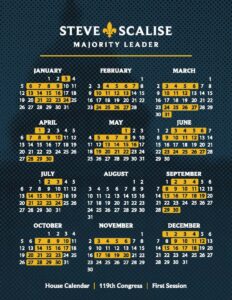
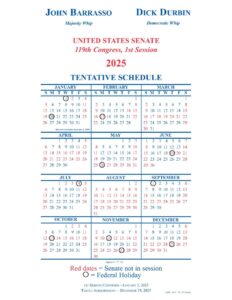
Members of the U.S. Congress try to spend as much time in their states/districts as possible. Both the House and Senate leadership have published session calendars for 2026. By reviewing these calendars, you can determine when your senators and congressman are likely to be “back home” by looking for dates not in session. Review the schedule documents below and find updated information at www.congress.gov/calendars-and-schedules.
House |
Senate |
|
 |
 |
Training & Career Development
Complete Part 145 Training Series On Demand
On Aug. 26, ARSA completed the live series of online training sessions walking through every section of 14 CFR part 145, “Repair Stations.” The final session focused on the operating rules for repair stations in part 145, subpart E. The complete new series replaces the association’s previous sessions focusing exclusively on the rule, providing new context and analysis of the current regulatory language.
The entire series is now available on-demand for immediate viewing. Live session registrants get free access to recordings for 90 days and new participants may access them at any time. Interested registrants may select individual hours or purchase a discounted “bundle” to get complete access:
Session 1: Complying with Part 145 – Subparts A & B
Date: Thursday, July 16 @ 11:00 a.m. EDT – COMPLETE
Registration & More Information: Click here for on-demand access.
Session 2: Complying with Part 145 – Subpart C
Date: Wednesday, July 29 @ 11:00 a.m. EDT – COMPLETE
Registration & More Information: Click here for on-demand access.
Session 3: Complying with Part 145 – Subpart D
Date: Wednesday, Aug. 19 @ 11:00 a.m. EDT – COMPLETE
Registration & More Information: Click here for on-demand access.
Session 4: Complying with Part 145 – Subpart E
Date: Wednesday, Aug. 26 @ 11:00 a.m. EDT – COMPLETE
Registration & More Information: Click here for on-demand access.
To purchase a discounted “bundle of all four sessions (live and on-demand), click here.
Registration for an ARSA-provided training session includes:
- Unlimited access for 90 days to the recording available after the live session is complete.
- A copy of the presentation and all reference material with links to relevant resources and citations.
- A certificate upon completion of the class, as well as any test material.
The association’s training program is provided through Obadal, Filler, MacLeod & Klein, P.L.C., the firm that manages ARSA. To go directly to OFM&K’s online training portal, visit PotomacLaw.inreachce.com. To learn more about the association’s training program and see course availability, visit arsa.org/training.
How the FAA Shows You Off
ARSA is engaged with the FAA on broad career development efforts. In addition to bolstering agency knowledge through workshops, periodical subscriptions, query acceptance, and event access, the association improves compliance by supporting government and industry workforce growth.
The FAA outreach through the Science, Technology, Engineering, and Math Aviation and Space Education (STEM AVSED) program seeks to inspire and prepare today’s youth to explore, connect with, and pursue the aerospace careers of tomorrow. From pilots and mechanics to advanced air mobility and air traffic control, the program introduces K–12 students to new possibilities. It builds pathways into the aviation workforce through hands-on learning and collaboration with educators, industry, and community partners.
For more information about the STEM AVSED program, visit www.faa.gov/education.
To see how the FAA is connecting with educators to share aerospace, see the webinar provided through the Central Service Area Regional Council:

Click the image to launch the webinar recording in YouTube.
On Demand Workshop – The Lifecycle of Airworthiness
The recording of ARSA’s special workshop sharing the association’s method for understanding the aviation safety rules is now available on demand. The resource was presented to FAA personnel as part of the association’s broader industry education efforts and is a valuable tool for aerospace professionals to understand the basics of the aviation safety rules.
| Workshop Title | The Lifecycle of Airworthiness |
| Workshop Description | This session overviews Chapter I of Title 14 of the Code of Federal Regulations, showing how each element of the rules impacting design, production, operations, and maintenance connect in order to provide for airworthiness in the national air space. |
| Registration | Click here to register and get access for 90 days. Government personnel (with valid .gov or equivalent international email addresses) may access the session for free, contact ARSA for instructions. Individuals who participated in the live session on May 26 get 90 days of access to the recording. |
The session is the second in a planned series that will cover industry and regulatory issues, providing baseline instruction and references for agency personnel. A recording will be available for general registration after each workshop is complete.
To see all of the workshops given to the FAA and available for on-demand viewing, visit arsa.org/faa-training.
Making Regulation 101
For decades, ARSA’s management firm has contracted with industry clients to present a day long, intensive regulatory compliance training session. Different titles may focus specific students on key compliance elements, but the foundational content provides a “Regulation 101” survey introducing anyone to the realities of aerospace business.
Association members are encouraged to use ARSA’s training resources to build content resulting in a “101” level experience. Supervisors and training managers should start building their own packages starting with the following topics (and reviewing the complete catalogue for more options):
(1) Administrative Agencies & Their Powers – arsa.org/rulemaking-training.
(2) Defining “Appliance” (lessons in part 1) – arsa.org/appliance-training
(3) Part 21 – arsa.org/part21-training.
(4) Airworthiness Directives – arsa.org/part-39-training
(5) Part 43 – arsa.org/part-43-training.
(6) Part 145 – arsa.org/145-training-series.
(7) International Compliance – arsa.org/goingglobal.
(8) Safety Management Systems – arsa.org/sms-training.
Most of ARSA’s available content ties back directly to the elements of “Regulation 101,” with specific attention and depth given to the session’s focus. Want to build your own bundle of regulatory content? Contact ARSA to work through it.
To search the catalogue and register for a session today, click here. For more information about training available through ARSA and the firm, read on.
ARSA’s online training program represents its most-valuable benefit to the aviation industry: knowledge gained through training and experience. The association’s team has turned its decades of work on behalf of aviation maintenance into more than 80 hours of on-demand content.
While sessions are available for registration at any time – ARSA member discounts available – companies can also incorporate the association’s training into their regular programs:
(1) Subscription. Make up-front, bulk purchases of training hours. The details of each subscription can be customized, including focus on specific subject areas (e.g., human factors) or options for specially-priced session access after the initial hours have been used. The basic training subscription is $5,000 for 100 hours of unrestricted training to be used for 52 weeks, but different options are available depending on specific needs.
(2) Training Sponsorship. A company name, logo, and description associated with a live session (which becomes an on-demand recording) or an existing on-demand session for the duration of its time in the association’s catalogue. The duration of the advertising is as long as the training session remains active in the catalogue (most training sessions remain active until a regulatory change takes place). Advertising company employees get free access to the training content, an immediate return on your advertising investment. Training session sponsorships start at $3,500.
(3) Tailored training. Contract ARSA’s management firm Obadal, Filler, MacLeod & Klein, P.L.C. to produce or modify training specific to your organization. The team can then re-record it (or offer it as a separate live session) for ARSA’s training program. Tailored programs are priced differently from ARSA’s hourly rate and are administered by OFM&K, which allows for a client engagement and related attorney-client privilege for all discussion. Tailored training prices vary depending on length and delivery, e.g., in-person or online.
To review sample syllabi of training session options from the firm – many of which have similar sessions available generically through ARSA training – click here to download a combined PDF. The syllabi include “Regulatory Comprehension for Maintenance,” “Public Aircraft,” “AD Compliance” and more.
For more information about ARSA’s training program, review the menus below. If you have questions or would like to learn more about ways to integrate ARSA training into your own program, contact Vice President of Operations Brett Levanto (brett.levanto@arsa.org).
Government employees: Contact ARSA directly for auditing opportunities.
Registration: Registration and payment may be processed directly through the training platform/course catalog (free account creation required).
Technical questions and assistance: Click here for FAQ and technical support from training platform vendor.
Refunds: No refunds are granted for ARSA training sessions. When classes are canceled, registrants can choose from future courses of equal value. If a registrant is unable to attend a live session, their registration allows access to the on-demand, recorded version of the webinar.
IA Approval: A number of ARSA training sessions have been accepted for Inspection Authorization (IA) renewal credit. These sessions are denoted on their registration page with their FAA course acceptance number (in red).
Benefits: Registration for an ARSA-provided training session includes:
- Access to the live class session on the scheduled date (if applicable).
- Unlimited access to the on-demand, recorded version of the webinar to be made available after the live session is complete (or at time of purchase, for on-demand classes).
- A copy of the presentation and all reference material with links to relevant resources and citations.
- A certificate* upon completion of the session as well as any required test material.
OFM&K Training Portal: All of ARSA's training sessions are provided through OFM&K's training portal. As the training provider of choice for ARSA and a trusted resource for the aviation community, the firm's training materials represent a vital tool for entities pursuing regulatory compliance and business success. All of the courses are administered via PotomacLaw.InreachCE.com, which is not part of ARSA's website.
Complying with Part 145 – “Soup to Nuts” (Four Hours) Instructor: Sarah MacLeod Description: Specially recorded with a hand-picked audience for interactive discussion, this session thoroughly reviews 14 CFR part 145, discusses the application of the rule and overviews some practical implications of obtaining and maintaining a repair station certificate. Pricing Note: This is a four-hour session and is $300 for members and $600 for non-members. Click here to register and get access for 90 days.
Sessions Accepted for IA Renewal Credit Eight of ARSA's on-demand training sessions have been accepted by the FAA for Inspection Authorization renewal credit under 14 CFR § 65.93. Each session is currently available for registration and immediate access:Click here to purchase all eight sessions (plus one required prerequisite) at a “bundled” discount – let ARSA take care of your IA renewal requirements this year. Click here to purchase all eight sessions (plus one required prerequisite) at a “bundled” discount.
Aircraft Parts
Audit Activism & Prophylactic Lawyering
Drug & Alcohol Testing
Human Factors
Instructions for Continued Airworthiness
Parts 21, 43, 65, 145 (and others)
Public Aircraft"Going Global" - International Regulatory Law
Grassroots Advocacy
Recordkeeping – "Finishing the Job with Proper Paperwork"
The Fourth Branch of Government (Administrative Agencies and Procedures)
Self Disclosure Programs and Practices
(1) Subscription. Make up-front, bulk purchases of training hours. The details of each subscription can be customized, including focus on specific subject areas (e.g., human factors) or options for specially-priced session access after the initial hours have been used.
(2) “Championing” a session. Guarantee a certain number of attendees for training in a particular topic that will also be made available for general registration. Variations include open registration for a live session (i.e., company personnel participate at the same time as general registrants) or a company-specific live event for which a recorded version (not including any company-specific information) is made available for on-demand registration.
(3) Tailored training. Contract ARSA's management firm Obadal, Filler, MacLeod & Klein, P.L.C. to produce or modify training specific to your organization. The team can then re-record it (or offer it as a separate live session) for ARSA’s training program. Tailored programs are priced differently from ARSA’s hourly rate and are administered by OFM&K, which allows for a client engagement and related attorney-client privilege for all discussion.
For more information about ARSA's training program, review the menus below. If you have questions or would like to learn more about ways to integrate ARSA training into your own program, contact Vice President of Operations Brett Levanto (brett.levanto@arsa.org).The association’s training program is provided through Obadal, Filler, MacLeod & Klein, P.L.C., the firm that manages ARSA. To go directly to OFM&K’s online training portal, visit potomaclaw.inreachce.com. To learn more about the association’s training program and see course availability, visit arsa.org/training.
What training do you need? Contact ARSA to let the association know and help get it developed.

Regulatory Compliance Training
Test your knowledge 14 CFR §§ 21.71 and 21.73, covering applicability and eligibility for provisional type certificates.
Click here to download the packet of training sheets.

Membership
High Utilization
ARSA would like to highlight members that utilized member benefits.
MGM (Members Getting Members) referrals. A great way to show support and build ARSA’s membership base which supports ARSA works. The association provided discounts to:
Continental Aircraft Support, Inc. for referring American Turbo Systems, Inc.
Eagle Creek Aviation Services, Inc. for referring Naples Jet Center.
ASK ARSA for access to free regulatory guidance. If you are not using this resource to help traverse the regulations, you are missing out on a great member resource that can help save the member company time and money. Below are the members who took advantage of the association’s knowledge of regulatory compliance.
Pratt & Whitney (Raytheon Enterprise Member)
Component Repair Technologies, Inc. (R05 member)
JSSI Parts LLC (Associate member)
A big thank you also goes out to those members that return updated profiles ensuring all people are registered and can access ARSA benefits. Update any information any time through ASK ARSA.
Know you are a member but not fully aware of the member benefits? The website can create awareness of the tools provided.
Advertising – Who’s Your Type?
ARSA pushes hard to build complete profiles for each member. Except for the smallest repair stations, primary contacts see repeated requests for full lists of contacts covering every facet of the repair station’s business.
For the member, the benefit is clear: “Hooking up” everyone ensures access to the expertise shared through ARSA’s communications, its training, and responses to member queries.
For ARSA and its partners, these lists provide breadth and depth of industry needs. Anyone highlighted in an association newsletter or on its website gets in front of these eyes:
Regulatory – ARSA’s most attentive readers. Personnel performing maintenance, overseeing quality systems, dealing with the FAA, and making operational decisions related to the core business of a maintenance provider.
Communications – Partners in highlighting good work. For more sophisticated members, ARSA maintains connection with public relations and other individuals responsible for showing off their companies.
Legislative – Amplification for ARSA’s voice. Not just official “lobbyists” in big companies, but any personnel who’ve been tasked with maintaining relationships with municipal, state, and federal officials.
Executive – Leaders of ARSA’s industry. Company heads and other management personnel not directly involved in maintenance work. These top-level business decision makers need to know what their people know and need to know.
When an advertiser links itself to the association, it gets visibility in all of these groups. Regardless of your specific type, ARSA’s readership covers the positions that are looking for you.
Are you an ARSA member whose profile (which you see at least every year) is not filled with all of these roles? Contact ARSA to update today.
Learn more and request a placement by visiting the advertising page.
Welcome & Welcome Back – New & Renewing Members
ARSA’s members give the association life – its work on behalf of the maintenance community depends on the commitment of these organizations. Here’s to the companies that joined or renewed in August:
New Members
American Turbo Systems, Inc., R02
Burrana, Inc., R01
Co-Operative Industries Defense, LLC dba Co-Operative Industries, R01
GV Aerospace Technology LLC, R01
Naples Jet Center Holdings, LLC dba Naples Jet Center, R03
Returning Members
Aeronautical Technology, Inc. dba Precision Aero Technology, R03, 1993
Aero Propulsion Support, Inc., R01, 2025
Aerotron AirPower, Inc. dba Fokker Services Americas, R04, 1990
Aeroworx, Inc., R02, 2010
Airline Accessory Service Company, LLC, R02, 2012
Aircraft Systems Division of Com-Jet Corp, R03, 2011
Aircraft Tooling, Inc., R01, 2024
Aviation Repair Solutions, Inc., R02, 2009
Bernoulli Aerospace, LLC, R01, 2025
Com-Jet, LLC dba Sunvair Aircraft Systems, R03, 2011
Cosgrove Aircraft Services, Inc., R01, 2021
Cross-Check Aviation, R02, 2003
Dan Brauhn-Indian Hills Community College, EDU, 2015
Diversified Aero Repair, LLC, R01, 2023
EuroTec Vertical Flight Solutions, LLC, R02, 2004
EXTEX Engineered Products, Inc., Assoc, 2002
GA Telesis Engine Services, LLC, R02, 2024
Gyro Specialist, Inc., R01, 2011
HEICO Aerospace Corporation, Enterprise, 1992
Millennium International, L.L.C., R02, 2013
MTI Aviation, Inc., R02, 2011
National Flight Services, Inc., R04, 1991
Paz Aviation, Inc., R02, 2016
Pearl River Community College, Edu, 2020
REB Technologies Inc., dba REBTECH, R02, 2003
Regional Avionics Repair, LLC, R03, 2006
R.W. Raddatz, Inc., R02, 2004
Schaeffler Aerospace USA Corporation, R02, 2012
Signature Engines, Inc., R02, 2017
Sunvair, Inc, R04, 2024
Unipak Aviation, LLC, R02, 2003
VSE Aviation Services, Co., R02, 2012
A Member Asked…Documenting military releases?
Q: Our company is an FAA-approved repair station that maintains both civil and non-civil (military/industrial) articles. Since AC 43-9D was released in May 2025, and Appendix B, Section B.14 allows the use of FAA Form 8130-3 for military components, I reached out to the FAA to ask whether they had received any industry feedback that could be shared with us regarding the use of the form for these components.
Specifically, I asked whether there had been any feedback related to improperly issued certificates, or any positive feedback regarding implementation. The FAA advised that they have not yet received any feedback from the industry and suggested that we pose the same question to ARSA to better understand what it may be hearing from members. Accordingly, could you please let me know if ARSA has received any industry feedback that it can share?
A: Please be aware that the Advisory Circular is not why the agency has admitted that its regulations have never prohibited the use of that form (a) by mechanics, or (b) on “dual use” military articles, or (c) commercial purposes. The criminal laws are what prevents any government form from being used in a fraudulent, misleading, or false manner, as does 14 CFR part 3, subpart D.
The simple truth is that military aircraft and industrial components are not under the agency’s jurisdiction, only civilian aircraft with U.S. certificates of airworthiness and components used on those aircraft – see, section 43.1(a). You can also review this legal interpretation dealing with foreign registered aircraft, which explains the limits of the agency’s authority.
Your work on military aircraft and components is not done under the repair station certificate. The work on civil aircraft and “Airframe, aircraft engines, propellers, appliances, and component parts of such aircraft” is done under the auspices of the repair station certificate. In other words, if you are working on a dual use component and it is installed on a civil aircraft with an U.S. airworthiness certificate the FAA has jurisdiction.
The use of the FAA Form 8130-3 by a repair station is usually to create the “maintenance release” required by section 145.219(b). The release satisfies sections 43.9(a)(1)(2), and (4) which is a portion of the maintenance record required by sections 43.9 and 145.219(a). (And to satisfy the special conditions imposed by EASA under the bilateral.) A maintenance record must contain all the elements of section 43.9 (such as section 43.9(a)(3)—names of individuals and contractors that performed work on the article, other than the repair station) plus any other information required by the repair station’s manual or customers.
ARSA would recommend that the form only be used on “dual” use components, not on any “military only” configured or industrial items. However, if a contract with the military requires the use of the form, take advantage of Block 12 to include “unless otherwise specified” language before approving the work for return to service, or entering a certificate number. Also, keep in mind that EASA is not friendly to the use of the form on military only items, so check only the 14 CFR 43.9 Return to Service box in Block 14a.
Have questions? Take advantage of ARSA’s most valuable resource and use the “Ask ARSA First!” system to get help.
Conference Corner
2026 Legislative Day Throwback – Playing the Political Game
 ARSA’s Legislative Day, traditionally hosted on the Wednesday of Annual Conference week, is the maintenance community’s moment on Capitol Hill. Relationships with elected officials must be year-round, but this one day in March is a valuable in-person opportunity to begin or refresh engagement with members of Congress and their staffs.
Get ready for 2026 midterm elections with this session from this year’s Legislative Day…then plan attendance for next year to work with the winners. 2027 Annual Conference Registration opens in December.
Looking ahead to November, this ARSA-led discussion helped set the stage for Legislative Day participants and is provided for the benefit of members getting politically active back home.
10:00 a.m. | Playing the Political Game
The 2026 congressional elections provide an opportunity for the aviation maintenance industry to further build its political visibility and effectiveness. Klein will review individual campaign law finance contribution limits, discuss ways companies can build relationships with candidates, and explain how members can tap into ARSA PAC resources.
Naveen Rao, Principal, H4 Advisors LLC
Madison Smith, Principal, Ridge Path Strategies
Moderator: Christian Klein, Executive Vice President, ARSA
Resources
ARSA strives to provide resources to educate the general public about the work of the association’s member organizations; should you need to provide a quick reference or introductory overview to the global MRO industry, please utilize AVMRO.ARSA.org.
ARSA Member Benefits
From access to industry expertise to growing your own through education and training, ensure your company gets the most out of its investment in ARSA.
About ARSA PAC
The Aeronautical Repair Station Association Political Action Committee (ARSA PAC) is a special fund designed to allow the collection of funds from qualified individuals that will become financial contributions to U.S. House and Senate candidates that support the legislative goals of the civil aviation industry.
Industry Meetings & Events
| Event/Meeting | Dates | Location |
| LPA Aerospace Industry Expo | 9/17-18/2026 | Orlando, Florida |
| ATEC Fly In | 9/22-25/2026 | Washington, D.C. |
| NBAA BACE | 10/20-22/2026 | Las Vegas, Nevada |
| MRO Europe | 10/27-29/2026 | Amsterdam, Netherlands |
| Aero-Engines Americas | 1/19-21/2027 | Scottsdale, AZ |
| ARSA Annual Conference | 3/9-12/2027 | Washington, D.C. |
| VERTICON 2027 | 3/15-18/2027 | Anaheim, CA |
| MRO Americas | 4/13-15/2027 | Orlando, FL |
| Aircraft Interiors Expo | 4/6-8/2027 | Hamburg, Germany |
| NBAA Maintenance Conference | 5/4-6/2027 | Charlotte, NC |
the hotline is the monthly publication of the Aeronautical Repair Station Association (ARSA), the not-for-profit international trade association for certificated repair stations. It is for the exclusive use of ARSA members and federal employees on the ARSA mailing list. For a membership application, please call 703.739.9543 or visit arsa.org/membership/join. For information about previous editions, submit a request through arsa.org/contact. This material is provided for educational and informational purposes only. It does not constitute legal, consulting, tax or any other type of professional advice. Law, regulations, guidance and government policies change frequently. While ARSA updates this material, we do not guarantee its accuracy. In addition, the application of this material to a particular situation is always dependent on the facts and circumstances involved. The use of this material is therefore at your own risk. All content in the hotline, except where indicated otherwise, is the property of ARSA. This content may not be reproduced, distributed or displayed, nor may derivatives or presentations be created from it in whole or in part, in any manner without the prior written consent of ARSA. ARSA grants its members a non-exclusive license to reproduce the content of the hotline. Employees of member organizations are the only parties authorized to receive a duplicate of the hotline. ARSA reserves all remaining rights and will use any means necessary to protect its intellectual property.
© 2026 Aeronautical Repair Station Association