


2025 – Edition 8 – September 5
Table of Contents
Note: The order of material varies in hotline emails, but is always presented the same on this landing page. Readers scrolling through content on or printing this page will find it organized consistent with the table of contents.
President’s Desk
People Matter
ARSA’s Board of Directors is looking forward to the association’s special invitation Leadership Roundtables held in October; an annual event preceding the yearly in-person board business meeting in October.
The roundtables are a tent pole event because it involves allied associations, FAA and international regulatory leaders, and key member representatives – and it directs priorities. It represents ARSA’s leadership on behalf of maintenance interests worldwide – a room full of private and public sector aviation professionals focusing on the work initiated during the previous years, along with new issues needing resolution.
The industry’s collective work has demonstrated that process must serve the people, not delay an outcome. Rather than eliminating positions and downsizing workforces, efficiency must be sought. Obstacles existed only when burdensome process supplants the opportunity for intelligent individuals to show and find compliance.
ARSA’s “welcome” letter to the new administrator and its response demonstrates the need for action. The five opportunities for creating efficiencies in government and industry interaction provided in the welcome letter will benefit the agency and the industry. At the roundtables, those five action areas will be front and center.
The message from ARSA will be clear: The agency must make good on improving processes by turning to the industry for viable solutions. Similarly, the industry must use the processes to provide the agency with viable solutions.
 |
John Riggs 2025 ARSA president | Director of Airworthiness, Chromalloy |
Conference 2026
Plan Ahead
March 17-20, 2026
Registration for 2026 opens with the hotline’s Dec. 5 distribution. You can’t be first in line if you’re not planning now. Budget for sponsorship, attendance, and travel. The event will again center around the Ritz-Carlton, Pentagon City in Arlington, Virginia with supporting activities around the nation’s capital.
Basic Schedule
Executive to Executive Briefings: Tuesday, March 17, 2026
Participation by industry executives with senior executive branch officials and key aerospace allies is limited to annual conference sponsors.
Legislative Day: Wednesday, March 18, 2026
Dedicated to educating both the aviation maintenance industry and elected officials. Learn (or brush up) on what ARSA does and what you can do to prepare for afternoon visits with targeted Capitol Hill legislators and staff.
Annual Repair Symposium: Thursday, March 19, 2026
The centerpiece of Conference week, ARSA convenes a full day of substantive panel discussions covering key regulatory compliance and business issues. After the keynote address, regulators from across the world join the “Opening Salvo” conversation, followed by lunch, and an afternoon of practical regulatory and business discussion.
Member Day: Friday, March 20, 2026
ARSA’s leadership briefs members on the state of the association as well as goals and priorities for the coming year. Participants then close out the event by participating in breakout and/or training sessions focused on key aerospace topics. The Conference ends by 12:00 p.m. EDT.
2025 in Review
Look back at last year to bask in the memories or see what you’ve been missing.
Executive to Executive Briefings: Tuesday, March 17, 2026
Participation by industry executives with senior executive branch officials is limited to annual conference sponsors at the Administratium, Platinum, Gold, or Silver levels. In past years, meeting participants included representatives from the U.S. Departments of Commerce, Defense, Labor, State, and Transportation as well as the fellow trade associations and industry interest groups.| 8:30 a.m. | Coffee & Light Breakfast |
| 9:15 a.m. | Introductory Briefing
Christian A. Klein, ARSA Executive Vice President Klein will review the association’s antitrust statement, discuss the purposes and agenda of the 2026 E2E, and review recent ARSA initiatives. |
| 10:00 a.m. | Federal Aviation Administration
Bryan Bedford, Administrator, Invited The Administrator will discuss his vision for improving FAA’s professionalism and effectiveness and invite feedback on the agency’s current challenges. |
| 11:00 a.m. | Break with Fruit & Muffins |
| 11:15 a.m. to 12:00 p.m. | U.S. Department of State
Marco M. Sylvester, Deputy Assistant Secretary for Transportation Affairs, Bureau of Economic and Business Affairs With an eye on the volatile geopolitical environment, Deputy Assistant Secretary Sylvester will discuss issues impacting international relationships, the negotiation process, and opportunities to influence bilaterals in these times. |
| 12:00 p.m. to 1:00 p.m. | U.S. Department of War
James Ruocco, Deputy Assistant Secretary for Acquisition, Invited Concern is growing about concentration and a lack of competition in the defense industrial base. Mr. Ruocco will discuss the Department’s efforts to improve access to the data needed to bid on and perform aircraft maintenance contracts and status of regulatory reforms to enhance use of FAA Parts Manufacturer Approval. |
| 1:00 p.m. to 2:00 p.m. | Lunch/Midday Break |
| 2:00 p.m. to 3:00 p.m. | Trade and Labor
Jennifer Bang, Assistant U.S. Trade Representative for Intergovernmental Affairs and Public Engagement, Invited
Ms. Bang will explain the rationale for the Trump administration’s sweeping tariffs and how trade policy will evolve over the remainder of President Trump’s term. |
| 3:00 p.m. | Break with Coffee, Tea, Soda, Iced Tea |
| 3:15 p.m. | Economic Impacts
Livia Hayes, Director, Market Intelligence Team, Transportation and Services Practice, Oliver Wyman and Paul Harper, Vice President, Oliver Wyman Vector Hayes and Harper will reveal the findings of the most recent Oliver Wyman MRO industry forecast and lead a roundtable discussion of factors and trends impacting demand for aerospace maintenance services. |
| 4:00 p.m. | Wrap up Discussion
Participants will discuss key takeaways and opportunities for collective action. |
| Additional Content Options | ARSA's team is working with colleagues and government contacts to lead discussion on workforce and career development issues as well as to get top-level aviation policy guidance from the Department of Transportation. |
Legislative Day: Wednesday, March 18, 2026
The day dedicated to educating both the aviation maintenance industry and elected officials. Learn (or brush up) on what ARSA does and what you can do so you're ready for afternoon visits with targeted Capitol Hill legislators and staff.| 7:30 a.m. | Registration and Breakfast |
| 8:00 a.m. | Welcome and Introductions
Christian Klein, Executive Vice President, ARSA Alex De Gunten, Vice President of Government & Industry Affairs, HEICO and ARSA 2026 Government Affairs Chairman |
| 8:15 a.m. | It’s All About Your Industry and Your Company
Christian Klein, Executive Vice President, ARSA Last year was another banner year for the maintenance industry on Capitol Hill. We will discuss recent accomplishments, the political landscape, industry priorities for 2026, and building on our success. |
| 9:00 a.m. | The View from the Hill
Karen Huggard, Vice President of Government Affairs, National Air Transportation Association, invited Jarrod Thompson, Vice President for Legislative and Regulatory Policy, Airlines for America, invited Moderator: Christian Klein, Executive Vice President, ARSA The looming air traffic control reform bill provides opportunities to adjust FAA policy and related congressional mandates before the next FAA reauthorization. |
| 9:45 a.m. | Break |
| 10:00 a.m. | National Defense Authorization Act: Accomplishments and Opportunities
Josh Krotec, Senior Vice President, First Aviation and ARSA Board Member Alex De Gunten, Senior Vice President for Government & Industry Affairs, HEICO and 2026 ARSA Government Affairs Chairman Mandy Smithberger, Senior Adviser, National Security, Sen. Elizabeth Warren (D-Mass.) Moderator: Christian Klein, Executive Vice President, ARSA The annual Pentagon budget and policy bill can be used to enhance competition and opportunities for small aerospace businesses in Department of Defense maintenance contracting. Panelists will discuss 2025 accomplishments and 2026 opportunities. |
| 10:30 a.m. | Playing the Political Game
Christian Klein, Executive Vice President, ARSA Holly Woodruff-Lyons, President, HWL Aerospace Policy, Invited The 2026 congressional elections provide an opportunity for the aviation maintenance industry to further build its political visibility and effectiveness. Klein will review individual campaign law finance contribution limits, discuss ways companies can build relationships with candidates, and explain how members can tap into ARSA PAC resources. |
| 11:00 a.m. | Release of ARSA's 2026 Global Fleet & MRO Market Report
Livia Hayes, Director, Market Intelligence Team, Transportation and Services Practice, Oliver Wyman |
| 11:30 a.m. | Wrap up Discussion
Christian A. Klein, ARSA Executive Vice President A quick review of topics for this afternoon’s Hill meetings with an opportunity to ask questions. |
| 12:00 p.m. | Adjournment and Box Lunch |
| 1:00 p.m. – 4:00 p.m. | Congressional Meetings |
| TBD | Presentation of 2026 ARSA Legislative Leadership Award to Sens. Elizabeth Warren (D-Mass.) and Tim Sheehy (R-Mont.) |
| TBD | House Aviation Subcommittee Staff Briefing |
| 4:00 p.m. | Symposium Registration Open (for non-Legislative Day attendees) |
| 5:30 p.m. | Ice Breaker Reception |
| 7:00 p.m. | Special Invitation Dinner |
Annual Repair Symposium: Thursday, March 19, 2026
The centerpiece of Conference week, ARSA convenes a full day of substantive panel discussions covering key regulatory compliance and business issues. After the keynote address, regulators from across the world join the full-morning "Opening Salvo" conversation, followed by lunch and an afternoon of practical regulatory and business discussion.| 7:30 a.m. | Registration and Breakfast |
| 8:00 a.m. | Welcome and Introductory Remarks
Sarah MacLeod, Executive Director, ARSA Christian Klein, Executive Vice President, ARSA Find out how the association is advocating for your interests with legislators, regulators, and the media. Information on how you can help advance the industry’s collective work. |
| 8:30 a.m. | Session 1: Fireside Chat with the FAA
Tina Amereihn, Associate Administrator, Aviation Safety Oversight and Certification Organization Moderator: Sarah MacLeod, Executive Director, ARSA |
| 9:00 a.m. | Break with Coffee/Tea |
| 9:30 a.m. | Session 2: Opening Salvo—Conversations with the Regulators
Stewart Algar, Chief Surveyor, Head of Airworthiness, United Kingdom Civil Aviation Authority Lawrence Josuá Fernandes Costa, Continuing Airworthiness Certification Manager, Department of Flight Standards, ANAC Brazil Ludovic Aron, Washington Representative, EASA Karl Specht, Principal Coordinator Organisation Approvals, EASA, Invited Caitlin Locke, Executive Director, Aircraft Certification Service, FAA Tim Adams, Acting Deputy Director, Office of Safety Standards, Flight Standards Service, FAA, Invited Moderator: Christian Klein, Executive Vice President, ARSA International aviation safety agencies will provide updates on the regulations, policies, and procedures of importance to the global aerospace sector. |
| 10:45 a.m. | Networking Break (Approximate) – Coffee/Tea |
| 12:30 p.m. | Lunch with Lessons from a Hall of Famer John Goglia, President, Professional Aviation Maintenance Association |
| 2:00 p.m. | Session 3: Foreign Repair Station D&A/SMS implementation
Ric Peri, Vice President, Government & Industry Affairs, Aircraft Electronics Association Karl Specht, Principal Coordinator Organisation Approvals, EASA, Invited Chris Parfitt, Manager, General Aviation Group (AFS-340), Flight Standards Service, FAA Moderator: Brett Levanto, Vice President of Operations, ARSA Foreign and domestic part 145 certificate holders are dealing with new regulatory mandates. The panel will discuss lessons learned in the implementation of SMS requirements for U.S. repair stations and ARSA’s compliance, advocacy, and education efforts related to foreign repair station D&A. |
| 3:00 p.m. | ARSA Quiz Show |
| 3:30 p.m. | Networking Break |
| 4:00 p.m. | Session 4: Perspectives on Career Growth
Adam Flynn-Tabloff, Director of Policy, Research, and Evaluation, Office of Career and Technical Education, U.S. Department of Education Tristan McDonald, President, Federal Aerospace Institute, Invited Andrew Rachmell, Director, Educational Partnerships, Purdue Global Brett Levanto, Vice President of Operations, ARSA Many call a mechanic’s certificate a “license to learn,” but any career in aerospace maintenance – certificated or not – is a “license to grow.” Engage three different perspectives on how individuals and companies can turn entry level into life long. |
| 5:00 p.m. | The Aerospace Happy Hour |
Member Day: Friday, March 20, 2026
ARSA's leadership briefs members on the state of the association as well as goals and priorities for the coming year. Participants then close out the event by participating in breakout and/or training sessions focused on key aerospace topics. The Conference ends by 12:00 p.m. EDT.| 8:00 a.m. | Annual Membership Meeting & Breakfast |
| 9:30 a.m. | Break |
| 10:00 a.m. | Breakout Sessions
Integrate or Overlay A training/discussion session on “designing, implementing, and maintaining” a safety management system that integrates with existing quality programs. Foreign D&A Waivers and ExemptionsA training/discussion session to help repair stations get ahead of new drug & alcohol testing requirements while understanding rule applicability regardless of location. |
| 12:00 p.m. | Conference Ends |
In-Person
All substantive and social activities were hosted at the Ritz-Carlton, Pentagon City in Arlington, Virginia. Legislative Day participants will head to Capitol Hill for meetings with congressional offices as appropriate.
Livestream
The majority of Conference events will be available to livestream viewers via a Vimeo web-player embedded into a page on ARSA.org. All in-person registrants will be able to name a "Conference Ambassador" as a contact to access the livestream and bring the event back to their home facilities.
Pricing
| Executive to Executive Briefings – Tuesday, March 17 | ||||
| Open to Administratium, Platinum, Gold, and Silver-level sponsors.(1) | ||||
| Legislative Day – Wednesday, March 18 | ||||
| Members | Non-Members | |||
| In Person or Livestream | $450 | $750 | ||
| Symposium – Thursday, March 19 | ||||
| In Person or Livestream(2) | $925 | $1,500 | ||
| Legislative Day & Symposium Bundle | ||||
| In Person or Livestream | $1,250 | $2,000 | ||
| The Super Bundle (Silver Sponsorship, E2E, Legislative Day, & Symposium) | ||||
| In Person or Livestream | $4,200 | $4,500 | ||
| Member Meeting & Training/Breakouts – Friday, March 20 | ||||
| In-person | Free with Symposium registration. | |||
| Livestream | ||||
(2) Registration fees may be waived for government personnel, members of the media, speakers, and other support personnel or special guests upon approval by the ARSA event team.
Administratium – $15,000
What is Administratium? An element aerospace professionals see every day (click here to learn more). Notation in all publicity, marketing and periodicals (e.g., the hotline, Dispatch, ARSA team email signatures, conference attendee contact list, specific email alerts to association contacts), recognition in event materials and from the podium, specific thank you in ARSA periodicals, additional advertising placement via ARSA’s communications, complimentary registrations for three (3) participants in the Executive to Executive Briefings as well as three (3) in Legislative Day, and free livestream access for personnel unable to attend in person. At the Administratium Level, sponsors may select one of the following* to specifically support (please note the list in this document does not reflect current availability):- Annual Repair Symposium – Ice Breaker Reception
- Annual Repair Symposium – Thursday Happy Hour
- General Sponsorship
Platinum – $10,000
Notation in all publicity, marketing and periodicals (e.g., the hotline, Dispatch, ARSA team email signatures, conference attendee contact list, specific email alerts to association contacts), recognition in event materials and from the podium, specific thank you in ARSA periodicals, complimentary registrations for three (3) participants in the Executive to Executive Briefings as well as three (3) in Legislative Day, and free livestream access for personnel unable to attend in person. At the Platinum Level, sponsors may select one of the following to specifically support (may not reflect current availability for 2025):- Online Conference Experience
- Executive to Executive Briefings
- Legislative Day – All Day
- Congressional Directories/Resources
- General Sponsorship
2025 Platinum Sponsors
 |
 |
 |
 |
 |
 |
 |
 |
Gold – $7,500
Notation in all publicity, marketing and periodicals (e.g., the hotline, Dispatch, ARSA team email signatures, conference attendee contact list, specific email alerts to association contacts), recognition in event materials and from the podium, specific thank you in ARSA periodicals, complimentary registrations for two (2) participants in the Executive to Executive Briefings as well as two (2) in Legislative Day, and free livestream access for personnel unable to attend in person. At the Gold Level, sponsors may select one of the following to specifically support (may not reflect current availability for 2025):- Legislative Priorities Brochures/Resources
- Digital Companion/Electronic Materials
- Legislative Day – Continental Breakfast
- Legislative Day – Congressional Briefing and Luncheon
- Annual Repair Symposium – Continental Breakfast
- Annual Repair Symposium – Luncheon with Special Guest
- Nametag Lanyards
- Hotel Room Keys
- General Sponsorship
2025 Gold Sponsors
 |
 |
 |
 |
 |
 |
Silver – $3,500
Notation in all publicity, marketing, and periodicals (e.g., the hotline, Dispatch, ARSA team email signatures, conference attendee contact list, specific email alerts to association contacts), recognition in event materials and from the podium, complimentary registrations for one (1) participant in the Executive-to-Executive Briefings as well as one (1) in Legislative Day. At the Silver Level, sponsors may select one of the following to specifically support (may not reflect current availability for 2024):- Annual Repair Symposium – Coffee Break (5)
- General Sponsorship
2025 Silver Sponsors
 |
 |
 |
Supporter – $2,500
Notation in all publicity, marketing, and periodicals (e.g., the hotline, Dispatch, ARSA team email signatures, specific email alerts to association contacts), and recognition in event materials and from the podium.Contributor – $500 to $2,499 (or equivalent support)
Notation in some publicity, marketing, and periodicals (e.g., the hotline, Dispatch), and recognition in event materials and from the podium.
2025 Contributor
 |
 Those seeking other options may consider these hotels (there are no ARSA-related specials or promotions at these locations):
Embassy Suites by Hilton Crystal City National Airport 1393 S Eads St. Arlington, Virginia, 22202
Residence Inn Arlington Capital View 2850 South Potomac Avenue Arlington, Virginia, 22202
DoubleTree by Hilton Hotel Washington DC – Crystal City 300 Army Navy Drive Arlington, Virginia, 22202
Crowne Plaza Washington National Airport 1480 Crystal Drive Arlington, Virginia, 22202
Hampton Inn & Suites Reagan National Airport 2000 Richmond Highway Arlington, Virginia, 22202
Radisson Hotel Reagan National Airport 2020 Richmond Hwy Arlington, VA 22202
Holiday Inn National Airport/Crystal City 2650 Richmond Highway Arlington, Virginia, 22202
The Leo Weston Award for Excellence in Government Service
First bestowed on Leo Weston himself in 2005, the Weston award honors an instrumental figure in ARSA's birth by recognizing individuals who embody his commitment to the industry's safety and success. The symposium provides a venue for association members and invited guests from around the world to network and discuss issues that matter to the aviation maintenance industry. It is the perfect time to respect the history of the repair station community and honor the good works of those who support it.
Click here to learn more about Leo, the award bearing his name, and those who have received it.The Legislative Leadership Award
The association regularly recognizes members of Congress who have provided outstanding support to the aviation maintenance community by supporting policies beneficial to the industry. Honorees have each been key in moving forward specific legislation advancing priorities championed by ARSA on behalf of its members.
Click here to see past updates regarding Legislative Leadership Award recipients.The "Golden Shovel" Award
From time to time, ARSA recognizes individuals – usually at the time of their retirement – who have spent their careers in steadfast devotion to good business, good safety, and good oversight. In the colorful illustration of Executive Director Sarah MacLeod, these professionals have spent their lives shoveling against the tide of government bureaucracy; their achievement in never giving up is acknowledged through the "Golden Shovel Award."
Click here to learn more about the "Shovel" and see who has received it.Photos
ARSA has created a Google Album including photos taken during the 2025 Annual Conference, which allows participants to share their own photos (Sharing event photos constitutes consenting to their use/distribution in association with Conference-related publicity for this or future events, at ARSA’s discretion). To see the album, click here.Recordings
The following excerpts were provided to ARSA members via the hotline newsletter. They are included here as examples of the event's content.
Legislative Day Briefing – Market Report ReleaseLeaders from Oliver Wyman Vector presented report findings to Legislative Day participants on March 19, illustrating the current and projected states of the North American and global aircraft fleets and related impacts on maintenance demand. This data illustrates the current state of the aerospace marketplace and provides insight for future business considerations. The briefing is provided in its entirety for the benefit of members.
Symposium Briefing – What Has ARSA Done LatelyThe brief session includes updates about key work performed by the association in the last year as well as instruction for maximizing membership value while helping move the enterprise forward.
Symposium Q&A – Foreign D&A TestingThe three-hour “Opening Salvo” is unlike anything else in the aerospace event cycle: Four regulatory authorities from three continents providing updates and engaging in substantive discussion with attendees. In this clip from the 2025 panel, a participant question produces more than ten minutes of discussion from the panelists.
Weston Award Recognizes Crowley’s Commitment to LearningOn March 20, ARSA recognized Jerry Crowley with its Leo Weston Award for Excellence in Government Service. Crowley is a long time FAA aviation safety inspector who was a professional protégé and friend to the award’s namesake.
Planning Ahead
Help ARSA’s team put together the 2026 Annual Conference by answering a few questions at www.surveymonkey.com/r/ARSAConferencePlan.
ARSA Works
Simplifying Foreign D&A Testing
On Aug. 22, a coalition of eight aviation trade associations joined the ARSA petition to amend the FAA’s recently issued rules expanding drug and alcohol (D&A) testing obligations outside the United States for the first time. The FAA’s December final rule imposes D&A requirements on foreign repair stations performing work on U.S. registered air carrier aircraft.
The petition proposed 10 changes to simplify compliance, oversight, and enforcement, including:
(1) Clarifying testing applies only to foreign repair stations performing heavy maintenance on air carrier aircraft.
(2) Simplifying and expanding waiver opportunities by allowing the FAA to grant waivers without a petition.
(3) Allowing the use of laboratories, medical review officers, and substance abuse professionals in the national jurisdiction of the repair station.
The petition explained the public’s interest in facilitating compliance for more than 1,000 certificated repair stations supporting American global operations: “The proposed amendments will reduce the regulatory burden associated with … compliance and make it more likely that these facilities will continue to provide maintenance services for U.S. registered aircraft. This, in turn, benefits every American who depends on international air transportation for travel, cargo shipments, and mail.”
The petition is ARSA’s most-recent engagement in the decades-old effort to limit burdens resulting from Congress’ 2012 legislation requiring international expansion of testing rules “consistent with the applicable laws” of the country where the repair station is located. The FAA long struggled with the expansive mandate, unsupported by a safety argument. The agency’s final rule makes certificate holders responsible for determining the consistency of U.S. D&A obligations with foreign nations’ laws, abdicating the FAA’s responsibility to set clear standards.
In addition to ARSA, the petition was signed by the Aviation Suppliers Association, the General Aviation Manufacturers Association, the Modification and Replacement Parts Association, the National Air Carrier Association, the National Air Transportation Association, the National Business Aviation Association, and the United Aerial Firefighters Association. To read the complete petition, click here or go to the rulemaking docket.
To support the petition:
(1) Go to www.regulations.gov/document/FAA-2025-2498-0001 to access the petition’s docket.
(2) Click “Comment”, then utilize the form to submit a supportive statement. Demonstrate your interest by explaining the rule’s impact on your business, even if it is indirect. Ensure submissions meet the standards of effective rulemaking comments.
Provide Restricted Category Experience Before Sept. Listening Session
ARSA seeks additional responses to the survey launched in January by Virginia-based law firm Obadal, Filler, MacLeod, & Klein, P.L.C. gathering experience with certification and operation of restricted category aircraft in the United States. As the association’s management firm and in support of multiple restricted-category clients, OFMK has taken the lead in gathering, analyzing, and disseminating industry information for an FAA project including a Sept. 10 listening session.
The FAA outreach is to provide for meaningful discussion between agency representatives and industry stakeholders regarding restricted category certification, operational challenges, and regulatory requirements. The law firm created the survey questionnaire to ensure the industry provides the appropriate information for consideration under the plain language of the applicable regulations. Responses will be collated without attribution to identify the regulatory requirements associated with the issues experienced so appropriate resolutions can be reached.
All interested parties are encouraged to complete the survey. Collected information will be referred to the appropriate FAA and industry contacts throughout the engagement.
To participate in the survey, go to:
https://www.surveymonkey.com/r/FAA_RC_ListeningSession
Respondents may voluntarily provide contact information that will be used only for clarification on any responses provided. Although providing contact information will not create an attorney client relationship with the law firm, the information provided will not be released without a demand from a court of competent jurisdiction.
For more information or questions about the survey, contact ofmk@potomac-law.com.
LAST CALL: IATA Surveying Air Carriers on PMA Adoption
The International Air Transport Association (IATA) has formed a working group studying increased adoption of alternative materials including parts manufacturer approval (PMA) parts. That working group seeks air carrier feedback on PMA adoption and ARSA encourages its members to assist; those holding air carrier certificates should respond while others forward the opportunity to customer contacts.
Survey Description: In collaboration with IATA’s member airlines, OEMs, and industry leaders, a working group was formed to explore how the increase in adoption of the use of alternative materials – such as PMA – can be a viable solution to mitigate capacity challenges in the aftermarket. Your organization’s participation in the survey will provide insight into the industry’s adoption of alternative materials. The pilot project aims to examine how airlines and MROs can implement these alternatives effectively while minimizing operational risks, ensuring compliance with airworthiness standards, maintaining warranty coverage, and avoiding complications during aircraft return to lessors. Survey results will be shared with all participants once the survey has closed.
Survey Close: Sept. 5, 2025
Survey Link: Click here (or https://forms.office.com/e/iCW8ELhR4t)
Contact: Stephanie Lambrinakos-Raymond, Senior Manager Technical Operations Performance, OSS-Flight and Technical Operations, IATA
Final Documents/Your Two Cents
This list includes Federal Register publications, such as final rules, Advisory Circulars and policy statements, as well as proposed rules and policies of interest to ARSA members.
Regulatory Update
One-step UK Renewal Process
On Aug. 27, ARSA clarified for a member how to renew a UK CAA approval held under the bilateral agreement between the United States and United Kingdom. U.S.-based repair stations need only submit to the FAA an updated Approved Maintenance Organization Application (Form SRG 1783) along with any manual supplement updates to request a renewal.
UK Part 145 approvals are valid for two years. Each applicant is responsible for submitting a renewal application in a timely manner, which should be done 90 days prior to their certificate expiration date. The original member query noted the FAA/UK CAA MAG’s instructions for renewal in Section B, Paragraph 3.1.3 directed repair stations to apply online via a non-existent web option. ARSA raised the issue with its British contacts and received an update that the MAG paragraph would be corrected. The new language, which will be officially released with the next amendment, will read:
Section B – Requirements for UK AMOs Located in the United States
3.0 Renewal Application Process
3.1 Applicant Responsibilities
…
3.1.3 The applicant must apply as follows. Note that there is no fee for renewal but annual charges apply.
a. Complete the CAA Form SRG 1783 (see Section B, Appendix 3), and provide the FAA with a copy.
b. Provide the FAA with a revised CAA supplement, if applicable. The repair stations current procedures and activities are document within the current MAG.
ARSA members holding UK approval under the bilateral are encouraged to schedule their application for renewal well in advance of the 90 day mark. To confirm continued acceptability of a UK CAA supplement, use the matrices tracking compliance with the special conditions and supplement guidance (click here for more information).
To download a copy of CAA Form SRG 1783, click here.
To access the current version of the MAG, which still has the incorrect language for renewals, click here.
Draft AC Imposes Statistical Burden on PMA Applications
On Aug. 6, ARSA learned the FAA has circulated for public comment its Draft Advisory Circular (AC) 33-13, “Sample Size Considerations for Comparative Test and Analysis for Turbine Aircraft Engine and APU, PMA, and Third-Party Repair Parts.”
The AC attempts to provide “practical approaches to define sample sizes” necessary for statistical analysis demonstrating equivalency by a PMA applicant to an approved article. The guidance’s implication that such analysis is necessary for all applications would impose an unnecessary burden on the industry. Statistical comparison is inappropriate where features can be directly measured, such as direct dimensional analysis – it may be a tool available to support equivalency during an application but need not be imposed as one.
In an example calculation utilizing one of the AC’s methods, a PMA applicant would need to obtain 44 approved parts to compare against the same number of the applicant’s replacement article. The sample of test articles is to be drawn from “more than one lot, melt, or other relevant production [factor]” to establish variation. The quantity and scope requirements implied by the analytical guidance stretch beyond necessity, especially for directly measurable features such as size or hardness.
Comments on the draft AC are due on Sept. 12. ARSA is working with its allies to analyze and respond, encouraging interested members to contact the association with feedback on the draft.
To read the complete draft, click here.
Legal Brief
Editor’s note: This material is provided as a service to association members for educational and informational purposes only. It does not constitute legal or professional advice and is not privileged or confidential.
When Government Closes a Door, Pound on a Window
By Christian Klein, Executive Vice President
Public participation is a cornerstone of the Administrative Procedures Act (APA) (5 U.S.C. Ch. 5), the law that establishes federal agency rulemaking and adjudication procedures.
In the early 20th century, as the U.S. economy became more complex and experienced the Great Depression, Congress devolved considerable power to new administrative agencies established to regulate specific industries or activities. However, there was little effort to establish uniform standards applicable to all agencies; instead, any procedural rules were incorporated into the agency’s enabling statute.
In the 1940s, policymakers enacted the APA to address concerns about the lack of transparency, accountability, and consistency in agency operations. The APA has been updated and amended over the years to add laws like the Freedom of Information Act (5 U.S.C. sec. 552) and the Equal Access to Justice Act (5 U.S.C. sec. 504), but the underlying concept of public participation hasn’t changed.
Among other things, the APA (at 5 U.S.C. sec. 553) requires agencies to provide public notice of rulemaking activities and a meaningful opportunity for the public to comment on the content of the proposed rule. Agencies are required to consider those comments.
The APA’s legislative history indicates “notice and comment” was intended to be the minimum level of public participation. The House report accompanying the bill stated that “[matters] of great importance, or those where the public submission of facts will be either useful to the agency or a protection to the public, should naturally be accorded more elaborate public procedures.”
Taking public participation a step further, Congress established a framework in the APA (subchapter 2 of 5 U.S.C., Chapter 5) for “negotiated rulemaking,” which brings interested parties together in a rulemaking committee. Among the reasons cited by Congress for promoting “negotiated rulemaking”:
Agencies currently use rulemaking procedures that may discourage the affected parties from meeting and communicating with each other, and may cause parties with different interests to assume conflicting and antagonistic positions and to engage in expensive and time-consuming litigation over agency rules. …
Negotiated rulemaking, in which the parties who will be significantly affected by a rule participate in the development of the rule, can provide significant advantages over adversarial rulemaking…
Negotiated rulemaking can increase the acceptability and improve the substance of rules, making it less likely that the affected parties will resist enforcement or challenge such rules in court. It may also shorten the amount of time needed to issue final rules.
The only APA limit on public engagement is ex parte communication, defined at 5 U.S.C. sec. 551(14) as “an oral or written communication not on the public record with respect to which reasonable prior notice to all parties is not given, but it shall not include requests for status reports on any matter or proceeding covered by this subchapter.” Ex parte communication is prohibited in formal adjudications and formal rulemakings conducted under the trial-like procedures of 5 U.S.C. secs. 556 and 557; however, as stated by the Administrative Conference of United States, “sec. 553 imposes no comparable restriction in the context of informal rulemaking.” In other words, while public engagement is inappropriate in certain circumstances, it’s generally permissible. And even potentially impermissible communication can be permissible if it’s properly documented in the public record.
Congress continues to recognize the value of public engagement. The most recent FAA reauthorization law contained multiple directives to the agency to maximize permissible communications with other authorities and stakeholders.
With all the foregoing in mind, it’s disappointing that the FAA is pulling back on its public engagement. For evidence, look no further than the recent termination of all Aviation Rulemaking Advisory Committee (ARAC) appointments, including that of ARSA Executive Director Sarah MacLeod.
When it was operating as it should, the ARAC, a negotiated rulemaking body, was a valuable forum for diverse industry stakeholders to discuss problems, develop solutions, and engage with agency personnel. The fact that the agency doesn’t want to be involved in that conversation anymore doesn’t mean it will end.
ARSA prides itself on the association’s relationship with other aviation sector groups and has long record of success partnering with them to achieve common goals, often doing the agency’s work for it. This month, ARSA and seven other associations petitioned the FAA to amend 14 CFR part 120’s foreign repair station drug and alcohol testing requirements. Earlier this year, ARSA and the Aircraft Electronics Association (AEA) submitted a draft revision of FAA Order 8130.21J. And, ironically, in October 2024, ARSA and ten other industry organizations called on then Administrator Michael Whitaker to improve agency support for stakeholder committees.
The FAA must resist the temptation to bury its head in the sand. FAA’s core mission is to establish minimum safety standards and to hold industry accountable for (at least) meeting those standards. Given that safety regulations are simply best practices with the force and effect of law, ongoing public engagement by agency personnel is essential to understand the challenges and solutions facing certificate holders in the rapidly evolving aviation sector. That engagement will take place whether the FAA wants it or not; when the agency closes the door, ARSA will keep pounding on the window.
Layman Lawyer
Editor’s note: This material is provided as a service to association members for educational and informational purposes only. It does not constitute legal or professional advice and is not privileged or confidential.
To Regulation and Beyond
By Brett Levanto, Vice President of Operations
Two years before this layman lawyer joined ARSA, Congress reauthorized the FAA and produced decades worth of problems through a new mandate for international drug and alcohol testing requirements.
The 2012 law was an installment in lawmakers’ repetitive responsibility to set funding levels and policy priorities for the agency overseeing the U.S. aerospace industry. Across multiple reauthorizations since, there have been countless victories spurred by ARSA’s advocacy – career development grant programs, regulatory reforms, inspector general reviews, among countless others – and the continued echo of a mandate the association fought and deflected for 12 years:
H.R. 658, FAA REAUTHORIZATION AND REFORM ACT OF 2012
§ 44733. Inspection of repair stations located outside the United States
…
(d) Alcohol and Controlled Substances Testing Program Requirements.
…
(2) Application to part 121 aircraft work.–Not later than 1 year after the date of enactment of this section, the Administrator shall promulgate a proposed rule requiring that all part 145 repair station employees responsible for safety-sensitive maintenance functions on part 121 air carrier aircraft are subject to an alcohol and controlled substances testing program determined acceptable by the Administrator and consistent with the applicable laws of the country in which the repair station is located. (Emphasis added.)
That last requirement for consistency with international laws – and respect for the sovereignty of international states – was a hard-won victory of ARSA’s legislative team. It became the focus of a decade’s worth of advocacy and coalition building to prevent international business disruption and governmental backlog resulting from Congress’ misunderstanding of aviation safety.
In comments to a 2014 advanced notice of proposed rulemaking (ANPRM), ARSA led eight industry groups in general commentary as well as submitted its own detailed analysis of the issue. Though legislators had considered blanket requirements irrespective of international law, ARSA said, the eventual law “express[ed] Congress’ commitment to a narrowly tailored, carefully crafted proposal that respects national sovereignty.”
Nine years later, the FAA finally produced its notice of proposed rulemaking (NPRM). Over almost a decade of delay and repeated prods from aviation legislation, the agency could find no safety argument for putting international drug and alcohol testing policy ahead of other regulatory matters. When the executive branch eventually bowed to the legislator’s wishes, it put the burden of respecting sovereignty and parsing global legal requirements entirely on certificate holders.
In meetings with the Office of Information and Regulatory Affairs (OIRA) and eventual comments on the NPRM, ARSA and its allies called for the entire effort to be withdrawn. “The rulemaking is misguided,” the comments co-signed by seven organizations concluded after outlining the imposition of governmental responsibility on certificate holders, misunderstanding of the number of persons impacted, and unevenly imposed testing requirements. “[The] preamble is clear—the requirement for U.S. anti-drug and alcohol programs and the testing protocol and procedures are not validated by any discernible safety concern. Therefore, the federal government must ensure the rules do not interfere with foreign commerce or mistreat national sovereignty.”
Nevertheless, the agency persisted: Its December 2024 final rule (effective Dec. 20, 2027) placed waiver and exemption application requirements on certificate holders and foreign governments.
“The rule is a congressionally mandated solution to a problem that doesn’t exist. The FAA itself acknowledges there isn’t enough data to articulate the benefits,” ARSA Executive Vice President Christian A. Klein said in response to the rule’s promulgation.
For ARSA, there’s nothing “final” about a final rule. Its publication in the Federal Register is merely a milestone. Since the rule’s release, ARSA’s team has engaged the Department of Transportation and the FAA’s Office of Drug Abatement to assist in developing guidance and led yet another industry group in petitioning for improvement of 14 CFR part 120. Members can follow simple instructions to support that submission by going to arsa.org/drugandalcohol.
While the narrative continues, a recap of the story so far:
(1) Under political pressure, Congress contemplates imposition of an unnecessary mandate.
(2) ARSA works the process to impose some international regulatory discipline on the eventual law.
(3) Through an extended rulemaking process, the association coordinates allies and repeatedly makes clear points regarding government responsibility and the absence of safety-based arguments for testing requirements. FAA eventually bows to political pressure and promulgates a rule despite the agency’s own acknowledgement the regulatory expansion is unnecessary.
(4) In response to the final rule, ARSA continues to impact implementation of the new rule.
The process underscores the necessity of ARSA’s legislative program: What happens on Capitol Hill directly impacts the actions in Independence Avenue (FAA HQ now). It also demonstrates the sticktoitiveness of the association’s regulatory advocacy – to continue working an issue until the “right” outcome is achieved.
ARSA on the Hill
From Legislation to Regulation – Tenacity is Key
By Christian Klein, Executive Vice President
ARSA’s congressional lobbying began two decades ago when it was obvious that FAA doesn’t operate in a vacuum. Flawed laws based on flawed assumptions yield flawed regulations. Even good and clear legislation can be misinterpreted by the agency or wind up as a low priority. That’s why ARSA’s holistic advocacy focuses on the entire process.
From “legislation to regulation” is ARSA shorthand for everything the association does on the lawmaking front, including monitoring for harmful bills, conceiving and drafting legislation, building support or opposition on and off Capitol Hill. Once a bill is enacted, the association will propose regulatory language, comment on rulemakings, develop compliance assistance resources, and keep pressure on the agency to implement and enforce the rule consistent with congressional intent.
ARSA’s work on the FAA’s new foreign drug and alcohol (D&A) testing rule is a case in point.
Congress first directed the FAA to extend D&A testing to foreign repair stations in 2012 at the behest of airline mechanic unions seeking to make contract maintenance less competitive. ARSA and its allies objected vociferously because there is no U.S. Department of Transportation (DOT) global testing infrastructure and there was no demonstrated safety risk.
While those actions didn’t stop the provision from being enacted, the process was slowed and language was added requiring the D&A testing to be consistent with the laws of country in which the repair station was located and “acceptable to the Administrator.” Words that have proven to be critical during the implementation.
When the agency issued its D&A advanced notice of proposed rulemaking (ANPRM) in 2014, ARSA and its allies comments emphasized that the rules must respect the sovereignty of other nations’ laws and the FAA must consider the unintended consequences of the proposed rule on small businesses and the FAA’s bilateral relationships.
Many years passed without further FAA action, leading some on Capitol Hill to suggest it reflected a lack of focus by the agency on foreign repair station oversight. Then House Transportation & Infrastructure Committee Chairman Peter DeFazio (D-Ore.) proposed legislation banning new foreign repair station applications and punishing industry if the FAA didn’t finish the rule. ARSA limited blowback for industry by educating lawmakers about the realities of regulatory oversight and compliance, the aviation maintenance sector’s impressive safety record, and its state-by-state economic footprint.
In 2023, the FAA issued a D&A NPRM which Congress deemed sufficient, and the 2024 FAA bill simply directed the agency to publish a D&A rule within 18 months of enactment (the end of 2025).
The FAA published its final foreign repair station D&A rule on Dec. 18, 2024. Since then, ARSA has been busier than ever. The association released its initial analysis within hours of the rule’s publication, included a training session on the 2025 Annual Conference agenda, and presented on the topic at various international meetings through the spring.
ARSA also developed a toolkit (to be released later this year) to help foreign repair stations navigate the new rules and apply for waivers and met with FAA and DOT D&A personnel to discuss compliance challenges.
This month, seven associations joined ARSA’s rulemaking petition to amend 14 CFR part 120 (the FAA’s D&A rules) to clarify applicability, and provide more authority and flexibility to the agency to issue waivers. The petition points out that the statute does not require foreign repair stations to have programs that fully comply with DOT D&A rules (49 CFR part 40) and by using the phrases “consistent with the laws of the country in which the repair station is located” and “acceptable to the Administrator,” Congress gave the FAA enormous flexibility. As such, the agency has the power to waive impracticable DOT requirements.
While the agency has yet to respond substantively to ARSA’s appeals, the industry must surely be glad someone thought to include key phrases in the unfortunate legislation introduced so many years ago.
Finding Your Members of Congress
Senators and congressmen use the summer to meet constituents. ARSA members need to take advantage of this interest to schedule facility visits, attend town halls, meet and greets, or any other excuse to spend time with the person representing your business in Congress.
Building an ongoing relationship with elected officials is a matter of simple effort. The most successful constituents are patient and persistent…and they know how to use a few simple tools.
Who represents you?
Using ARSA’s Legislative Advocacy Tools – provided all year by Conference sponsor Aircraft Electric Motors – find your elected officials. Remember to search your personal and all professional zip codes; there may be multiple officials/offices with an interest in your needs. Get started at arsa.org/congress.
When will they be home?
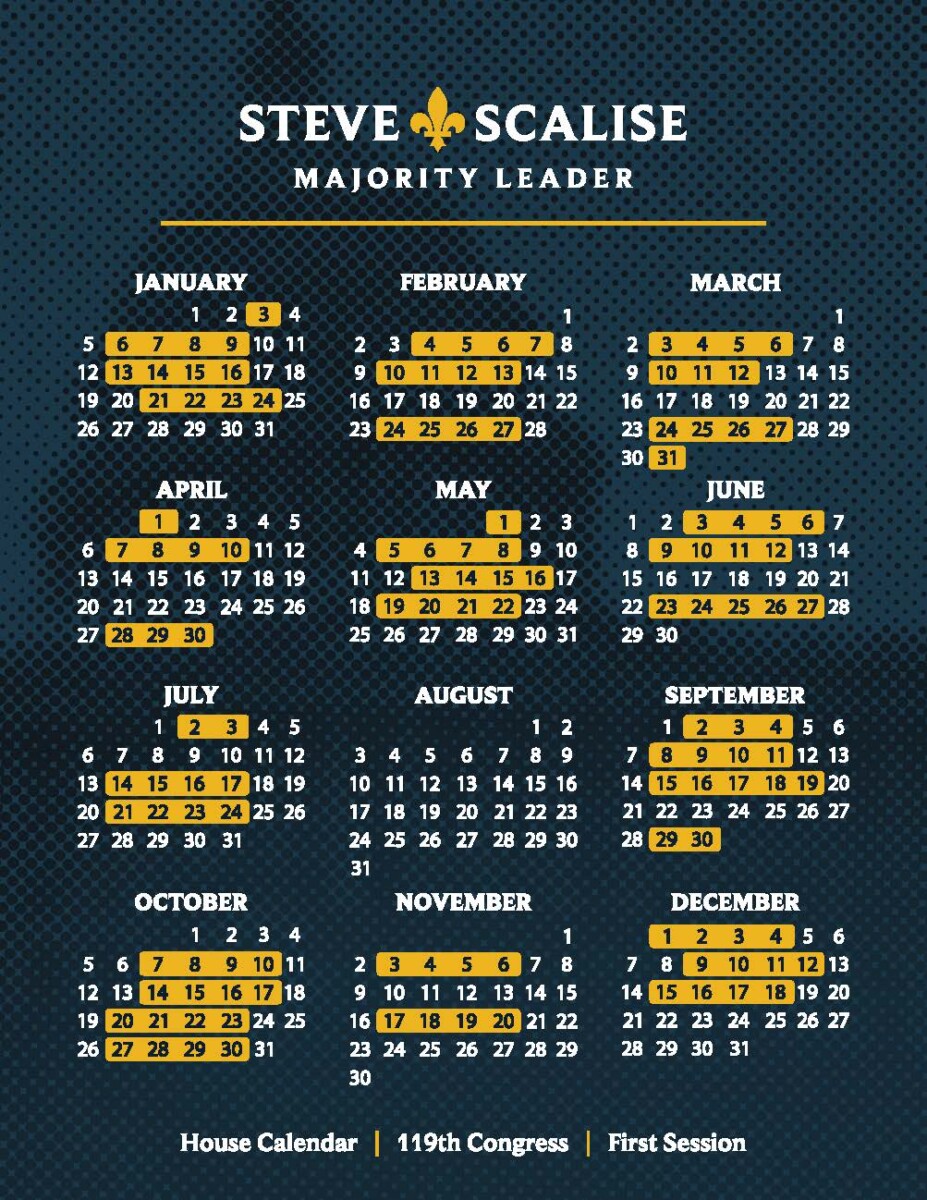
Members of the U.S. Congress try to spend as much time in their states/districts as possible. Both the House and Senate leadership have published session calendars for 2025. By reviewing these calendars, you can determine when your senators and congressman are likely to be “back home” by looking for dates not in session. Review the schedule documents below and find updated information at www.congress.gov/calendars-and-schedules.
House |
Senate |
|
 |
 |
What do you do now?
Use the instructions available at arsa.org/congress to get in touch with the offices that represent you and invite them to visit your facility on one of the dates for “district work.” For talking points and other guidance, visit arsa.org/legislative or contact ARSA.
Training & Career Development
Make ARSA Training Work
ARSA’s online training program represents its most-valuable benefit to the aviation industry: knowledge gained through training and experience. The association’s team has turned its decades of work on behalf of aviation maintenance into more than 80 hours of on-demand content.
While sessions are available for registration at any time – ARSA member discounts available – companies can also incorporate the association’s training into their regular programs:
(1) Subscription. Make up-front, bulk purchases of training hours. The details of each subscription can be customized, including focus on specific subject areas (e.g., human factors) or options for specially-priced session access after the initial hours have been used.
(2) “Championing” a session. Guarantee a certain number of attendees for training in a particular topic that will also be made available for general registration. Variations include open registration for a live session (i.e., company personnel participate at the same time as general registrants) or a company-specific live event for which a recorded version (not including any company-specific information) is made available for on-demand registration.
(3) Tailored training. Contract ARSA’s management firm Obadal, Filler, MacLeod & Klein, P.L.C. to produce or modify training specific to your organization. The team can then re-record it (or offer it as a separate live session) for ARSA’s training program. Tailored programs are priced differently from ARSA’s hourly rate and are administered by OFM&K, which allows for a client engagement and related attorney-client privilege for all discussion.
For more information about ARSA’s training program, review the menus below. If you have questions or would like to learn more about ways to integrate ARSA training into your own program, contact Vice President of Operations Brett Levanto (brett.levanto@arsa.org).
Government employees: Contact ARSA directly for auditing opportunities.
Registration: Registration and payment may be processed directly through the training platform/course catalog (free account creation required).
Technical questions and assistance: Click here for FAQ and technical support from training platform vendor.
Refunds: No refunds are granted for ARSA training sessions. When classes are canceled, registrants can choose from future courses of equal value. If a registrant is unable to attend a live session, their registration allows access to the on-demand, recorded version of the webinar.
IA Approval: A number of ARSA training sessions have been accepted for Inspection Authorization (IA) renewal credit. These sessions are denoted on their registration page with their FAA course acceptance number (in red).
Benefits: Registration for an ARSA-provided training session includes:
- Access to the live class session on the scheduled date (if applicable).
- Unlimited access to the on-demand, recorded version of the webinar to be made available after the live session is complete (or at time of purchase, for on-demand classes).
- A copy of the presentation and all reference material with links to relevant resources and citations.
- A certificate* upon completion of the session as well as any required test material.
OFM&K Training Portal: All of ARSA's training sessions are provided through OFM&K's training portal. As the training provider of choice for ARSA and a trusted resource for the aviation community, the firm's training materials represent a vital tool for entities pursuing regulatory compliance and business success. All of the courses are administered via PotomacLaw.InreachCE.com, which is not part of ARSA's website.
Complying with Part 145 – “Soup to Nuts” (Four Hours) Instructor: Sarah MacLeod Description: Specially recorded with a hand-picked audience for interactive discussion, this session thoroughly reviews 14 CFR part 145, discusses the application of the rule and overviews some practical implications of obtaining and maintaining a repair station certificate. Pricing Note: This is a four-hour session and is $300 for members and $600 for non-members. Click here to register and get access for 90 days.
Sessions Accepted for IA Renewal Credit Eight of ARSA's on-demand training sessions have been accepted by the FAA for Inspection Authorization renewal credit under 14 CFR § 65.93. Each session is currently available for registration and immediate access:Click here to purchase all eight sessions (plus one required prerequisite) at a “bundled” discount – let ARSA take care of your IA renewal requirements this year. Click here to purchase all eight sessions (plus one required prerequisite) at a “bundled” discount.
Aircraft Parts
Audit Activism & Prophylactic Lawyering
Drug & Alcohol Testing
Human Factors
Instructions for Continued Airworthiness
Parts 21, 43, 65, 145 (and others)
Public Aircraft"Going Global" - International Regulatory Law
Grassroots Advocacy
Recordkeeping – "Finishing the Job with Proper Paperwork"
The Fourth Branch of Government (Administrative Agencies and Procedures)
Self Disclosure Programs and Practices
(1) Subscription. Make up-front, bulk purchases of training hours. The details of each subscription can be customized, including focus on specific subject areas (e.g., human factors) or options for specially-priced session access after the initial hours have been used.
(2) “Championing” a session. Guarantee a certain number of attendees for training in a particular topic that will also be made available for general registration. Variations include open registration for a live session (i.e., company personnel participate at the same time as general registrants) or a company-specific live event for which a recorded version (not including any company-specific information) is made available for on-demand registration.
(3) Tailored training. Contract ARSA's management firm Obadal, Filler, MacLeod & Klein, P.L.C. to produce or modify training specific to your organization. The team can then re-record it (or offer it as a separate live session) for ARSA’s training program. Tailored programs are priced differently from ARSA’s hourly rate and are administered by OFM&K, which allows for a client engagement and related attorney-client privilege for all discussion.
For more information about ARSA's training program, review the menus below. If you have questions or would like to learn more about ways to integrate ARSA training into your own program, contact Vice President of Operations Brett Levanto (brett.levanto@arsa.org).The association’s training program is provided through Obadal, Filler, MacLeod & Klein, P.L.C., the firm that manages ARSA. To go directly to OFM&K’s online training portal, visit potomaclaw.inreachce.com. To learn more about the association’s training program and see course availability, visit arsa.org/training.
What training do you need? Contact ARSA to let the association know and help get it developed.
Celebrating Careers – Patrick “Paddy” Konkel
Opportunities abound in aviation. Earlier this year, a young technician named Patrick “Paddy” Konkel contacted ARSA after seeing a CNBC special on the maintenance workforce. His outreach led to a position with enterprise member AAR Corp.
ARSA’s communications team caught up with Paddy for the first of many discussions to show how he is creating a career in aerospace.
Listen to an individual determined to create a career in aerospace.
If the embedded video fails to play, please use the following URL in your browser: vimeo.com/1115899309/26b77bb2bb?share=copy.
From the Ground Up – A PSA on PSAs
By Robert Ryan, President, Ryan Strategies International
Note: This is an ongoing hotline series, to catch up:
(1) Watch the kickoff interview in the June 2025 edition.
(2) Learn about “the Awareness Problem” in the July 2025 edition.
Last month’s introduction of “the awareness problem” in aerospace career development included encouragement to use public service announcements (PSAs). Through such “PSA’s,” ARSA members can act in local communities by building awareness in the media that produces ongoing attention. Printers of newspapers, magazines, community bulletins as well as broadcasters of traditional and streaming media are always looking for content, which can produce continued exposure.
What is a PSA?
A short message in the media (radio, television, social site) disseminated for free to raise awareness of a social issue to change public attitudes or behaviors.
Gain public exposure for an issue or cause through a PSA requires meeting each outlet’s guidelines. Media is not obligated to accept and run a PSA unless there is a belief in the subject and the solution.
The National Association of Broadcasters suggests that the media carefully review requests for time and placement of PSAs based on the character and reputation of the group, the public interest content of the message, and the manner of presentation.
A classic PSA example from the youth of the hotline’s editor. Do you remember this one?
How can you produce a PSA?
Written documents, social media posts, PowerPoint presentations, or smartphone-shot video can be edited with readily-available tools and prepared for distribution. Personal or corporate social media distribution, press releases, or direct outreach to local media outlets provide options for distribution. Media consultants can provide creative direction and guidance.
How do you work with media outlets?
List local print and broadcast outlets (even social media influencers) by brainstorming with colleagues and family. Internet searches will reveal contacts like station managers, chief editors, or general submission options. Reach out and share your desire for free exposure because the workforce need is great and the opportunities for young adults are significant. It is a win-win proposition: safer the skies for everyone. Reach out with prepared materials, including production materials prepared beforehand; provide examples of “display” ads for print media ads and/or television and radio “spots.” These are your tools and talking points with management of each media outlet.
When you do gain free exposure, be sure to thank the media management in writing. They love receiving and posting Thank You cards in their lobby. It shows their commitment to the local communities they serve.
What is the message?
Filling the technical workforce is a challenge that deserves public attention. Creating awareness is the key. It is quite simple, yet very crucial for the future of aerospace as well as other technical opportunities in every community, every state, and every country.
Some examples showing how messaging can be simple (but presented broadly):
Short Video Spot
Voiceover:
“Who keeps us safe in the air?”
Visual (still images or live shots): Little girl looks up at an aircraft passing overhead, while a passenger looks back down from the window.
Voiceover:
“Perhaps the greatest reason is the people on the ground, just like you, who take care of aircraft. They ensure safe flight.”
Visuals:
Young woman in jumpsuit adjusting a jet engine, from underneath, and above. The jet engine morphs into a rotorcraft engine which morphs into a rocket: all with technical personnel.
Voiceover:
“These are Aviation Maintenance Technicians: trained professionals with experience, precise work, and diligence keep each flight safe.”
Visuals:
Four young AMT’s in jumpsuits facing the camera.
Voiceover:
“Aerospace need professionals, not just technicians but managers, communications specialists, accountants…if you can think of a job or profession it can be done for aviation business. Aerospace has careers as broad as the horizon.”
30 Second Radio Spot
In high school, my guidance counselor only talked about college and didn’t know much about anything else. I liked solving problems but wasn’t great in academics. When a friend just like me got a job in aerospace I realized that the industry was just for scientists and engineers, but for people that like to work with high tech tools to solve problems on aircraft. It turns out airlines, airports, maintenance facilities, space exploration, and local companies need my abilities now and there are many choices. Now I am on my way! So, don’t miss your flight! Check out the aerospace industry for opportunities today, now, with your basic talents—I guarantee there are more opportunities to succeed that going to college.
There are multiple guides on developing and airing PSAs, one guide from Purdue Global (which also provides tuition benefits to ARSA members and their families) provides and analysis of some famous television examples, and encourages direct contact the author.
Robert “Bob” Ryan is president of Ryan Strategies International, which provides business development for companies and non-profit entities to accelerate commerce and capture revenues in growing supply chain markets. The firm is based in Vancouver, Washington and helps consult with individuals businesses seeking to raise awareness and recruit new AMT workforce members. For more information, visit www.ryanii.com, call 503.250.2337, or email ryanstrategies@aol.com.
Regulatory Compliance Training
Test your knowledge of 14 CFR § 21.35, flight tests.
Click here to download the training sheet.

Membership
Tooting All Horns
The members participating in the Members Getting Members (MGM) program is growing and expanding—it is time to toot your horn, and ARSA’s – thank yourselves and others for contributing to our mutual success.
| MGM Program YTD 2025 | |||
| Referring Member | Referred Member | Referring Dues Discount | Month |
| Southwest Aerospace Technologies, LLC | Axcess Aviation Maintenance Services, Inc. | $120.00 | January |
| Air Transport Components, LLC | Tulsa Aerospace Component Overhaul and Repair Inc. | $120.00 | January |
| Southwest Aerospace Technologies, LLC | California Radomes, Inc. | $120.00 | February |
| Diversified Aero Repair, LLC | HIGH CLASS MRO INC | $60.00 | March |
| Compressed Gas Systems, LLC | DRJ Technologies | $120.00 | April |
| Diversified Aero Repair, LLC | Alliance Aeronautical Composites, LLC | $60.00 | April |
| Compressed Gas Systems, LLC | Tym’s LLC | $50.00 | April |
| Tym’s LLC | Corporate Air Parts, Inc. | $180.00 | April |
| Continental Aircraft Support, Inc. | Turbo Technologies, L.L.C. | $120.00 | April |
| Continental Aircraft Support, Inc. | Jet Air MRO, LLC | $120.00 | May |
| Alliance Aeronautical Composites, LLC | General Airframe Support, Inc. | $120.00 | June |
| Aero-Craft Hydraulics, Inc. | Compressed Gas Systems, LLC | $60.00 | July |
The discipline exercised by ARSA and its members has created steady growth in association membership numbers—we encourage members to get new members while we exercise the discipline and provide the benefits necessary to maintain and retain the steady growth.
| New Members YTD 2025 | ||
| Member Name | Member Type | Month |
| ARC145, LLC | R01 | January |
| Aviation Repair Group, LLC | R01 | January |
| Axcess Aviation Maintenance Services, Inc. | R02 | January |
| FACC Solutions, Inc. | R03 | January |
| FLG Technics, Inc. | R02 | January |
| MHI RJ Aviation Inc. | R05 | January |
| QT Aerospace, LLC | R01 | January |
| Tulsa Aerospace Component Overhaul and Repair Inc. | R02 | January |
| Aero Accessories, LLC | R01 | February |
| Aerotech of Louisville LLC | R02 | February |
| Alcor Inc. | Associate | February |
| California Radomes, Inc | R02 | February |
| Consolidated Fuel Systems, LLC | R01 | February |
| Integrity Testing & Safety Administrators, Inc. | Associate | February |
| Precision Airmotive | R02 | February |
| Aerocopter Component Services Ltd. | R02 | March |
| Cirrus Design Corporation | Associate | March |
| HIGH CLASS MRO INC | R01 | March |
| Redline Aviation Inc | R01 | March |
| RexAir Maintenance, LLC | R01 | March |
| Santa Monica Propeller Service, Inc. | R01 | March |
| Up North Aerospace Solutions LLC | R01 | March |
| Alliance Aeronautical Composites, LLC | R01 | April |
| AOG Aviation Spares LLC | R03 | April |
| Audacity Aviation | R01 | April |
| Corporate Air Parts, Inc. | R03 | April |
| DRJ Technologies | R02 | April |
| Global Engine Maintenance, LLC | R04 | April |
| LF Avionics, Corp | R01 | April |
| Servotronics, Inc. | R01 | April |
| Turbo Technologies, L.L.C. | R02 | April |
| Tym’s LLC | Affiliate | April |
| Jet Air MRO, LLC | R02 | May |
| Tassili Airlines | R05 | May |
| Airgroup Dynamics, Inc. | R03 | June |
| General Airframe Support, Inc. | R02 | June |
| Omnigas Systems, Inc. | R02 | June |
| TAI Acquisition Corporation dba Trimec Aviation Inc | R02 | June |
| Astrodyne International, Inc. | R01 | July |
| Blankenship, Dwayne | Affiliate | July |
| Samsel, Charles | Affiliate | July |
| Aero Propulsion Support, Inc. | R01 | August |
| Aero-Craft Hydraulics, Inc. | R01 | August |
| Aviation Brake Services, Inc. | R02 | August |
| California Precision Hydraulics, Inc. | R01 | August |
| Triumph Actuation Systems – Valencia Inc. | R01 | August |
| Triumph Actuation Systems – Yakima, LLC | R03 | August |
| United MRO Group, LLC | R01 | August |
Show our colors by displaying the ARSA logo – it is proof that you are serious about aviation safety and compliance!
Welcome & Welcome Back – New & Renewing Members
ARSA’s members give the association life – its work on behalf of the maintenance community depends on the commitment of these organizations. Here’s to the companies that joined or renewed in August:
New Members
Aero Propulsion Support, Inc., R01
Aero-Craft Hydraulics, Inc., R01
Aviation Brake Services, Inc., R02
California Precision Hydraulics, Inc., R01
TIC Aerospace, Inc., R01
Triumph Actuation Systems – Yakima, LLC, R03
Triumph Actuation Systems – Valencia Inc., R01
United MRO Group, LLC, R01
Renewing Members
Aero Instruments & Avionics, Inc., R04, 1991
Aeroworx, Inc., R02, 2010
Aircraft Systems Division of Com-Jet Corp., R03, 2011
Airframe Components by Williams, Inc., R02, 2003
AllClear Aerospace & Defense, Inc. dba AllClear Repair Services, Inc, R03, 2022
Boeing Company, Enterprise, 2000
Diversified Aero Repair, LLC, R01, 2023
Empire Airlines, Inc. dba Empire Aerospace, R04, 2002
Engine Disassembly Services, Inc. dba Engine Overhaul Services, R01, 2018
F&E Aircraft Maintenance, LLC (FEAM), R06, 2012
GA Telesis Engine Services, LLC, R02, 2024
Gyro Specialist, Inc., R01, 2011
Hot Section Technologies, Inc., R02, 2017
IBM Flight Operations, Assoc, 1997
Jet Center MFR dba Southern Oregon Skyways, R02, 2006
Mach II Maintenance Corp., R04, 2018
Northeast Aero Compressor Corp., R03, 2024
Pacific Aerospace, LLC, R01, 2005
Pearl River Community College, EDU, 2020
Aeronautical Technology, Inc. dba Precision Aero Technology, R03, 1993
Schaeffler Aerospace USA Corporation, R02, 2012
Signature Engines, Inc., R02, 2017
Turbine Weld Industries, LLC, R03, 2020
A Member Asked…Contracting European work?
Q: Looking for clarification for contracting work for an EASA customer. The MAG, Section B, Appendix 1 (Supplement Guidance), Paragraph 16.2.2, reads:
“Contracting to Non-EASA-Approved Sources. If the repair station contracts a maintenance function to a non-EASA-approved source, the repair station must be appropriately rated itself to perform the work.”
Does that mean if a repair station contracts chrome plating the repair station must also be rated for chrome plating?
A: When a repair station in the U.S. uses another repair station that does not have an EASA certificate, the originating repair station (you) have to treat that supplier as a non-certificated source under § 145.217. The repair station can contract with another person to perform any work of any article for which the certificated repair station (you) is rated (see, § 145.201(a)(2)).
Article is defined in § 145.3(b) to mean an aircraft, airframe, aircraft engine, propeller, appliance, or component part.
Of course, the “function” must be approved, and the certificated repair station must keep a list of its maintenance function providers (both certificated and non). ARSA’s tools for members has a model form that tracks the types of certificates held by each maintenance function vendor/contractor so which vendor/contractor is approved by which CAA can be determined and available to personnel to ensure appropriate inspections or tests can be done. Of course, if articles returned from maintenance function vendors are always inspected or tested, it would make things easier.
Have questions about aviation regulatory compliance, legislative policy, or ARSA resources? Ask ARSA first!
Choices Galore or Fractional Advertising
Ever wondered how an ARSA ad can expand your business?
With the new fractional ad structure, choices include weekly Event Banners to 3, 6, or 12 month displays. Prices are scaled to match the exposure.
Have ARSA tout participation in events through a new Event Banner display in ARSA’s weekly periodical distribution.
Get details at ARSA’s advertising page or go straight to Michael O’Born.
Resources
ARSA strives to provide resources to educate the general public about the work of the association’s member organizations; should you need to provide a quick reference or introductory overview to the global MRO industry, please utilize AVMRO.ARSA.org.
Careers in Aviation Maintenance
How do you share the industry’s story with the people who could be its future? Teach them about the great work done every day to keep the world in flight. (Even if we can’t recruit somebody, we sure can make them thankful for our work.)
ARSA Member Benefits
From access to industry expertise to growing your own through education and training, ensure your company gets the most out of its investment in ARSA.
U.S. Legislative Action Center
ARSA requests its members’ assistance to keep FAA reauthorization front and center on the congressional agenda and ensure our workforce priorities are included. Please use ARSA’s grassroots action center (sponsored by Aircraft Electric Motors) to send a quick note to your elected representatives in support of our efforts.
Industry Meetings & Events
| ATEC Fly In | 9/16-19/2025 | Washington, DC |
| MRO Europe | 10/14-16/2025 | London |
| NBAA BACE | 10/14-16/2025 | Las Vegas, Nevada |
| UAFA Annual Conference | 11/19-20/2025 | Boise, Idaho |
| Aerial Works Safety Conference | 12/7-9/2025 | Boise, Idaho |
| ARSA Annual Conference | 3/17-20/2026 | Arlington, Virginia |
the hotline is the monthly publication of the Aeronautical Repair Station Association (ARSA), the not-for-profit international trade association for certificated repair stations. It is for the exclusive use of ARSA members and federal employees on the ARSA mailing list. For a membership application, please call 703.739.9543 or visit arsa.org/membership/join. For information about previous editions, submit a request through arsa.org/contact. This material is provided for educational and informational purposes only. It does not constitute legal, consulting, tax or any other type of professional advice. Law, regulations, guidance and government policies change frequently. While ARSA updates this material, we do not guarantee its accuracy. In addition, the application of this material to a particular situation is always dependent on the facts and circumstances involved. The use of this material is therefore at your own risk. All content in the hotline, except where indicated otherwise, is the property of ARSA. This content may not be reproduced, distributed or displayed, nor may derivatives or presentations be created from it in whole or in part, in any manner without the prior written consent of ARSA. ARSA grants its members a non-exclusive license to reproduce the content of the hotline. Employees of member organizations are the only parties authorized to receive a duplicate of the hotline. ARSA reserves all remaining rights and will use any means necessary to protect its intellectual property.
© 2025 Aeronautical Repair Station Association