


2025 – Edition 9 – October 3
Table of Contents
Note: The order of material varies in hotline emails, but is always presented the same on this landing page. Readers scrolling through content on or printing this page will find it organized consistent with the table of contents.
President’s Desk
Dedication Pays
The elected terms for the association’s Officers and Board of Directors begin and end at its annual meeting in October, so by the distribution of the next monthly newsletter this space belongs to the new volunteer ARSA leader.
Not this year. To quote Leonardo DiCaprio’s character in “The Wolf of Wall Street”: I’m not leavin’! Unlike the movie, this is not defiance but rather taking advantage of the board’s ongoing evolution. When our friend Bob Mabe departed because of a career change, I stepped in through an orderly transition just before the Annual Conference in March.
ARSA’s board is a collaborative body supporting the association’s professional team. Every member shares dedication to bolstering ARSA’s work. That dedication can be shown through event sponsorship and attendance, assistance with resource development, active support for policy priorities, engagement with elected officials, and ensuring the broadest possible reach of the association’s benefits. Serving as the president, is supported by the willingness to support the industry through collective works and elevates my employer’s knowledge and exposure to the politics of aviation safety.
I’m looking forward to speaking to you through this space for another year. Given the opportunity to show my own dedication to the association – and recognizing that every director shares high expectations for support – the time will be well spent highlighting the value continuously returned to our “real” work.
 |
John Riggs 2025 ARSA president | Director of Airworthiness, Chromalloy |
Conference 2026
Getting Ready
March 17-20, 2026
Registration for 2026 opens with the hotline’s Dec. 5 distribution. You can’t be first in line if you’re not planning now. Budget for sponsorship, attendance, and travel. The event will center at the Ritz-Carlton, Pentagon City in Arlington, Virginia with supporting activities around the nation’s capital.
Basic Schedule
Executive to Executive Briefings: Tuesday, March 17, 2026
Participation by industry executives with senior executive branch officials and key aerospace allies is limited to annual conference sponsors.
Legislative Day: Wednesday, March 18, 2026
Dedicated to educating both the aviation maintenance industry and elected officials. Learn (or brush up) on what ARSA does and prepare for afternoon visits with targeted Capitol Hill legislators and staff.
Annual Repair Symposium: Thursday, March 19, 2026
The centerpiece of Conference week, ARSA convenes a full day of substantive panel discussions covering key regulatory compliance and business issues. After the keynote address, regulators from across the world join the “Opening Salvo” conversation, followed by lunch, and an afternoon of practical regulatory and business discussion.
Member Day: Friday, March 20, 2026
ARSA’s leadership briefs members on the state of the association as well as goals and priorities for the coming year. Participants then close out the event by participating in breakout and/or training sessions focused on key aerospace topics. The Conference ends by 12:00 p.m. EDT.
2025 in Review
Look back at last year to bask in the memories or see what you’ve been missing.
Executive to Executive Briefings: Tuesday, March 17, 2026
Participation by industry executives with senior executive branch officials is limited to annual conference sponsors at the Administratium, Platinum, Gold, or Silver levels. In past years, meeting participants included representatives from the U.S. Departments of Commerce, Defense, Labor, State, and Transportation as well as the fellow trade associations and industry interest groups.| 8:30 a.m. | Coffee & Light Breakfast |
| 9:15 a.m. | Introductory Briefing
Christian A. Klein, ARSA Executive Vice President Klein will review the association’s antitrust statement, discuss the purposes and agenda of the 2026 E2E, and review recent ARSA initiatives. |
| 10:00 a.m. | Tariffs, Refunds, and Enforcement
Cortney Morgan, Esq. and Cormac Connor, Esq., Partners, Husch Blackwell Morgan and Connor will discuss the Supreme Court’s recent tariff decision, its implications, and opportunities to seek refunds. They will also review the Trump Administration’s general legal enforcement posture. |
| 10:45 a.m. | U.S. Department of State
Marco M. Sylvester, Deputy Assistant Secretary for Transportation Affairs, Bureau of Economic and Business Affairs With an eye on the volatile geopolitical environment, Deputy Assistant Secretary Sylvester will discuss issues impacting international relationships, the negotiation process, and opportunities to influence bilaterals in these times. |
| 11:30 a.m. | TBD |
| 12:15 p.m. | Lunch/Midday Break |
| 1:15 p.m. | Trade and Labor
Jennifer Bang, Assistant U.S. Trade Representative for Intergovernmental Affairs and Public Engagement, Invited Ms. Bang will explain the rationale for the Trump administration’s sweeping tariffs and how trade policy will evolve over the remainder of President Trump’s term. |
| 2:00 p.m. | Solving the Workforce Crisis: Grants, Apprenticeships, and Growth
Ryan Goertzen, Vice President of Workforce, AAR and Etain Connor, Director of Community Affairs, FEAM What are leading aerospace maintenance companies doing to address the technician shortage? What can industry do together? |
| 3:00 p.m. | Break with Coffee, Tea, Soda, Iced Tea |
| 3:15 p.m. | Economic Impacts
Livia Hayes, Director, Market Intelligence Team, Transportation and Services Practice, Oliver Wyman and Paul Harper, Vice President, Oliver Wyman Vector Hayes and Harper will reveal the findings of the most recent Oliver Wyman MRO industry forecast and lead a roundtable discussion of factors and trends impacting demand for aerospace maintenance services. |
| 4:00 p.m. | Wrap up Discussion
Participants will discuss key takeaways and opportunities for collective action. |
Legislative Day: Wednesday, March 18, 2026
The day dedicated to educating both the aviation maintenance industry and elected officials. Learn (or brush up) on what ARSA does and what you can do so you're ready for afternoon visits with targeted Capitol Hill legislators and staff.| 7:30 a.m. | Registration and Breakfast |
| 8:00 a.m. | Welcome and Introductions
Christian Klein, Executive Vice President, ARSA Alex De Gunten, Vice President of Government & Industry Affairs, HEICO and ARSA 2026 Government Affairs Chairman |
| 8:15 a.m. | It’s All About Your Industry and Your Company
Christian Klein, Executive Vice President, ARSA Last year was another banner year for the maintenance industry on Capitol Hill. We will discuss recent accomplishments, the political landscape, industry priorities for 2026, and building on our success. |
| 9:00 a.m. | The View from the Hill
Karen Huggard, Vice President of Government Affairs, National Air Transportation Association, invited Jarrod Thompson, Vice President for Legislative and Regulatory Policy, Airlines for America, invited Moderator: Christian Klein, Executive Vice President, ARSA The looming air traffic control reform bill provides opportunities to adjust FAA policy and related congressional mandates before the next FAA reauthorization. |
| 9:45 a.m. | Break |
| 10:00 a.m. | Playing the Political Game
Naveen Rao, Principal, H4 Advisors LLC Madison Smith, Principal, Ridge Path Strategies Christian Klein, Executive Vice President, ARSA The 2026 congressional elections provide an opportunity for the aviation maintenance industry to further build its political visibility and effectiveness. Klein will review individual campaign law finance contribution limits, discuss ways companies can build relationships with candidates, and explain how members can tap into ARSA PAC resources. |
| 11:00 a.m. | Release of ARSA's 2026 Global Fleet & MRO Market Report
Livia Hayes, Director, Market Intelligence Team, Transportation and Services Practice, Oliver Wyman Vector |
| 11:30 a.m. | Wrap up Discussion
Christian A. Klein, ARSA Executive Vice President A quick review of topics for this afternoon’s Hill meetings with an opportunity to ask questions. |
| 12:00 p.m. | Adjournment and Box Lunch |
| 1:00 p.m. – 4:00 p.m. | Congressional Meetings |
| TBD | Presentation of 2026 ARSA Legislative Leadership Award to Sens. Elizabeth Warren (D-Mass.) and Tim Sheehy (R-Mont.) |
| TBD | House Aviation Subcommittee Staff Briefing |
| 4:00 p.m. | Symposium Registration Open (for non-Legislative Day attendees) |
| 5:30 p.m. | Ice Breaker Reception |
| 7:00 p.m. | Special Invitation Dinner |
Annual Repair Symposium: Thursday, March 19, 2026
The centerpiece of Conference week, ARSA convenes a full day of substantive panel discussions covering key regulatory compliance and business issues. After the keynote address, regulators from across the world join the full-morning "Opening Salvo" conversation, followed by lunch and an afternoon of practical regulatory and business discussion.| 7:30 a.m. | Registration and Breakfast |
| 8:00 a.m. | Welcome and Introductory Remarks
Sarah MacLeod, Executive Director, ARSA Christian Klein, Executive Vice President, ARSA Find out how the association is advocating for your interests with legislators, regulators, and the media. Information on how you can help advance the industry’s collective work. |
| 8:30 a.m. | Session 1: Fireside Chat with the FAA
Tina Amereihn, Associate Administrator, Aviation Safety Oversight and Certification Organization Moderator: Sarah MacLeod, Executive Director, ARSA |
| 9:00 a.m. | Break with Coffee/Tea |
| 9:30 a.m. | Session 2: Opening Salvo—Conversations with the Regulators
Stuart Algar, Chief Surveyor, Head of Airworthiness, United Kingdom Civil Aviation Authority Lawrence Josuá Fernandes Costa, Continuing Airworthiness Certification Manager, Department of Flight Standards, ANAC Brazil Ludovic Aron, Washington Representative, EASA Karl Specht, Principal Coordinator Organisation Approvals, EASA, Invited Mallory Naill, Executive Director, Aircraft Certification Service, FAA Chris Parfitt, Manager, General Aviation Group (AFS-340), Flight Standards Service, FAA Moderator: Christian Klein, Executive Vice President, ARSA International aviation safety agencies will provide updates on the regulations, policies, and procedures of importance to the global aerospace sector. |
| 10:45 a.m. | Networking Break (Approximate) – Coffee/Tea |
| 12:30 p.m. | Lunch with Lessons from a Hall of Famer John Goglia, Member, National Aviation Hall of Fame |
| 2:00 p.m. | Session 3: Foreign Repair Station D&A/SMS implementation
Ric Peri, Vice President, Government & Industry Affairs, Aircraft Electronics Association Chris Parfitt, Manager, General Aviation Group (AFS-340), Flight Standards Service, FAA Stuart Algar, Chief Surveyor, Head of Airworthiness, United Kingdom Civil Aviation Authority Moderator: Brett Levanto, Vice President of Operations, ARSA Foreign and domestic part 145 certificate holders are dealing with new regulatory mandates. The panel will discuss lessons learned in the implementation of SMS requirements for U.S. repair stations and ARSA’s compliance, advocacy, and education efforts related to foreign repair station D&A. |
| 3:00 p.m. | ARSA Quiz Show |
| 3:30 p.m. | Networking Break |
| 4:00 p.m. | Session 4: Perspectives on Career Growth
Adam Flynn-Tabloff, Director of Policy, Research, and Evaluation, Office of Career and Technical Education, U.S. Department of Education Tristan McDonald, President, Federal Aerospace Institute Andrew Rachmell, Director, Educational Partnerships, Purdue Global Brett Levanto, Vice President of Operations, ARSA Many call a mechanic’s certificate a “license to learn,” but any career in aerospace maintenance – certificated or not – is a “license to grow.” Engage three different perspectives on how individuals and companies can turn entry level into life long. |
| 5:00 p.m. | The Aerospace Happy Hour |
Member Day: Friday, March 20, 2026
ARSA's leadership briefs members on the state of the association as well as goals and priorities for the coming year. Participants then close out the event by participating in breakout and/or training sessions focused on key aerospace topics. The Conference ends by 12:00 p.m. EDT.| 8:00 a.m. | Annual Membership Meeting & Breakfast |
| 9:30 a.m. | Break |
| 10:00 a.m. | Breakout Sessions
Integrate or Overlay A training/discussion session on “designing, implementing, and maintaining” a safety management system that integrates with existing quality programs. Foreign D&A Waivers and ExemptionsA training/discussion session to help repair stations get ahead of new drug & alcohol testing requirements while understanding rule applicability regardless of location. |
| 12:00 p.m. | Conference Ends |
In-Person
All substantive and social activities were hosted at the Ritz-Carlton, Pentagon City in Arlington, Virginia. Legislative Day participants will head to Capitol Hill for meetings with congressional offices as appropriate.
Livestream
The majority of Conference events will be available to livestream viewers via a Vimeo web-player embedded into a page on ARSA.org. All in-person registrants will be able to name a "Conference Ambassador" as a contact to access the livestream and bring the event back to their home facilities.
Pricing
| Executive to Executive Briefings – Tuesday, March 17 | ||||
| Open to Administratium, Platinum, Gold, and Silver-level sponsors.(1) | ||||
| Legislative Day – Wednesday, March 18 | ||||
| Members | Non-Members | |||
| In Person or Livestream | $450 | $750 | ||
| Symposium – Thursday, March 19 | ||||
| In Person or Livestream(2) | $925 | $1,500 | ||
| Legislative Day & Symposium Bundle | ||||
| In Person or Livestream | $1,250 | $2,000 | ||
| The Super Bundle (Silver Sponsorship, E2E, Legislative Day, & Symposium) | ||||
| In Person or Livestream | $4,200 | $4,500 | ||
| Member Meeting & Training/Breakouts – Friday, March 20 | ||||
| In-person | Free with Symposium registration. | |||
| Livestream | ||||
(2) Registration fees may be waived for government personnel, members of the media, speakers, and other support personnel or special guests upon approval by the ARSA event team.
Administratium – $15,000
What is Administratium? An element aerospace professionals see every day (click here to learn more). Notation in all publicity, marketing and periodicals (e.g., the hotline, Dispatch, ARSA team email signatures, conference attendee contact list, specific email alerts to association contacts), recognition in event materials and from the podium, specific thank you in ARSA periodicals, additional advertising placement via ARSA’s communications, complimentary registrations for three (3) participants in the Executive to Executive Briefings as well as three (3) in Legislative Day, and free livestream access for personnel unable to attend in person. At the Administratium Level, sponsors may select one of the following* to specifically support (please note the list in this document does not reflect current availability):- Annual Repair Symposium – Ice Breaker Reception
- Annual Repair Symposium – Thursday Happy Hour
- General Sponsorship
Platinum – $10,000
Notation in all publicity, marketing and periodicals (e.g., the hotline, Dispatch, ARSA team email signatures, conference attendee contact list, specific email alerts to association contacts), recognition in event materials and from the podium, specific thank you in ARSA periodicals, complimentary registrations for three (3) participants in the Executive to Executive Briefings as well as three (3) in Legislative Day, and free livestream access for personnel unable to attend in person. At the Platinum Level, sponsors may select one of the following to specifically support (may not reflect current availability for 2025):- Online Conference Experience
- Executive to Executive Briefings
- Legislative Day – All Day
- Congressional Directories/Resources
- General Sponsorship
2025 Platinum Sponsors
 |
 |
 |
 |
 |
 |
 |
 |
Gold – $7,500
Notation in all publicity, marketing and periodicals (e.g., the hotline, Dispatch, ARSA team email signatures, conference attendee contact list, specific email alerts to association contacts), recognition in event materials and from the podium, specific thank you in ARSA periodicals, complimentary registrations for two (2) participants in the Executive to Executive Briefings as well as two (2) in Legislative Day, and free livestream access for personnel unable to attend in person. At the Gold Level, sponsors may select one of the following to specifically support (may not reflect current availability for 2025):- Legislative Priorities Brochures/Resources
- Digital Companion/Electronic Materials
- Legislative Day – Continental Breakfast
- Legislative Day – Congressional Briefing and Luncheon
- Annual Repair Symposium – Continental Breakfast
- Annual Repair Symposium – Luncheon with Special Guest
- Nametag Lanyards
- Hotel Room Keys
- General Sponsorship
2025 Gold Sponsors
 |
 |
 |
 |
 |
 |
Silver – $3,500
Notation in all publicity, marketing, and periodicals (e.g., the hotline, Dispatch, ARSA team email signatures, conference attendee contact list, specific email alerts to association contacts), recognition in event materials and from the podium, complimentary registrations for one (1) participant in the Executive-to-Executive Briefings as well as one (1) in Legislative Day. At the Silver Level, sponsors may select one of the following to specifically support (may not reflect current availability for 2024):- Annual Repair Symposium – Coffee Break (5)
- General Sponsorship
2025 Silver Sponsors
 |
 |
 |
Supporter – $2,500
Notation in all publicity, marketing, and periodicals (e.g., the hotline, Dispatch, ARSA team email signatures, specific email alerts to association contacts), and recognition in event materials and from the podium.Contributor – $500 to $2,499 (or equivalent support)
Notation in some publicity, marketing, and periodicals (e.g., the hotline, Dispatch), and recognition in event materials and from the podium.
2025 Contributor
 |
 Those seeking other options may consider these hotels (there are no ARSA-related specials or promotions at these locations):
Embassy Suites by Hilton Crystal City National Airport 1393 S Eads St. Arlington, Virginia, 22202
Residence Inn Arlington Capital View 2850 South Potomac Avenue Arlington, Virginia, 22202
DoubleTree by Hilton Hotel Washington DC – Crystal City 300 Army Navy Drive Arlington, Virginia, 22202
Crowne Plaza Washington National Airport 1480 Crystal Drive Arlington, Virginia, 22202
Hampton Inn & Suites Reagan National Airport 2000 Richmond Highway Arlington, Virginia, 22202
Radisson Hotel Reagan National Airport 2020 Richmond Hwy Arlington, VA 22202
Holiday Inn National Airport/Crystal City 2650 Richmond Highway Arlington, Virginia, 22202
The Leo Weston Award for Excellence in Government Service
First bestowed on Leo Weston himself in 2005, the Weston award honors an instrumental figure in ARSA's birth by recognizing individuals who embody his commitment to the industry's safety and success. The symposium provides a venue for association members and invited guests from around the world to network and discuss issues that matter to the aviation maintenance industry. It is the perfect time to respect the history of the repair station community and honor the good works of those who support it.
Click here to learn more about Leo, the award bearing his name, and those who have received it.The Legislative Leadership Award
The association regularly recognizes members of Congress who have provided outstanding support to the aviation maintenance community by supporting policies beneficial to the industry. Honorees have each been key in moving forward specific legislation advancing priorities championed by ARSA on behalf of its members.
Click here to see past updates regarding Legislative Leadership Award recipients.The "Golden Shovel" Award
From time to time, ARSA recognizes individuals – usually at the time of their retirement – who have spent their careers in steadfast devotion to good business, good safety, and good oversight. In the colorful illustration of Executive Director Sarah MacLeod, these professionals have spent their lives shoveling against the tide of government bureaucracy; their achievement in never giving up is acknowledged through the "Golden Shovel Award."
Click here to learn more about the "Shovel" and see who has received it.Photos
ARSA has created a Google Album including photos taken during the 2026 Annual Conference, which allows participants to share their own photos (Sharing event photos constitutes consenting to their use/distribution in association with Conference-related publicity for this or future events, at ARSA’s discretion). To see the album, click here.Recordings
The following excerpts were provided to ARSA members via the hotline newsletter. They are included here as examples of the event's content.
From Legislative Day – Playing the Political GameLooking ahead to November’s midterm elections, this ARSA-led discussion helped set the stage for Legislative Day participants and is provided for the benefit of members getting politically active back home.
From Legislative Day – Market Report ReleaseLeaders from Oliver Wyman Vector presented report findings to Legislative Day participants on March 18, illustrating the current and projected states of the North American and global aircraft fleets and related impacts on maintenance demand. The briefing is provided in its entirety for the benefit of members.
From the Symposium – What ARSA Has Done LatelyOn March 19, ARSA Executive Director Sarah MacLeod and Executive Vice President Christian Klein opened the Symposium portion of the Annual Conference with their regular review of ARSA’s work and a challenging question: How does ARSA measure up?
From the Symposium – Lessons from a Hall of FamerAfter accepting the Weston Award on March 19, Goglia shared the benefit of his experience and enthusiasm with Conference participants. His presentation and subsequent Q&A are provided for the benefit of ARSA members.
From the Symposium – Reciprocal AcceptanceThe FAA’s Chris Parfitt made a big announcement on March 19. He officially reported, in the presence of international CAA colleagues and ARSA members, the FAA has begun the rulemaking process to institute an amendment to part 43 requested in 2020 by ARSA.
From the Symposium – Perspectives on Career DevelopmentThe third day of the Annual Conference consistently closes with a session considering career growth and continuous learning opportunities for maintenance professionals. Workforce-focused discussions never end in aerospace, so this session is provided for the benefit of ongoing member engagement and action.
Annual Member MeetingOn Friday, March 20, ARSA Vice President of Operations Brett Levanto conducted the association’s Annual Member Meeting. A recording of Levanto’s presentation is provided for the benefit of all members.
Planning Ahead
Help ARSA’s team put together the 2026 Annual Conference by answering a few questions at www.surveymonkey.com/r/ARSAConferencePlan.
ARSA Works
FAA Needs More Convincing
On Sept. 30, the FAA rejected the ARSA-led industry petition to amend the FAA’s recently issued rules expanding drug and alcohol (D&A) testing obligations outside the United States for the first time.
The FAA’s December final rule imposes D&A requirements on foreign repair stations performing work on U.S. registered air carrier aircraft. The petition proposed 10 changes to simplify compliance, oversight, and enforcement. The agency’s rejection cited immediacy of safety concerns, priority of other issues, and resources. ARSA is reviewing the rejection to determine the viability of a petition for reconsideration.
The petition was ARSA’s most-recent engagement in the decades-old effort to limit burdens resulting from Congress’ 2012 legislation requiring international expansion of testing rules “consistent with the applicable laws” of the country where the repair station is located. The FAA long struggled with the expansive mandate, unsupported by a safety argument. The agency’s final rule makes certificate holders responsible for determining the consistency of U.S. D&A obligations with foreign nations’ laws, abdicating the FAA’s responsibility to set clear standards.
In addition to ARSA, the petition was signed by the Aviation Suppliers Association, the General Aviation Manufacturers Association, the Modification and Replacement Parts Association, the National Air Carrier Association, the National Air Transportation Association, the National Business Aviation Association, and the United Aerial Firefighters Association.
To read the complete petition, click here or go to the rulemaking docket.
FAA Stays True to Falsification
On Sept. 3, the Federal Register published the FAA’s final rule consolidating the many falsification-related sections across 14 CFR into the new part 3, subpart D. The publication followed through on the agency’s April 2024 consolidation proposal by correcting an issue highlighted by ARSA and multiple other industry groups through which the agency would’ve expanded its authority to police “honest mistakes” (a term used by multiple commenters to criticize the rulemaking).
The proposed § 3.405 would have given the agency discretion to act against the certificate of a person found to have made an incorrect entry on an application or other required record.
“If a person performing maintenance or inspection on an article subject to part 43 unknowingly makes an incorrect entry or omission in a record, §§ 43.9 and 43.11 provide a clear basis for the FAA to address adverse safety impacts, both in real time and through enforcement action,” the comments coordinated by ARSA said. If the statements were incorrect because of improper work, there are plenty of rules under which the individual making them – and likely others – would be subject to oversight.
In the final rule, the FAA agreed:
“[The] FAA revises proposed §§ 3.405 and 402.5 to align more closely with the structure of 14 CFR 60.33(c) and 67.403(c) regarding incorrect statements. Regarding § 3.405, rather than proscribing incorrect statements as proposed in the NPRM, this final rule provides that an incorrect statement or omission of fact may serve as a basis for suspending, modifying, revoking, rescinding, removing, or withdrawing an acceptance, approval, authorization, certificate, rating, declaration, designation, qualification, or similar, or denying an application or request for reconsideration, or similar, issued or granted by the Administrator. This change prevents a strict liability application of sanctions for incorrect statements and omissions and instead allows FAA to take appropriate remedial action tailored to the circumstances surrounding the incorrect statement or omission.”
To read the final rule, click here.
See ARSA’s analysis of the new rule in this month’s “Layman Lawyer.”
Following Up on FAA Restricted Category Listening Session
On Sept. 10, ARSA Executive Director Sarah MacLeod participated in an on-site listening session regarding restricted category aircraft certification and operation. The full-day event produced discussion regarding agency oversight, civilian/military coordination, and information/data availability.
The following topics were covered during the meeting:
(1) Inconsistent and prolonged FAA certification timelines.
(2) Issues in sharing operational and safety data between military and civilian operators.
(3) Alignment between military maintenance standards and civilian airworthiness directives.
(4) Bureaucratic and administrative hurdles to certification.
(5) Feasibility of delegating conformity work.
MacLeod attended the meeting representing ARSA’s management firm, Obadal, Filler, MacLeod, & Klein, P.L.C. The law firm in January launched a survey gathering experience with certification and operation of restricted category aircraft in the United States. In order to assist with “meaningful discussion” (the agency’s goal) regarding the subject, ARSA encourages its members to continue using the survey or contacting the association with experience/questions/concerns related to restricted category certification and/or operation.
Gather industry experience will assist in pushing certificate holders to stand up for compliance with the plain language of the the applicable regulations, rather than responding to preferences of the agency. All interested parties are encouraged to complete the survey. Collected information will be referred to the appropriate FAA and industry contacts throughout the engagement.
To participate in the survey, go to:
https://www.surveymonkey.com/r/FAA_RC_ListeningSession
Respondents may voluntarily provide contact information that will be used only for clarification on any responses provided. Although providing contact information will not create an attorney client relationship with the law firm, the information provided will not be released without a demand from a court of competent jurisdiction.
For more information or questions about the survey, contact ofmk@potomac-law.com.
Preventing Burdensome AC for PMA Applications
On Sept. 12, ARSA joined five other aviation trade associations – led by the Modification and Replacement Parts Association (MARPA) – in commenting on FAA Draft Advisory Circular (AC) 33-13, “Sample Size Considerations for Comparative Test and Analysis for Turbine Aircraft Engine and APU, PMA, and Third-Party Repair Parts.”
As reported when ARSA learned of the draft AC on Aug. 6, the AC attempts to provide “practical approaches to define sample sizes” necessary for statistical analysis demonstrating equivalency by a PMA applicant to an approved article. The guidance’s implication that such analysis is necessary for all applications would impose an unnecessary burden on the industry. Statistical comparison is inappropriate where features can be directly measured, such as direct dimensional analysis – it may be a tool available to support equivalency during an application but need not be imposed as one.
The comments directed the FAA to focus on specific safety concerns rather than impose blanket expectations for statistical measurement. Through an extensive issue background, the group’s submission demonstrated the “Min-Max Measured” paradigm as the long accepted methodology for both industry use and FAA oversight. The paradigm is defined in FAA Order 8110.42B:
“Variations in the sample measurements and accepted engineering practices determine the tolerances in part dimensions. The resulting tolerances for the PMA part should not exceed the minimum and maximum dimensions measured on the sampled approved parts. Exceeding these limits requires substantiation.”
Establishing this foundation, the comments then list a series of specifically objectionable elements in the draft AC before requesting the FAA’s withdrawal of the guidance entirely.
“We believe that issuing this AC is not necessary and would only add confusion by adding guidance that disagrees with existing guidance in AC 21.303-4 and AC 33-8,” the comments said. “We believe that the FAA should work with specific applicants on closing compliance / understanding gaps. The FAA could also develop specific guidance for showing compliance to particular regulations, like AC 33.83-1 and AC 33.87-2.”
In addition to ARSA and MARPA, the comments were supported by the Aviation Suppliers Association, the Commemorative Air Force, the International Air Transport Association, and the National Air Carrier Association.
To read the complete draft AC, click here.
To read the complete comments, click here.
The Definition of Part-IS
The European Union Aviation Safety Agency (EASA) Part-IS (Information Security) provides a framework of requirements for aerospace organizations. Similar to the safety management systems favored by the Europeans in addition to existing quality programs, Part-IS standards include adopting an Information Security Management System (ISMS), defining clear policies and roles, and preparing for incident detection, response, and recovery.
ARSA’s EASA contacts (well known as participants in the Annual Conference each March) have provided Part-IS resources and access to continued updates. The association encourages international repair stations with European approvals to review and seek more information as necessary:
(1) The EASA Part-IS website: part-is.eu.
(2) Materials (video recording and presentations) for a June workshop provided by EASA on Part-IS: www.easa.europa.eu/en/newsroom-and-events/events/part-implementation-workshop-2025
(3) The revised (in July) AMC/GM to Part-IS, taking into account the first experience feedback from implementation: www.easa.europa.eu/en/document-library/acceptable-means-of-compliance-and-guidance-materials/amc-gm-part-isior-issue-1-0.
(4) Access to community network relating Part-IS news (visit the page and register for updates): www.easa.europa.eu/community/group/16/members.
For clarification on Part-IS application, see this month’s “A Member Asked.”
Final Documents/Your Two Cents
This list includes Federal Register publications, such as final rules, Advisory Circulars and policy statements, as well as proposed rules and policies of interest to ARSA members.
Special Attention
Going Long for Goglia
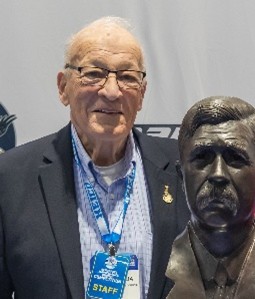
John Goglia, photo courtesy NAA.
In September, the Campaign Committee for the John J. Goglia Trophy Endowment invited ARSA members to support establishing a National Aeronautic Association award for aviation maintenance excellence.
Learn more about the campaign.
John has been known to ARSA’s executive team since long before he accumulated his now-formidable record of public service and recognition. He was not yet “the Honorable”, but an outspoken certificated mechanic and union representative. As an association also known for its outspoken leadership, the subsequent decades of collaboration with “Dr. John” have included vigorous, entertaining, and humorous discussions that always resulted in progress beneficial to the industry.
ARSA’s management firm assisted in the business formation of the Aerospace Maintenance Council and the AMC Competition, which is John’s great passion. Ultimately, the competition is a celebration of the skill, dedication, and commitment of student, professional, and military technicians from around the world. Not only does the event advance the cause of aerospace education – connecting students with industry opportunities and allowing businesses to share technology and procedures with industry professionals – it is a vital piece of the worldwide effort to ensure the industry’s economic future.
John’s achievements, including his 2024 recognition as the first mechanic since Charles Taylor inducted into the National Aviation Hall of Fame, have made him a face for the potential inherent in a maintenance career. Through his personal engagement, professional achievement, and the impact on so many others committed to the industry, John is an example of a technician who has “made good” for countless colleagues around the world.
ARSA invites its members to support the Goglia Trophy. To get involved, go to naa.aero/awards/goglia-trophy-endowment-campaign.
Legal Brief
Editor’s note: This material is provided as a service to association members for educational and informational purposes only. It does not constitute legal or professional advice and is not privileged or confidential.
Say What You Mean
By Christian Klein, Executive Vice President
One of the biggest challenges in aviation is learning its terms. Words like “appliance”, “person”, and “product” have defined meanings under the aviation safety regulations. When words and terms become a shorthand to facilitate quicker communication their meanings must be clearly defined and commonly understood.
Some widely used terms in aviation add confusion. Among the worst culprits is “original equipment manufacturer” or “OEM.” The term is widely used but has no established regulatory meaning; indeed, there’s not even consensus about its popular meaning. Operators and leasing companies that refuse to use Parts Manufacturer Approval (PMA) parts and insist on “OEM only” are betraying their ignorance and costing themselves money.
Unfortunately, the FAA has been complicit in proliferating the term. “OEM” only appears once in 14 CFR – in Appendix A to Part 60 (“Qualification Performance Standards for Airplane Full Flight Simulators”), which says that “the airplane original equipment manufacturer (OEM)” may be a source data for developing aerodynamic models. But the term OEM isn’t defined anywhere in the FAA regulations. However, the FAA’s Dynamic Regulatory System (DRS) turned up 3,725 hits for “OEM” in various other FAA documents, including Airworthiness Directives, Special Airworthiness Information Bulletins, Order 8900.1, Advisory Circulars, and exemptions.
A few FAA guidance documents (e.g., AC 121-22D) use the phrase “Original Equipment Manufacturer (OEM)/Type Certificate Holder (TCH).” This suggests the FAA thinks OEM means TCH. Per sec. 21.1(b)(4), a TC is one form of design approval; a TC conveys no production authority. But Merriam-Webster’s Dictionary defines an OEM as “one that produces complex equipment (such as a computer system) from components usually bought from other manufacturers.” (Emphasis added.) “Manufacture” is defined as making a product suitable for use, to make from raw materials by hand or by machinery, to produce according to an organized plan and with division of labor. In other words, even the way the FAA uses the term “OEM” in guidance is misaligned with the term’s common use.
In aviation, complexity arises from the various approvals and certificates the FAA issues during the development and production of aviation products and articles. Sometimes the Design Approval Holder (DAH) and Production Approval Holder (PAH) are the same, but oftentimes they’re different.
Things get even more confusing when PMA and related licensing arrangements are brought into the conversation. Issued pursuant to subpart K of part 21, PMA is both a design and production approval. Obtaining PMA to produce modification and replacement parts requires the applicant to provide the FAA with extensive data, perform inspections and tests, implement a quality system, and more. Arguably, armed with both design and production approval, a PMA holder looks a lot more like an OEM as the term is commonly understood than just the TC holder. And many PMA parts are manufactured by licensees of the TC holder using the former’s data, adding to the confusion over the term “OEM”.
The bottom line is that OEM is an expression, not a regulatory or legal term. Instead of using “OEM” generally, say what you mean and refer to the production or design approval holder specifically. If we in industry become more careful about using proper terminology, maybe the FAA will follow.
Layman Lawyer
Editor’s note: This material is provided as a service to association members for educational and informational purposes only. It does not constitute legal or professional advice and is not privileged or confidential.
A Lonely Regulatory Word
By Brett Levanto, Vice President of Operations
“Honesty is such a lonely word
Everyone is so untrue
Honesty is hardly ever heard
And mostly what I need from you”
~ Billy Joel
In September, the FAA channeled Billy Joel in its final rule consolidating the many falsification-related sections across 14 CFR into the new part 3, subpart D.
The songwriter’s quest for honesty, set off in a search for “tenderness” is less rooted in legality than the agency’s prohibitions against intentionally false statements, productions or alterations for fraudulent purposes, or knowing omissions of information from certain documents. However, just like Joel doesn’t want “some pretty face to tell [him] pretty lies,” the FAA needs “someone to believe” in the basic definitions surrounding falsification and fraud.
ARSA’s analysis of the new rule – effective in November – shows it changes nothing of substance familiar to repair stations. The association joined multiple industry allies in commenting on the notice of proposed rulemaking to head off the FAA’s overzealous attempt to make “honest mistakes” the subject of enforcement action (see that successful effort in the “ARSA Works” section). What remained in the final rule was a standard set of prohibitions against intentionally false or fraudulent actions and a tepid admonition against “incorrect” information.
Here’s how the new rule compares to the previous section covering repair station falsification (new subparagraphs of § 3.403 in italics followed by bold text comparing it to the relevant elements of § 145.12):
NEW § 3.403 Falsification, reproduction, alteration, or omission.
(a) No person may make or cause to be made any fraudulent or intentionally false statement in:
(1) Any document in any format, submitted under any provision referenced in § 3.401, consisting of or related to any acceptance, application, approval, authorization, certificate, rating, declaration, designation, qualification, record, report, request for reconsideration, or similar; or
(2) Any document in any format that is kept, made, or used to show compliance with any requirement under the provisions referenced in § 3.401.
§ 145.12(a)(1) prohibits a person subject to part 145 from “mak[ing] or caus[ing] to be made…any fraudulent or intentionally false entry” in an application or any other record made or kept to show compliance.
(b) No person may make or cause to be made any production, reproduction, or alteration, for fraudulent purpose, of:
(1) Any document in any format, submitted or granted under any provision referenced in § 3.401, consisting of or related to any acceptance, application, approval, authorization, certificate, rating, declaration, designation, qualification, record, report, request for reconsideration, or similar; or
(2) Any document in any format that is kept, made, or used to show compliance with any requirement under the provisions referenced in § 3.401.
§ 145.12(a)(2) and (3) prohibit a person subject to part 145 from making any reproduction or alteration “for fraudulent purpose, of any application (including any document used in support of that application), record, or report” required by the repair station rule.
(c) No person may knowingly omit, or cause to be omitted, a material fact in:
(1) Any document in any format, submitted under any provision referenced in § 3.401, consisting of or related to any acceptance, application, approval, authorization, certificate, rating, declaration, designation, qualification, record, report, request for reconsideration, or similar; or
(2) Any document in any format that is kept, made, or used to show compliance with any requirement under the provisions referenced in § 3.401.
§ 145.12(b) prohibits any person from “knowingly conceal[ing] or caus[ing] to be concealed” a material fact by omission in an application or any other record made or kept to show compliance.
(d) The commission by any person of an act prohibited under paragraphs (a) through (c) of this section is a basis for:
(1) Denying, suspending, modifying, revoking, rescinding, removing, or withdrawing any acceptance, application, approval, authorization, certificate, rating, declaration, designation, qualification, request for reconsideration, or similar, issued or granted by the Administrator and held by that person; or
(2) A civil penalty.
§ 145.12(c) states that intentionally false or misleading acts defined by the section can be the basis for any denial of an application or approval, certificate suspension or revocation, or civil penalty.
Secure in the knowledge that the new subpart in part 3 does not change the prohibitions previously included in part 145, those “persons” subject to the falsification rules should refresh themselves on the legal standard of what constitutes “intentionally false” and fraudulent. Doing so requires the layman to quickly refer to criteria listed in a pair of proceedings.
In a 1942, the U.S. Supreme Court referenced the “necessary elements of the defense of fraud” with citations to decisions in multiple cases:
(1) A false representation;
(2) in reference to a material fact;
(3) made with knowledge of its falsity;
(4) with the intent to deceive; AND
(5) with action taken in reliance upon the representation.
In a 1976 case, the U.S. Court of Appeals for the Ninth Circuit concluded that the elements of an intentionally false statement are the first three elements of fraud: falsity, materiality, and knowledge: “Thus, intentional false statement is a lesser included offense within fraud. Thus, for both offenses, the person making the false entry must know of such falsity. However, fraud requires at least one additional element, i.e., an intent to deceive.”
The “knowledge” element of these actions is important. To falsify a record means knowing the entry or statement is false at the time it is made (i.e., having actual knowledge). Realizing an error after the fact, whatever the cause, does not constitute intentional falsification. Documents can be corrected, with corrections noted, after such errors are discovered. Though the final rule includes language regarding incorrect but not intentionally false statements, the agency softened the proposed language in § 3.405 to avoid strict liability and “instead allows FAA to take appropriate remedial action tailored to the circumstances surrounding the incorrect statement or omission.” Paperwork errors alone do not create enforcement-worthy violations.
In aerospace regulatory compliance, honesty really isn’t a lonely word. Prohibitions against intentional falsification, paired with quality system recordkeeping requirements, make clear and accurate documentation a key element of safety. The FAA’s recent consolidation of its many falsification rules into a single subpart has changed little for repair stations.
ARSA on the Hill
The Shutdown Showdown
By Christian Klein, Executive Vice President
Portions of the U.S. federal government began shutting down Oct. 1 as Congress and the president were unable to reach an agreement on a continuing resolution (CR) to fund government operations into the new fiscal year. President Trump and Republicans accuse Democrats of making demands about Obamacare premium supports to hold the CR hostage; Democrats accuse Republicans of ignoring the needs of working Americans and refusing to negotiate.
A government shutdown during President Trump’s first term lasted 35 days, the longest on record. The White House increased the stakes this time around by ordering executive branch agencies and departments to prepare Reduction in Force (RIF) plans to permanently cut personnel following the shutdown; the consequences could be felt for years. Given the shutdown went into effect just as the hotline was going to press and the House of Representatives is not set to reconvene until Oct. 6, it’s unclear how quickly compromise can be reached and whether the threatened RIFs will take effect.
ARSA and its allies urged congressional leaders to do everything possible to avoid a shutdown citing potential aviation safety risks and economic disruption. “During a shutdown, many FAA employees are furloughed, meaning that they cannot perform their duties that support aviation safety, aircraft certification, and the integration of new entrants—which limits U.S. innovation in aerospace,” the coalition letter to Congress said. The groups also cited risks to airport construction programs and to Air Traffic Control (ATC) recruiting, training, and system upgrades prioritized by the White House, Congress, and industry alike.
Government shutdowns were among the risks to the aerospace supply chain identified in a report to Congress last year prepared by ARSA and other aviation stakeholder groups. The report stated:
The aerospace sector is particularly impacted by CRs and government shutdowns, as it relies on constant interaction with the FAA and other federal agencies to function effectively, efficiently, and productively. To the maximum extent practicable, government shutdowns and CRs must be limited to ensure the safe and efficient management of the NAS and the wellbeing of the aerospace sector.
The U.S. Department of Transportation (DOT) released the shutdown plan for programs it oversees on Sept. 30, 2025. Of the FAA’s 44,829 employees, 11, 322 will be furloughed. The DOT document lists categories of FAA activities that will be unaffected by the shutdown, including:
- ATC services, hiring, field training, and system maintenance
- Flight Standards field inspections
- Airworthiness Directives
- Certain (not all) certification activities
- Foreign relations on aviation safety-related matters
- FAA’s aircraft and airman registry
FAA activities that will cease during the shutdown include aviation rulemaking, air traffic performance analysis, dispute resolution, and audit and evaluation. (See the DOT plan for the complete lists.)
What impact has the shutdown had on your company? Use the “Ask ARSA” system to share your stories so we can educate policymakers about the real word consequences of their actions (or inaction!).
DOT Guidance for Government Work During Shutdown
On Oct. 1, the U.S. government shut down as a result of Congress’ inability to pass legislation funding executive branch operations past they end of the fiscal year.
According to guidance issued by the Department of Transportation, roughly one quarter (11,322) of the FAA’s total workforce will be furloughed until new funding is enacted. The agency’s list of services continuing as excepted activities during the shutdown include air traffic control, flight standards field inspections, certain (but not all) certification activities, and various airmen-related services.
To see the complete list inside the DOT’s guidance, click here.
ARSA joined a cross-sectional group of industry organizations illustrating for Congress the negative impacts of government shutdowns on the aerospace community and general public. The association also supports legislation that would exempt all FAA personnel from ceasing operations during funding lapses.
Share shutdown related experiences with the association by submitting to the “Ask ARSA” system.
ARSA on the Road
Readiness is All at ATEC Fly In
 On Sept. 17 and 18, ARSA Vice President of Operations Brett Levanto supported the association’s allies at the Aviation Technician Education Council by attending and presenting at ATEC’s 2025 Washington Fly In on Capitol Hill.
In addition to moderating a discussion on career technical education policy and sharing insights on engaging Congress, Levanto participated in a non-stop morning discussion on FAA policy. Of interest to ARSA members – and all certificate holders – was the agency’s focus on recusing certification wait times. Both Tim Adams’ opening keynote and multiple flight standards presentations highlighted the importance of applicant “readiness” to enable quick application review.
The FAA pointed to the “Applicant Readiness Checklist” included as an appendix to Notice 8900.728 “Determine Applicant Readiness for Certification.” The checklist includes options for each part of 14 CFR. For repair stations there are 14 items – not all of which are requirements – with which members can find assistance through ARSA’s expertise and tools for members.
Levanto’s afternoon discussion Adam Flynn-Tabloff put a different focus on “readiness” in the form of engagement for state and federal career development resources. Flynn-Tabloff is the U.S. Department of Education’s director of policy, research, and evaluation at the Office of Career and Technical Education. He provided ATEC’s Fly In participants with background on and encouragement to engage with “Americas Talent Strategy” produced by the U.S. Department of Labor.
The overarching strategy “rests on five strategic pillars,” all of which apply to or can be utilized by aerospace employers and educators:
(1) Industry-driven strategies: The workforce system must transform into a reliable pipeline of American talent led by industry and aligned with America’s economic priorities.
(2) Worker Mobility: The “college-for-all approach” has failed, and workers struggle to navigate a fragmented system of workforce supports and attain economic mobility. Millions of Americans remain disconnected from high-wage jobs and career paths, with an increasing number disengaged and disincentivized from returning to work.
(3) Integrated Systems: The fragmented web of duplicative programs must be replaced with a streamlined, coordinated system that delivers unified workforce services.
(4) Accountability: Agencies must ensure federally-funded workforce programs deliver measurable results by linking investments to outcomes and program performance.
(5) Flexibility & Innovation: New models of workforce innovation must be created to match the speed and scale of AI-driven economic transformation.
Flynn-Tabloff also described opportunities for state level funding through the Carl D. Perkins Act and expansion of Pell Grants for short-term skill development programs. Repair stations can benefit from these resources, especially through partnerships with local training providers, that fund skills development. Overall, aerospace employers and educators should take advantage of the government’s focus on “high skill, high wage, or in-demand jobs” to foster career development opportunities for Americans.
ARSA, Allies Highlight Supply Chain Risks at ABA
On Sept. 18, ARSA Executive Vice President Christian A. Klein participated in panel discussion entitled “The U.S. Aerospace Industry’s Achilles Heel: The Fragile Aviation Supply Chain” at the annual meeting of the American Bar Association’s (ABA) Air and Space Law Forum in Philadelphia.
The panel, which kicked off the yearly gathering of the nation’s leading aviation attorneys, was moderated by Carsten Hoyt, general counsel and director of regulatory affairs for the General Aviation Manufacturers Association and included Aerospace Industries Association Vice President of International Affairs Dak Hardwick and National Air Transportation Association Vice President of Regulatory Affairs Jenny Ann Urban.
Klein, Hardwick, and Urban all participated in the congressionally mandated Aerospace Supply Chain Resiliency Task Force, which delivered its report to Congress last year. The panelists focused on the four key risk areas the task force identified: a shortage of technical talent, global interdependence, access to critical resources, and disruptive government actions.
Panelists discussed the impact of new tariffs, supply chain risks associated with the looming government shutdown, the need to recruit new professional talent to both the industry and FAA, and the need for both short- and long-term strategies to address global supply disruptions, particularly for critical minerals.
The ABA forum provided a venue for ARSA to join key association allies in showing aerospace legal professionals the needs of the industry. Stay tuned to ARSA’s communications for updates on all the ways the association represents and informs on behalf of its members.
MMT Spotlights Reciprocal Acceptance, D&A, SMS
The 2025 meeting of the Maintenance Management Team (MMT) took place in Ottawa the week of Sept. 8. The MMT brings together representatives from the FAA, European Union Aviation Safety Agency (EASA), Transport Canada Civil Aviation (TCCA), and Brazil’s Agência Nacional de Aviação Civil (ANAC) to coordinate maintenance aspects of the agencies’ bilateral relationships.
As part of the annual MMT, industry representatives spend a day coordinating priorities and a second day meeting with the authorities. ARSA Executive Vice President Christian Klein is the association’s representative.
Important takeaways from this year’s meeting:
- Change 10 to the FAA-EASA Maintenance Annex Guidance (MAG) was published in June and is now in force. Discussions about Change 11 have already begun.
- The Safety Management System (SMS) compliance deadline for U.S. repair stations with EASA approval is fast approaching. The deadline to develop, implement, and integrate SMS into the repair station’s manuals (including the EASA supplement), and operations is Dec. 31, 2025. Per the FAA’s Information for Operators (InFO), ‘For EASA part 145 certificate holders that have not established an SMS that meets the Special Condition by the October 10, 2025, deadline. The EASA Supplement revision required by that date must include a statement similar to: “SMS policies and procedures will be developed and implemented and the SMS declaration of compliance will be submitted to the FAA no later than December 31, 2025.’” More information about ARSA’s resources to help members meet SMS requirements is at arsa.org/sms-program.
- Revision 2 (not yet available online) to the FAA-TCCA Maintenance Implementation Procedures (MIP) was signed on Sept. 9 and will go into effect on Nov. 8, 2025. TCCA Advisory Circular (AC) 571-002 and FAA AC 43-10C will be updated accordingly with publication by TCCA expected by the end of 2025 and by the FAA in late 2026.
- The FAA-ANAC MIP and MAG were republished on July 31, 2024 with minor editorial updates and rewording to allow standalone FAA repair stations in Brazil, repair station certificates to last for 24 months instead of 12, and both countries to “accept” (rather than “approve”) supplements.
- EASA-TCAA MAG Revision 3 has been fully implemented. TCCA AC 573-010 provides additional information, as does EASA’s “EASA Part 145 organisations located in Canada” webpage.
As part of the meeting, Klein updated industry colleagues and regulators about ARSA’s efforts surrounding the FAA’s new foreign repair station drug and alcohol requirements. He described the toolkit ARSA is developing to support member applications for exemptions and waivers, suggestions the association made to the agency to facilitate implementation, the related ARSA-led petition for rulemaking, and outreach to foreign governments. The FAA has indicated that it plans to issue related guidance before the end of 2025.
As requested by an ARSA-led rulemaking petition, Klein also continued to urge the FAA to amend part 43 to allow the agency to reciprocally accept foreign repair station certificates. Many of the bilaterals between TCCA, EASA, and ANAC provide for some form of mutual recognition (especially for component repair stations), thereby eliminating the need for additional certification and supplements. The United States’ failure to pursue similar arrangements because of language in part 43 has put U.S. repair stations at a competitive disadvantage.
For more updates on bilateral relationships between the leading authorities, be sure to attend the “Opening Salvo” panel with regulators at ARSA’s 2026 Annual Conference.
For more information about becoming involved in the MMT, ask ARSA.
Training & Career Development
Make ARSA Training Work
ARSA’s online training program represents its most-valuable benefit to the aviation industry: knowledge gained through training and experience. The association’s team has turned its decades of work on behalf of aviation maintenance into more than 80 hours of on-demand content.
While sessions are available for registration at any time – ARSA member discounts available – companies can also incorporate the association’s training into their regular programs:
(1) Subscription. Make up-front, bulk purchases of training hours. The details of each subscription can be customized, including focus on specific subject areas (e.g., human factors) or options for specially-priced session access after the initial hours have been used.
(2) “Championing” a session. Guarantee a certain number of attendees for training in a particular topic that will also be made available for general registration. Variations include open registration for a live session (i.e., company personnel participate at the same time as general registrants) or a company-specific live event for which a recorded version (not including any company-specific information) is made available for on-demand registration.
(3) Tailored training. Contract ARSA’s management firm Obadal, Filler, MacLeod & Klein, P.L.C. to produce or modify training specific to your organization. The team can then re-record it (or offer it as a separate live session) for ARSA’s training program. Tailored programs are priced differently from ARSA’s hourly rate and are administered by OFM&K, which allows for a client engagement and related attorney-client privilege for all discussion.
For more information about ARSA’s training program, review the menus below. If you have questions or would like to learn more about ways to integrate ARSA training into your own program, contact Vice President of Operations Brett Levanto (brett.levanto@arsa.org).
Government employees: Contact ARSA directly for auditing opportunities.
Registration: Registration and payment may be processed directly through the training platform/course catalog (free account creation required).
Technical questions and assistance: Click here for FAQ and technical support from training platform vendor.
Refunds: No refunds are granted for ARSA training sessions. When classes are canceled, registrants can choose from future courses of equal value. If a registrant is unable to attend a live session, their registration allows access to the on-demand, recorded version of the webinar.
IA Approval: A number of ARSA training sessions have been accepted for Inspection Authorization (IA) renewal credit. These sessions are denoted on their registration page with their FAA course acceptance number (in red).
Benefits: Registration for an ARSA-provided training session includes:
- Access to the live class session on the scheduled date (if applicable).
- Unlimited access to the on-demand, recorded version of the webinar to be made available after the live session is complete (or at time of purchase, for on-demand classes).
- A copy of the presentation and all reference material with links to relevant resources and citations.
- A certificate* upon completion of the session as well as any required test material.
OFM&K Training Portal: All of ARSA's training sessions are provided through OFM&K's training portal. As the training provider of choice for ARSA and a trusted resource for the aviation community, the firm's training materials represent a vital tool for entities pursuing regulatory compliance and business success. All of the courses are administered via PotomacLaw.InreachCE.com, which is not part of ARSA's website.
Complying with Part 145 – “Soup to Nuts” (Four Hours) Instructor: Sarah MacLeod Description: Specially recorded with a hand-picked audience for interactive discussion, this session thoroughly reviews 14 CFR part 145, discusses the application of the rule and overviews some practical implications of obtaining and maintaining a repair station certificate. Pricing Note: This is a four-hour session and is $300 for members and $600 for non-members. Click here to register and get access for 90 days.
Sessions Accepted for IA Renewal Credit Eight of ARSA's on-demand training sessions have been accepted by the FAA for Inspection Authorization renewal credit under 14 CFR § 65.93. Each session is currently available for registration and immediate access:Click here to purchase all eight sessions (plus one required prerequisite) at a “bundled” discount – let ARSA take care of your IA renewal requirements this year. Click here to purchase all eight sessions (plus one required prerequisite) at a “bundled” discount.
Aircraft Parts
Audit Activism & Prophylactic Lawyering
Drug & Alcohol Testing
Human Factors
Instructions for Continued Airworthiness
Parts 21, 43, 65, 145 (and others)
Public Aircraft"Going Global" - International Regulatory Law
Grassroots Advocacy
Recordkeeping – "Finishing the Job with Proper Paperwork"
The Fourth Branch of Government (Administrative Agencies and Procedures)
Self Disclosure Programs and Practices
(1) Subscription. Make up-front, bulk purchases of training hours. The details of each subscription can be customized, including focus on specific subject areas (e.g., human factors) or options for specially-priced session access after the initial hours have been used.
(2) “Championing” a session. Guarantee a certain number of attendees for training in a particular topic that will also be made available for general registration. Variations include open registration for a live session (i.e., company personnel participate at the same time as general registrants) or a company-specific live event for which a recorded version (not including any company-specific information) is made available for on-demand registration.
(3) Tailored training. Contract ARSA's management firm Obadal, Filler, MacLeod & Klein, P.L.C. to produce or modify training specific to your organization. The team can then re-record it (or offer it as a separate live session) for ARSA’s training program. Tailored programs are priced differently from ARSA’s hourly rate and are administered by OFM&K, which allows for a client engagement and related attorney-client privilege for all discussion.
For more information about ARSA's training program, review the menus below. If you have questions or would like to learn more about ways to integrate ARSA training into your own program, contact Vice President of Operations Brett Levanto (brett.levanto@arsa.org).The association’s training program is provided through Obadal, Filler, MacLeod & Klein, P.L.C., the firm that manages ARSA. To go directly to OFM&K’s online training portal, visit potomaclaw.inreachce.com. To learn more about the association’s training program and see course availability, visit arsa.org/training.
What training do you need? Contact ARSA to let the association know and help get it developed.
U.S. Technician Pipeline Flowing Short of Demand
Click the cover image to access the 2025 Technician Pipeline Report.
On Sept. 18, the Aviation Technician Education Council (ATEC) and Oliver Wyman Vector jointly released the 2025 Aviation Technician Pipeline Report. The report’s analysis found the U.S aviation maintenance industry posted its second-largest year-over-year increase in new mechanic certificates in 2024, bolstered by more output from FAA-certificated training schools. Despite the positive trend, the demand for new technicians to satisfy industry growth and retirements is still projected to outpace supply in the foreseeable future.
The U.S. civil commercial aviation maintenance workforce – including both certificated mechanics and non-certified technicians – includes more than 431,000 personnel. The Pipeline Report shows the FAA issued slightly more than 9,000 new mechanic certificates last year after a record-setting 9,401 in 2023. Aviation maintenance technician schools saw total graduates decrease just slightly from 2023’s highest-ever graduation cohort, which exceeded 10,000 students. Overall enrollment increased by 9 percent, though program vacancies resulting from students unwilling or unable to continue in school remain a problem.
Demand from commercial air transport alone is expected to drive a 10 percent shortage in certificated mechanics in 2025. This gap will narrow to seven percent by 2035, but will still represent a shortage of 10,000 certificated mechanics – before considering needs for non-certificated personnel. Additional demand from business and general aviation fleets further increases pressure on the technical workforce pipeline.
“We’re seeing some measurably positive trends at the grassroots level, building interest in pursuing aviation maintenance and the training needed to earn an FAA certificate,” said ATEC President and WSUTech Vice President Aviation & Workforce Development Jim Hall. “Near-term challenges will include bolstering these trends while ensuring that we have enough specialized personnel, notably instructors and examiners, to support it.”
Among the notable trends:
- Two-thirds of new mechanics obtained certification through an A&P school, with the remainder earning certification through military experience (14 percent) or work experience (20 percent).
- FAA figures show one-third of certificated mechanics were engaged in general aviation or working for repair stations, air carriers, or AMTS in 2024. Certificated mechanics represent 61 percent of the air operator maintenance workforce, 22 percent of the repair station workforce – and these maintenance facilities employ more non-certificated persons than the total number of individuals working at airlines – and 86 percent of the general aviation workforce.
- While AMTS enrollment rose 9 percent year-over-year, the A&P instructor workforce remained flat in 2024. This underscores the growing gap between teacher supply and demand and the challenges programs face in hiring and retaining certificated instructors.
- AMTS enrollment’s uptick is encouraging, but about one-third of available seats remain unfilled. The lack of awareness of aviation maintenance as a rewarding career path and instructor shortages are the leading contributors to below-capacity enrollment.
The Pipeline Report is produced annually by ATEC and Oliver Wyman to spotlight U.S. maintenance workforce trends. It is composed of insights from an annual survey, analysis by subject matter experts in both organizations, and data from the FAA and other publicly available sources.
To access the report, click here.
From the Ground Up – Meet the School
By Robert Ryan, President, Ryan Strategies International
Note: This is an ongoing hotline series, to catch up:
(1) Watch the kickoff interview in the June 2025 edition.
(2) Learn about “the Awareness Problem” in the July 2025 edition.
(3) Get a “PSA” on Public Service Announcements in the August 2025 edition.
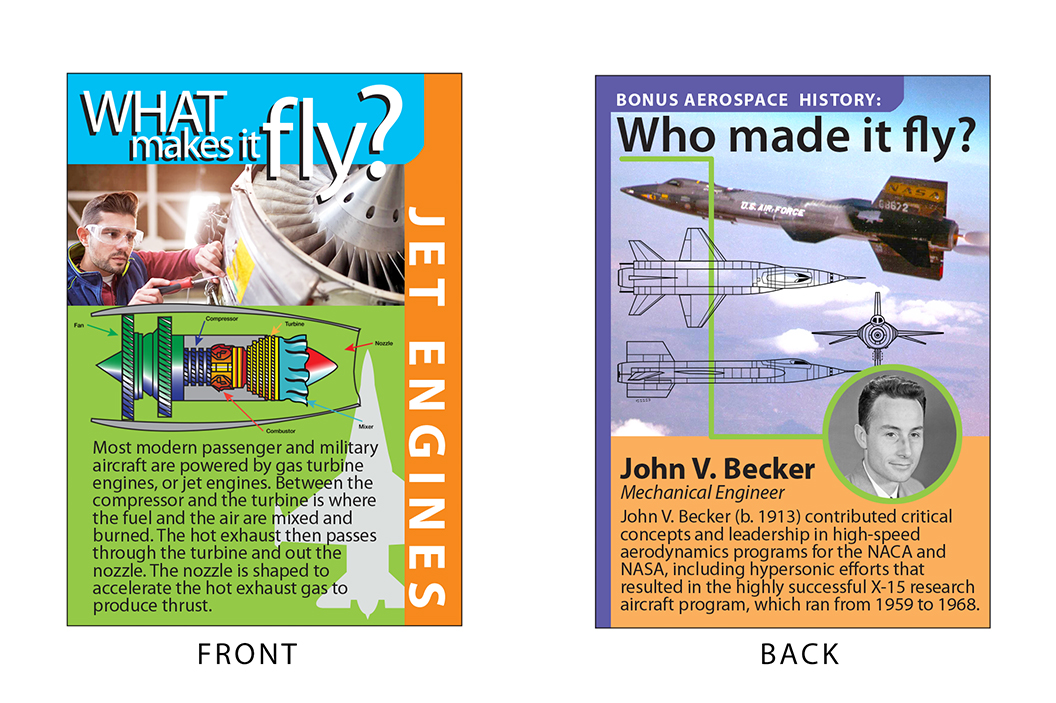
An example flyer to be used in school/parent outreach. Click to access.
The public is unaware of the tremendous need for aerospace professionals. This lack of awareness includes almost everyone in public and private education, from elementary to high school. As a result, teachers and administrators are also unaware of the vast livelihood opportunities for students in the aerospace fields.
If educators are at least made aware of the need for, and the opportunities that pursuing a career in aerospace present, and then given information to act on, students might be offered new futures. Futures that neither the educators nor students had envisioned and thus help fill the manpower gap sooner.
Reach out!
Educators and the other adults employed by local and regional school systems are very interested in helping students advance and pursue their own future. As such, they welcome information that can be shared with parents and students, so they can make their own decisions based on facts. Truly, students are at school for six to seven hours five days of the week, and they are influenced by adults throughout the day.
Use the multiple opportunities to provide facts for educators, parents, and other adults to share with students: information that may stimulate their curiosity to gain more information, to consider and to share with their friends and parents and/or caregivers.
The Many Adults in Education You Can Contact to Raise Awareness
Here are just some of the adults in education that you can share your knowledge of the manpower problem and offer resources:
| High School: | Elementary School: | Middle School: |
| District Superintendent | Bus Driver/Crossing Guard | Principal |
| District Communications Director | Vice Principal | Office Secretary |
| Principal | Security Guard | Science Teacher |
| Vice Principal | Librarian | Club Advisor |
| Counselor | Teacher | After-School Club Advisor |
| Sports Coach | Teacher Aide | PTA |
| Mechanic/Shop Teachers | PTA | Bus Driver |
| Club Advisor | Playground Monitor | |
| After-School Club Advisor | Principal | |
| Bus Driver | Office Secretary | |
| PTA |

An example pin (non-aviation) to show how giveaway items can create lasting memories.
How to Contact These Individuals
Almost every school has a directory of employees on the school’s website with the name and e-mail address of the individuals you wish to contact. If there is no listing for a position such as a playground monitor, or bus driver, merely ask the school’s front office support staff for the person’s name and contact information. By the way, a school’s front office support staff often know almost every student on campus. They are a great source of help with your outreach effort. Make sure they understand what you are doing, and importance for the future of flight safety and rewarding careers for young people.
Start a Dialogue/Customize Your Messages
The individuals you contact will have their own outlook on education. Approach them with messages that they can relate to, with wording they understand, and the logic they would use. The school administrator or superintendent might not have day-to-day contact with students, but they are on the lookout for opportunities to educate them in areas previously unexplored. While a teacher’s aide or shop teacher will have daily contact with their students, but are unaware of the needs in the aerospace industry sectors, and how they are relevant to their teaching curriculum.
As one example, start with a simple approach: “Hello, my name is , I am very interested in letting you and your colleagues know about career opportunities for your students in aerospace. I can provide some facts and resources that you and your students can use to understand the need for manpower in aerospace and how they will assure continuity in maintaining flight safety for the next generations.”
Robert “Bob” Ryan is president of Ryan Strategies International, which provides business development for companies and non-profit entities to accelerate commerce and capture revenues in growing supply chain markets. The firm is based in Vancouver, Washington and helps consult with individuals businesses seeking to raise awareness and recruit new AMT workforce members. For more information, visit www.ryanii.com, call 503.250.2337, or email ryanstrategies@aol.com.
Support for Military to Civilian Career Opportunities
In 2021, ARSA welcomed Kyle Kaiser, U.S. Army veteran and founder of the Veteran Internships Providing Employment Readiness (VIPER) program to the Annual Conference in an afternoon panel to discuss career development and technician recruitment issues.
VIPER’s mission is to eliminate veteran suicide by ending its main causes: unemployment, under employment, substance abuse, homelessness, and a fractured support system. The organization pursues this goal through career transition programs including pre-employment training, resource networking, and outreach for military veterans and spouses.
Kaiser participated with ARSA in 2021 to celebrate the launch of VIPER’s 10-week aircraft maintenance technician program. Working with transitioning veterans through Skillbridge, the program prepares uniformed personnel for civilian technical careers.
VIPER, a 501(c)(3) non-profit organization, recently updated its giving platform to collect individual donations including recurring gifts. ARSA encourages members to consider supporting this work through individual or corporate donations.
To give, visit www.vipertransitions.org/donate.
Repair stations should also investigate becoming a network or employer partner:
(1) Network partners assist in supporting the needs of transitioning service members.
(2) Employer partners work with VIPER to develop hiring opportunities for program participants.
To learn about partnerships, visit www.vipertransitions.org/get-involved.
Regulatory Compliance Training
Test your knowledge of 14 CFR § 21.37, 21.39, and 21.41 flight test pilots, instrument calibration reports, and type certificate definitions.
Click here to download the training sheet.

Membership
Member Benefit – Access SMS Tools Before EASA Deadlines
The “first” Safety Management System (SMS) compliance deadline for EASA approval under the U.S./EU bilateral arrives in October. MAG Change 10 becomes effective on the 10th; as of that date, new applicants must fully comply with the special condition requiring they “establish, implement, and maintain” an SMS.
(A) If you have fully implemented a Safety Management System (SMS)
If you have not already done so, on or before October 10, adjust the repair station, quality, forms, and training manuals, and the EASA supplement to integrate SMS into the repair station operations as required by MAG 10. Submit the changes to the FAA in accordance with sections 145.209(j) and 145.211(c)(4) procedures.
You must submit a declaration of compliance to 14 CFR part 5 to the FAA. A declaration of compliance contains:
The company’s name (as it appears on the FAA and EASA certificates)
Physical address (as it appears on the FAA and EASA certificates)
The FAA and EASA certificate numbers
This company has developed and implemented a Safety Management System that meets the requirements of 14 CFR part 5.
Signature of Accountable Manager
NOTE: The declaration may be added to the Accountable Manager’s statement required by Annex 2 Special Condition 1.1.1.c.1. that commits the repair station to compliance with Annex 2 and all Special Conditions.
(B) If you have not fully implemented a Safety Management System (SMS)
Step 1 – Before October 10, 2025, add a statement to the EASA Supplement committing the repair station to develop and fully implement a SMS no later than December 31, 2025.
This company will develop and implement a Safety Management System that meets the requirements of 14 CFR part 5 no later than December 31, 2025.
Step 2 – No later than December 31, 2025, fully implement the SMS by integrating the elements into the repair station operations through the repair station, quality, forms, and training manuals, and the EASA supplement as required by MAG 10.
The changes must include a declaration of compliance containing:
The company’s name (as it appears on the FAA and EASA certificates)
Physical address (as it appears on the FAA and EASA certificates)
The FAA and EASA certificate numbers
This company has developed and implemented a Safety Management System that meets the requirements of 14 CFR part 5.
Signature of Accountable Manager
NOTE: The declaration may be added to the Accountable Manager’s statement required by Annex 2 Special Condition 1.1.1.c.1. that commits the repair station to compliance with Annex 2 and all Special Conditions.
(C) SMS Compliance Matrix
Develop an SMS compliance matrix to verify the elements contained in AC 120-92D (latest edition) at Appendix D are met.
NOTE: The matrix need not be included in the EASA Supplement nor need it be submitted to the FAA. However, it is an invaluable tool for showing compliance.
ARSA members may develop and implement compliance elements using the SMS tools managed by the Aircraft Electronics Association (AEA). Under an ongoing agreement, ARSA members in good standing may access the AEA-managed SMS program for an annual flat fee of $350. The program helps small-to-medium sized aviation maintenance organizations meet the international and business requirements for adopting an SMS. AEA provides online administrative tools through its password-protected website to support the company designated safety representative, or on-site SMS coordinator. The administrative tool and program are constructed around the principles created by the International Civil Aviation Organization (ICAO) for adoption by the civil aviation authorities.
To obtain access to the AEA-managed SMS Program under ARSA’s partnership complete the request form at arsa.org/sms-program. The page includes other information about the AEA-managed SMS program and how to obtain more details.
Welcome & Welcome Back – New & Renewing Members
ARSA’s members give the association life – its work on behalf of the maintenance community depends on the commitment of these organizations. Here’s to the companies that joined or renewed in September:
New Members
Airframe Maintenance Group LLC, R01
Airline Accessory Service Company, LLC, R02
Bernoulli Aerospace, LLC, R01
Carrlson, Daniel, Mil
ITT Aerospace Controls LLC, R02
Mid-Jet Repair, LLC, R02
MRO Technologies, LLC, R01
MT-Propeller Gerd Muehlbauer GmbH, R04
Rice Lake Weighing System dba Measurement Systems International, R01
Renewing Members
Aerotron AirPower, Inc. dba Fokker Services Americas, R04, 1990
AerSale Landing Gear Solutions, R03, 2009
Aero Hydraulics, Inc., R01, 2024
Aerospace Welding Minneapolis, Inc., R01, 2020
Aircraft Accessories of Oklahoma, Inc., R03, 2022
Aircraft Lighting International, Inc., R01, 2018
Airforce Turbine Service, Ltd, R02, 2010
Ameron Global Products Support, R02, 2004
Ametek Ameron, LLC dba Ameron Global Product Support, R01, 1989
AAR Corp., Enterprise, 1985
Aviation Repair Solutions, Inc., R02, 2006
Aviation Services of TN Inc., R01, 2023
Bridger Aviation Repair LLC dba Bridger Aerospace, R03, 2019
Calvin Taff Electronics, Inc., R01, 2003
Citadel Completions, LLC, R04, 2018
Columbia Helicopters, Inc., R06, 1998
Construction Helicopters, Inc dba CHI Aviation, R02, 2022
CorpAir Supply Company, Inc. dba AVMATS Component Support, R02, 2001
Cosgrove Aircraft service, Inc., R01, 2021
Dan Brauhn-Indian Hills Community College, EDU, 2015
Eagle Creek Aviation Services, Inc., R04, 2016
Fieldtech Avionics & Instruments, Inc., R04, 2016
Intrepid MRO LLC, R02, 2016
Jordan Propeller Service, Inc., R02, 2002
Millennium International, L.L.C., R02, 2013
Nampa Valley Helicopters, Inc., R02, 1993
Palm Beach Aircraft Propellers, Inc., R02, 2001
S & K Aerospace, LLC dba AE & C Services, LLC, R01, 2017
Safran Nacelles Services Americas, LLC, R02, 2017
Sherwood Avionics & Accessories, Inc. dba Sherwood Aviation, R04, 2021
Tech Aire Instruments, Inc., R01, 2012
The Aviation Group, R01, 2023
The Zee Company, Inc., R02, 2019
Turbine Standard, Ltd., R03, 2003
University of Alaska Anchorage Aviation Technology Division, EDU, 2023
VSE Aviation Services, Co.-KS, R01, 2012
A Member Asked…EASA Part-IS Compliance?
Q: I am requesting your guidance regarding EASA Part-IS (Information Security) and how it applies to U.S. based repair stations with European Approval. When are repair stations expected to comply?
Also, we are currently C.A.S.E. certified and its requirements include cyber security compliance. Can ARSA provide any further guidance with this requirement?
Note: I have reached out to our local FSDO inspector, and he has no knowledge of the Part IS requirement implementation deadline yet for US bases 145s.
A: The requirement for “foreign” (to EASA) Part-145 approval holders to comply with Part-IS does not apply to U.S. repair stations that obtained their EASA certificate under the bilateral.
Currently, there are rumblings but no headway on requiring U.S.-based repair stations to comply with the EASA IS regulations through a Special Condition in the U.S./EU bilateral agreement. Considering how long it took for SMS to become a Special Condition it’s unlikely local regulators would be aware of the issue.
However, taking a lead from the EASA guidance for those “foreign” Part-145 approval holders and from the practical and pragmatic view of ARSA, I would work the risks into an unofficial (outside today’s 145 mandate) SMS review: Release of the company or any other confidential or business information is a risk that needs to be mitigated. If you know the gaps, wherever and whenever the “mandate” comes you will be ready.
The immediate concern ARSA has is the “flow down” from air carriers through
§ 145.205; there is a lot of confusion over the threat(s) being posed by a repair station’s IS usage, so compliance is muddled. Standards are to be set by “industry” and there are standard setting organizations jumping on the wagon.
If the company is involved in federal contracting, the standard is the Federal Risk and Authorization Management Program (FedRAMP), or if with the Department of Defense, look at the Cybersecurity Maturity Model Certification (CMMC).
The ISO standard bandied about for use in aviation (generally) is 27001. It covers:
Information Security Policies
Organization of Information Security
Human Resource Security
Asset Management
Access Control
Cryptography
Physical and Environmental Security
Operations Security
Communications Security
System Acquisition, Development and Maintenance
Supplier Relationships
Information Security Incident Management
Information Security Aspects of Business Continuity Management
Compliance
Have questions about aviation regulatory compliance, legislative policy, or ARSA resources? Ask ARSA first!
Advertising – Your Company Here
Marketing to and by repair stations can find no better connection to core values in aviation than ARSA advertising. With the association in full control of its communications, options available to advertisers stretch beyond placement in periodicals or on the website.
Sponsorships
Sponsorships for the association’s Annual Conference and online training programs are available and create long-standing presence.

How it Works
Sponsoring training or an Annual Conference session provides immediate  access to the learning experience for the sponsor. The advertisement will be presented during both the live and on-demand versions of the session. The “seats” available to the advertiser can be utilized for its personnel or can be offered as a benefit to others as “scholarships to support industry knowledge.”
Training sponsors bring value to the aviation maintenance industry and their name is attached to the final product for the duration of its time in the association’s catalogue. ARSA will produce the training, and Conference material, and retain rights to content.
Ready to see your company in ARSA’s communications and training? Visit arsa.org/news-media/advertising and arsa.org/training-resources for more information.
Not interested in advertising? Don’t forget to send your news releases and other media information to arsa@arsa.org.
Resources
ARSA strives to provide resources to educate the general public about the work of the association’s member organizations; should you need to provide a quick reference or introductory overview to the global MRO industry, please utilize AVMRO.ARSA.org.
Careers in Aviation Maintenance
How do you share the industry’s story with the people who could be its future? Teach them about the great work done every day to keep the world in flight. (Even if we can’t recruit somebody, we sure can make them thankful for our work.)
ARSA Member Benefits
From access to industry expertise to growing your own through education and training, ensure your company gets the most out of its investment in ARSA.
U.S. Legislative Action Center
ARSA requests its members’ assistance to keep FAA reauthorization front and center on the congressional agenda and ensure our workforce priorities are included. Please use ARSA’s grassroots action center (sponsored by Aircraft Electric Motors) to send a quick note to your elected representatives in support of our efforts.
Industry Meetings & Events
| Event/Meeting | Dates | Location |
| MRO Europe | 10/14-16/2025 | London |
| NBAA BACE | 10/14-16/2025 | Las Vegas, Nevada |
| ACI-NA & ACI World Annual General Assembly | 10/25-28/2025 | Toronto, Canada |
| Dubai Airshow | 11/17-21/2025 | Dubai |
| UAFA Annual Conference | 11/19-20/2025 | Boise, Idaho |
| Aerial Works Safety Conference | 12/7-9/2025 | Boise, Idaho |
| MRO Latin America | 1/14-15/2026 | Santiago, Chile |
| Singapore Air Show | 2/3-8/2026 | Singapore |
| MRO Middle East | 2/4-5/2026 | Dubai |
| AeroEngines Americas | 2/10-11/2026 | Tampa, Florida |
| VERTICON | 3/9-12/2026 | Atlanta, Georgia |
| ARSA Annual Conference | 3/17-20/2026 | Arlington, Virginia |
| AEA Convention | 3/23-26/2026 | Dallas, Texas |
| ATEC Annual Conference | 3/29-4/3/2026 | Portland, Oregon |
the hotline is the monthly publication of the Aeronautical Repair Station Association (ARSA), the not-for-profit international trade association for certificated repair stations. It is for the exclusive use of ARSA members and federal employees on the ARSA mailing list. For a membership application, please call 703.739.9543 or visit arsa.org/membership/join. For information about previous editions, submit a request through arsa.org/contact. This material is provided for educational and informational purposes only. It does not constitute legal, consulting, tax or any other type of professional advice. Law, regulations, guidance and government policies change frequently. While ARSA updates this material, we do not guarantee its accuracy. In addition, the application of this material to a particular situation is always dependent on the facts and circumstances involved. The use of this material is therefore at your own risk. All content in the hotline, except where indicated otherwise, is the property of ARSA. This content may not be reproduced, distributed or displayed, nor may derivatives or presentations be created from it in whole or in part, in any manner without the prior written consent of ARSA. ARSA grants its members a non-exclusive license to reproduce the content of the hotline. Employees of member organizations are the only parties authorized to receive a duplicate of the hotline. ARSA reserves all remaining rights and will use any means necessary to protect its intellectual property.
© 2025 Aeronautical Repair Station Association