


2026 – Edition 9 – October 2
Table of Contents
Note: The order of material varies in hotline emails, but is always presented the same on this landing page. Readers scrolling through content on or printing this page will find it organized consistent with the table of contents.
The President’s Desk
The Primer
ARSA’s annual board meeting and roundtable gathering is a precursor to the association’s Annual Conference in March.
The board not only receives its usual reports from the management team, but it meets for a day with industry allies and the FAA and EASA. That day precedes the board meeting because it helps set the regulatory and legislative agendas and thus the budget for the coming years.
This year, the association is focusing the roundtable’s attention on a new long-term project: enhancing the FAA’s designee system. Almost every member of the association has a designee, uses a designee, or needs one. Many of the larger members have obtained organization delegation authorization for their own activities.
Despite the system being around since the 1920’s, when according to a lawsuit a designee got a certificate, delegation comes under fire constantly. Some believe that having the industry issue its own approvals is a “conflict of interest.”
ARSA challenges the belief that the system creates an “inherent” conflict of interest. The industry is responsible for airworthiness by establishing and maintaining compliance with regulations. Delegation only becomes a potential conflict when the agency doesn’t understand its duties and responsibilities. The current system mixes the requirements of showing compliance with the responsibility of finding compliance.
The law and regulations were written to provide support to the agency by ensuring it had the resources to perform its discretionary functions. Both the legislative and executive branches understood that industry would always move faster than the government. That applicants and certificate holders would be more versed and vested in the technologies and innovations. That the citizens would always be responsible for compliance and the agencies would need only “spot check” for compliance before issuance of approvals and certificates. Thereafter, the government could readily act against potential violations and threats to the national airspace.
During the roundtable and “D-Day” (ARSA’s current shorthand for its planned addition of designee focused content) at the Annual Conference, the association will provide a primer for establishing objective criteria for appointments, oversight, and actions against designees.
I look forward to the association’s activities because anything it takes on is eventually made better.
 |
John Riggs 2025 ARSA president | Director of Airworthiness, Chromalloy |
ARSA Works
ICA ARC Report Issued – Now What?
The FAA published its Instructions for Continued Airworthiness Aviation Rulemaking Committee (ICA ARC) report. The ARC was first proposed in an ARSA-led petition to the FAA in 2021 and eventually mandated by Congress at the association’s request in the last FAA reauthorization law.
The charter directed the ARC to provide recommendations to the FAA for ICA regulations, policy, and guidance. The ARC was tasked with recommending “a clear definition for ICA and recommend performance-based requirements for ICA applicability, content, and availability.” It was also asked how to distinguish between safety and customer convenience provisions in ICA, describe the nexus between ICA and safety, and consider the role of repair source approval and restrictions on the use of ICA to certain entities.
From the spring of 2024 to the summer of 2026, more than 100 individuals representing owners, operators, maintainers, design and production approval holders, the FAA, and foreign regulators spent thousands of hours in ARC working groups and plenary sessions. The ARC’s industry co-chairs were First Equity’s (formerly First Aviation) Josh Krotec, a former ARSA president and board member, and HEICO Aerospace Parts Group Vice President of Technical Services Patrick Markham. ARSA Executive Director Sarah MacLeod and Executive Vice President Christian Klein played visible roles, leading working groups and contributing to report drafting.
So what did the ARC accomplish?
The report makes 17 consensus recommendations related to ICA identification, references, and changes, critical parts and articles, FAA enforcement, and generally improving regulations and guidance. These include recommendations to require DAHs to clearly identify the information comprising a complete set of ICA for the specific design approval, provide sufficient information to locate work instructions when the source is referenced by a DAH, and receive in-service feedback and update ICA accordingly.
The report also contains 18 “proposals” based on working group discussions that did not (and will never) achieve full consensus. These included basing the FAA’s definition of ICA on the definition use by other authorities, clarifying parts manufacturing approval (PMA) holder ICA requirements, and requiring DAHs to provide continuous support for ICA throughout the lifestyle of the type design.
The ARC did not achieve its primary task of finding consensus on the core issues of ICA definition/content and availability. However, the report extensively documents the positions of the OO/MRO and PAH/DAH communities. In addition to position papers addressing specific ICA content and availability issues (including intellectual property concerns), each camp as also provided a “stakeholder comment” summarizing its position.
The OO/MRO believe, “[d]espite its longstanding recognition of the importance of ICA in aviation safety, the FAA’s application of ICA rules is inconsistent, resulting in uneven implementation and limited enforcement.” While FAA appropriately scrutinizes maintenance practices used by operators and repair stations, the ARC could not identify a single instance of a DAH being subject to enforcement action pursuant to part 13 for violating the ICA availability rules at § 21.50(b). Further, existing FAA processes have not consistently resolved stakeholder concerns or provided transparency into complaint outcomes.
The FAA has failed to stand behind its regulations and policies. For example, while the agency has said that restrictive access or use agreements are unacceptable, through inaction, the agency has allowed the proliferation of licensing agreements that restrict ICA sharing and fee structures that make ICA constructively unavailable.
The comment prepared by the ARSA and its OO/MRO allies said that given the ARC’s inability to reach consensus on what constitutes ICA and to how and how ICA must be made available, “[i]t is therefore imperative that the FAA, as the agency responsible for the safety of the NAS, definitively answer those questions.” (Emphasis in original.)
On the question of what constitutes ICA, the OO/MRO comment stated:
The ICA for the product must include the maintenance data for parts that are essential to the continued airworthiness of the aircraft. Further, any system or part required for type certification or supplemental type certification or for operations in the NAS is inherently essential to continued airworthiness and must be addressed in ICA. If parts and appliances are installed to obtain design approval, the ICA must be provided for them. The TC/STC holder may provide the information, or refer to the supplier, but in either event, the ICA must include the scheduling, troubleshooting, and corrective actions necessary to maintain airworthiness.
Regarding availability, the OO/MRO community rejected the notion that intellectual property and trade secrets protections allow DAHs to restrict ICA access:
Copyright protection for ICA is limited by the Fair Use Doctrine because the FAA requires compliance with ICA. Similarly, the trade secret argument is invalid because ICA must be made available (to those parties described in § 21.50(b)) and cannot be withheld from persons who are required to comply with those instructions (thus they cannot be “secrets” with respect to those persons).
To review the complete report, click here.
To visit the association’s ICA issue page, which includes a 25-year timeline of ARSA’s ICA efforts, click here).
Seeking Time for D&A Implementation
On Sept. 10, ARSA and a coalition of industry allies petitioned the FAA to extend the compliance deadline for certain repair stations located outside the United States to institute drug and alcohol testing programs. The group requested extension of the current December 2027 deadline to the end of 2029.
The additional two years provides both industry and the government time to work through countless compliance related burdens, the petition said. Pointing to previous petitions to simplify the rules, particularly expanding opportunities for recognition of international programs and consideration of national laws impacting drug and alcohol testing, the newest submission also highlighted the FAA’s incorrect assessment of implementation and reporting burdens association with the expanded rule.
“As of the date of this petition, 631 days have passed since the issuance of the rule and 466 days remain until the compliance deadline,” the submission said. “Publication of FAA guidance has been delayed because of last year’s government shutdown and the complexity associated with requiring D&A testing outside the United States for the first time in the country’s history.”
The petition described the public’s interest in delaying implementation through limiting oversight burden and preventing contraction of available maintenance services for U.S. registered aircraft worldwide:
“Failing to revise the compliance deadline as petitioned raises immediate safety concerns because foreign repair stations may decide to surrender their certificates rather than comply, reducing the availability of repair stations legally able to service U.S. registered aircraft and related articles outside the United States…Additionally, the inability of the agencies (i.e., the FAA and the Department of Transportation) to process waiver requests and petitions for exemptions in a timely and consistent manner will further strain the aviation maintenance safety assurance system.”
In addition to ARSA, the petition was signed by:
Aircraft Electronics Association
Aircraft Owners and Pilots Association
Aviation Suppliers Association
Aviation Technician Education Council
Cargo Airline Association
General Aviation Manufacturers Association
National Air Carrier Association
National Air Transportation Association
National Business Aviation Association
Regional Airline Association
United Aerial Firefighters Association
What you can do:
(1) Click here to read the complete petition.
(2) Stay tuned for the Federal Register to publish the petition summary.
(3) Submit a supportive comment (ARSA will publish an update when comments may be submitted).
Streamlining Bilateral Guidance
Update: On Sept. 28, the FAA confirmed cancellation of AC 145-11A, Repair Station Guidance for Compliance with the Safety Agreement between the United States and the European Union.
Background from August 2026….
ARSA agrees that the FAA should cancel Advisory Circular (AC) 145-11A, Repair Station Guidance for Compliance with the Safety Agreement between the United States and the European Union. The association learned in August of the agency’s interest and coordinated with the Aircraft Electronics Association to share support.
The agency’s reasons for canceling the AC need to apply to all guidance that relates to bilateral compliance: The MAG/MIP associated with each bilateral should be the guidance that industry and the agencies are to follow. Producing more documents related to international compliance is redundant and inefficient.
“Reliance on the MAG as the single source of guidance promotes greater clarity, consistency, and harmonization for certificate holders operating under the agreement,” the agency said.
ARSA and AEA encouraged the FAA to continue eliminating all redundant guidance in all its forms. Reviewing the DRS, the following ACs should be assessed:
AC 21-24A: Extending a Production Certificate to a Facility Located in a Bilateral Airworthiness Agreement Country
AC 43-10C United States—Canadian Bilateral Aviation Safety Agreement Maintenance Implementation Procedures
AC 61-144: Issuance Process for Pilot Certificates in Accordance with the Implementation Procedures for Licensing as Part of the Bilateral Aviation Safety Agreement Between the FAA and the Swiss FOCA
AC 145-11A: Repair Station Guidance for Compliance with the Safety Agreement between the United States and the European Union
By focusing compliance instructions in the official documents associated with the agreement, the FAA can provide for the same consistency sought by eliminating the AC related to the U.S./European agreement.
What guidance documents do you use on bilateral issues? Click here to tell ARSA.
ARSA, AEA Seek Legally Supportable OpSpecs
On Sept. 10, ARSA and the Aircraft Electronics Association (AEA) continued their combined effort to limit use of “automatically” assigned operations specifications for repair station certificates.
“The regulations are clear; the automated Operations Specification system and the guidance are not aligned with the requirements in the rules or due process,” the association’s said in a letter to Flight Standards Service Executive Director Hugh Thomas. “The agency is failing to distinguish in its automated Operations Specification system between paragraphs that are part of a certificate from those that are not.”
The letter included a specific, unattributed example from a repair station facing a notice of proposed civil penalty because of OpSpecs paragraph language associated with electronic recordkeeping. The paragraph in question limiting indicating the certificate holder was “not authorized and shall not” use digitalized documentation is among many imposed by the agency without imposing a legitimate limitation on the certificate.
The associations pointed to correspondence with the agency acknowledging automatic paragraphs unsupported by the rules. Based on this continuing discussion, ARSA and AEA requested a meeting leading to the FAA “institut[ing] a legal supportable process for issuing part 145 air agency certificates and appropriate limitations.” (Emphasis in original.)
To read the letter, click here.
FAA Guidance Adds FRS Personnel Licensing Requirements
The FAA has issued a change to Order 8900.1 implementing the foreign repair station personnel licensing requirements of the 2024 FAA Reauthorization Law. Sec. 302 directed the FAA to require supervisory personnel and personnel authorized to approve an article for return to service to be certificated under 14 CFR part 65 as either a mechanic or repairman.
There have as of yet been no changes to the rules in either parts 65 or 145, meaning the official compliance requirements for repair stations located outside the United States have not changed. Updates to the agency’s guidance reflects the focus and interest of inspectors, which must be considered by certificate holders responsible for complying with 14 CFR and not the statements in FSIMS.
The change to 8900.1 appears in Volume 2, Chapter 11, Section 10, which addresses issuing, renewing, and amending repair station certificates for facilities outside of the territories of the United States in countries that do not have bilateral aviation safety agreements with maintenance implementation procedures with the FAA. The change adds a new section E to paragraph 2-1332. Consistent with a solution proposed by ARSA, the Aircraft Electronics Association, Airlines for America, the part 65 licensing requirement does not apply if the personnel hold certificates issued by a “foreign aviation authority whose licensing system has been determined by the FAA to be equivalent, based on standards consistent with the International Civil Aviation Organization (ICAO) Annex 1, Personnel Licensing, and applicable provisions of Annex 6.” To ARSA’s knowledge, the FAA has not published a list of those countries, but ICAO states that, “Each individual Contracting State should have the information available as they have the duty to inform ICAO of any difference between ICAO licensing Standards and their national/regional regulations. Any information in this matter submitted by Contracting States to ICAO is contained on the Supplement to Annex 1.”
The change to Order 8900.1 also states repair stations must also ensure the personnel in question (whether licensed by the FAA or a foreign authority) have the following minimum qualifications:
- Supervisory personnel and individuals directly in charge of maintenance functions: A minimum of 18 months of practical experience in the work being performed or training in or thorough familiarity with the methods, techniques, practices, aids, equipment, and tools used to perform the maintenance, preventive maintenance, or alterations. Ability to understand, read, and write English.
- Personnel authorized to approve articles for return to service: Appropriate training or at least 18 months of relevant practical experience, thorough familiarity with applicable regulations, and proficiency the inspection methods, techniques, practices, aids, equipment, and tools appropriate to the work being performed and approved for return to service.
The amendment comes on the heels of issuance of FAA InFO 26012, which addresses reporting requirements (also created by Sec. 302 of the recent FAA law) for U.S. air carriers that use foreign repair stations.
Final Documents/Your Two Cents
This list includes Federal Register publications, such as final rules, Advisory Circulars and policy statements, as well as proposed rules and policies of interest to ARSA members.
Legal Brief
Editor’s note: This material is provided as a service to association members for educational and informational purposes only. It does not constitute legal or professional advice and is not privileged or confidential.
Doing Hard Things
By Christian Klein, Executive Vice President
Taking on the federal government is no small task, but it’s exactly what several former FAA designees are doing. Their class action lawsuit alleges the FAA’s termination of their designations violated constitutional due process rights and the Administrative Procedures Act.
The case matters not only because of the legal issues at stake, but because designees are so important to the regulatory compliance ecosystem. ARSA isn’t party to the litigation but is using it as an opportunity to shine a bright spotlight on problems with FAA’s designee management practices.
The legal issues in the case and why it matters so much were discussed in detail in the May 2026 “Legal Brief”. This month’s column focuses on what it will take to win and what you can do to help.
The case was filed in federal district court in Florida in March and then transferred to the U.S. District Court for the District of Columbia where judges frequently deal with constitutional and administrative law issues. The FAA, of course, filed a motion to the dismiss the case. The plaintiff’s response to that motion is due at the beginning of November and the FAA will then have an opportunity to respond to the response. Oral arguments on the motion may take place in January, but the timing is uncertain, since beating back the motion to dismiss is the first hurdle.
The next hurdle will be getting the judge to certify the class so that the case can proceed as a class action. Rule 23 of the Federal Rules of Civil Procedure requires a showing that the class of potential plaintiffs is so big that joining all of them would be impractical (numerosity), that the class of plaintiffs share common questions of law and fact (commonality), that the claims of the class representatives are typical of the class (typicality), and that the representative parties will fairly and adequately protect the interests of the class (adequacy). The courts also consider factors like the risk of inconsistent adjudications if there are multiple lawsuits instead of one.
If the class is certified and procedural issues are resolved, the focus will shift to the legal issues. That entails back and forth court filings and hearings. If the district court judge ultimately decides in favor of either party, appeals to the U.S. Circuit court and then to the Supreme Court can follow.
It’s a long and costly process. Plaintiffs and their attorney need and deserve support. ARSA has been crowing from the rooftops about the case. Designee issues will be the focus of conversations at ARSA’s annual Board of Directors Industry Roundtable meeting in the nation’s capital next month. Conversations on Capitol Hill have begun and will continue regarding designee management reform being included in the next FAA reauthorization bill (see this month’s “ARSA on the Hill”).
So, what can you do to help hold the FAA accountable and protect the designee system?
First, raise awareness. Make sure every designee knows that the litigation is underway. If you know individuals whose designations were terminated by the FAA, have them connect with the attorney representing the class. Finally, use the case to remind industry colleagues about all the ways designees facilitate compliance and help make the civil aviation regulatory system work.
Second, send money. There are no deep pockets to pay for the litigation; the class members are funding it out of their own pockets. Compare that to the unlimited resources of the federal government (taxpayer money) to defend the case. The litigation is still in its infancy, but the class will need to raise funds. If every designee and company that used designees supported the action with ten dollars, the funding level necessary to sustain the action.
Taking on the federal government isn’t a futile effort, it is hard, and this case will be no exception. To paraphrase JFK, we choose to do these things not because they are easy but because they are hard. When it comes to hard problems, solutions are hard.
Layman Lawyer
Editor’s note: This material is provided as a service to association members for educational and informational purposes only. It does not constitute legal or professional advice and is not privileged or confidential.
Giving it Away
By Brett Levanto, Vice President of Operations
Complying with the rules entitles a person to a certificate, which means certificate holders have rights. Compliance provides privileges and protections constraining industry non-compliance and government excess.
The United States Constitution guarantees “due process.” The fifth amendment is famously invoked in high profile witness testimony, but it also declares: “No person shall … be deprived of life, liberty, or property, without due process of law.” In the practical sense, this right requires the government to establish and follow fair and objective procedures before taking punitive action.
For aerospace certificate holders, part 13 provides the due process procedures (see ARSA’s training session for basic instruction). The FAA’s rules for enforcement include required actions and response timelines. The non-emergency process described in § 13.19(b) requires notices of proposed action after which the certificate holder has the option to:
(1) Surrender the certificate or pay the fine.
(2) Answer the charges in writing to demonstrate the violation did not occur or the sanction is not warranted.
(3) Request an informal conference to discuss the matter.
(4) Request the order be issued so it can be appealed.
ARSA members, particularly those who are clients of its management firm, have used the basic requirements of due process to head off wrongheaded government action and protect their aviation business. Due process guarantees opportunity to make a case to the government or require it government to justify its actions. When immediate resolution fails, the procedures provide continuing opportunities for appeal to other tribunals.
A certificate is protected by the plain language of 14 CFR; it’s foolish to give those protections away. In the specific sense, giving away a protection means failing to use the response options of part 13 when facing either certificate action or civil penalty. More broadly, an entire category of professionals and businesses gave away (or let the government take away) their rights for the sake of holding delegated authority from the agency.
In June, ARSA informed Congress of an ongoing lawsuit against the FAA alleging violations of the Administrative Procedure Act and the Fifth Amendment. The suit alleges the unlawful termination of FAA designees through the improper promulgation and enforcement of rules that deprive individuals of procedural due process.
The complaint filed with the district court includes a thorough history of delegated authority showing designees clearly “operated under a certificate” in the 1950s. The relevant aviation safety rules included statements regarding the issuance of certificates for pilot examiners and engineering representatives. Amendments made to the rules in 1954 gave the administrator unfettered discretion to terminate a designation. Through further amendments to the enforcement rules, the agency eventually separated its treatment of designees entirely from due process:
For reasons known only to the FAA, the FAA subsequently asserted that Designees are not subject to 14 CFR § 13.20. Rather, without legal support, and in direct contravention to the representations made to Congress in 1983 [that the agency would follow its enforcement rules when a designee refused to surrender a certificate], aside from its internal interpretation of its own Regulations and Rules, the FAA has asserted that “13.20 … has nothing to do with the FAA’s termination of Designated Pilot Examiners or, for that matter, any other category of non-FAA employees whom the agency certifies to perform particular functions.”
Given the historical movement stripping designees of due process protections, the complaint’s “prayer for relief” seeks, among other compensation, re-establishment of clear rights for designees to appeal actions taken against them by the FAA.
No certificate holder should let the government take away basic rights. The class action suit represents an extreme situation after decades of changing law and policy. ARSA’s vigilance against government actions that can impact the “life, liberty, and property” central to aviation business is consistent.
While the association leads on behalf of broad industry issues, such as improving the FAA’s delegation system, each repair station or airman must stand up for their own rights to protect the value of their certificate. Knowing the rules, documenting all exchanges, and pushing back (with help) on the preferences of government personnel are all necessary elements of a successful civil aviation business.
Stay tuned for updates (and event opportunities) related to designee due process and continue engaging ARSA resources for sensible compliance resources.
ARSA on the Hill
Reviving Designee Protection Legislation
By Christian Klein, Executive Vice President
ARSA has been forced to take regulatory problems to Capitol Hill when the FAA doesn’t solve them. The agency’s designee management system is a case in point. A group of former designees is suing the FAA claiming their terminations violated due process and the Administrative Procedures Act (see this month’s “Legal Brief”.) ARSA will ensure members of Congress are aware of the problem so it can be addressed during the next FAA reauthorization. We also want the legislative branch to know how important designees are to the regulatory compliance ecosystem.
The good news is that some on the Hill are already familiar with the issue. In fact, the House-passed version of the last FAA reauthorization bill addressed it head on. Sec. 257 (“Termination of Designees”) directed the agency to update its Designee Management Policy (FAA Order 8000.95B) to “to ensure due process and increase transparency in Federal Aviation Administration-initiated terminations of designees.”
The provision directed changes to the termination process, including guaranteeing the designee to be notified of the results of an investigation and given an opportunity to respond if grounds for termination were identified. Congress also identified all the factors that the investigation must consider, directed changes to the termination review panel process, and sought to ensure fairness by prohibiting FAA personnel who selected, appointed, or managed the employee from being involved in the panel.
Unfortunately, the provision was not included in the final FAA bill because of Senate objections. ARSA’s mission is to garner support for designee termination reform in the House while building support in the Senate.
Our message is simple: The current termination process is unfair and arbitrary. Designees may be terminated for any reason, including that the designee’s manager doesn’t want to manage them anymore or personality conflicts. A designation is a professional credential that takes time and experience to earn. Termination hurts the designee’s career and the companies they support. Terminated is permanent, the individual can never serve as a designee again. And, finally, the work designees do -approving engineering data, examining pilots, packing parachutes, approving maintenance data, and much more – affect every part of aviation.
Designee reform won’t happen overnight, but it will be a priority for ARSA in the next FAA reauthorization.
Modernizing the Skies
ARSA and other leading aviation organizations gathered at Reagan National Airport on Sept. 28 for a press event to announce the introduction of the Modern Skies Act (MSA). The bill introduced by Sen. Eric Schmitt (R-Mo.) that same day would provide $30 billion for investment in air traffic control modernization and airports.
The MSA would allocate $10 billion each to three priorities:
- Completing the new ATC digital architecture.
- Overhauling outdated infrastructure.
- Establishing a pilot program for new terminals, capacity upgrades, and cargo expansions.
Speaking at the event, Transportation Secretary Sean Duffy pointed to recent ATC improvements. “But to finally fix air travel for the American people, we need to pass the Modern Skies Act. This bill will give us the funding we need to modernize the digital architecture powering air traffic control, replace crumbling aviation infrastructure, and build world-class airports across the country,” Duffy said. Sen. Schmitt, FAA Administrator Brian Bedford, and industry representatives also spoke.
ATC and airport infrastructure aren’t top priorities for ARSA, but safety and efficiency of the aviation system are. The association recognizes that a safe and efficient ATC system is essential for the growth of commercial aviation, a major market driver for ARSA members. The 2024 Aerospace Supply Chain Resiliency Task Force Report, which ARSA helped write, identified outdated ATC as a risk.
With its strong backing from the administration, the legislation may begin moving as soon as November. To see an infographic about the bill click here and to read what leading aviation advocates (including ARSA) are saying about it, click here.
Election Engagement
There’s no better time than election season to build and strengthen relationships with your elected officials. They’re especially attuned to constituent needs when asking for your vote.
Now is the time to invite them to your facilities to meet employees (i.e., voters), participate in town hall events to learn more about candidate positions and raise issues, and attend campaign fundraisers. More information about getting involved politically is available on ARSA’s website and the association is standing by to help identify, create, and leverage opportunities. Just ask ARSA!
Building an ongoing relationship with elected officials is a matter of simple effort. The most successful constituents are patient and persistent…and they know how to use a few simple tools.
Who represents you?
Using ARSA’s Legislative Advocacy Tools, find your elected officials. Remember to search your personal and all professional zip codes; there may be multiple officials/offices with an interest in your needs. Get started at arsa.org/congress.
When will they be home?
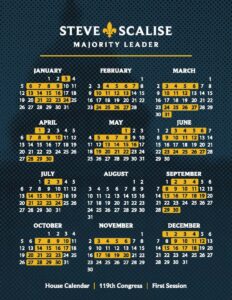
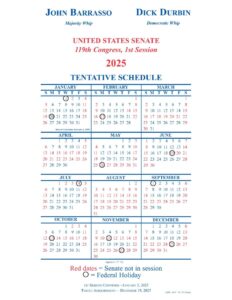
Members of the U.S. Congress try to spend as much time in their states/districts as possible. Both the House and Senate leadership have published session calendars for 2026. By reviewing these calendars, you can determine when your senators and congressman are likely to be “back home” by looking for dates not in session. Review the schedule documents below and find updated information at www.congress.gov/calendars-and-schedules.
House |
Senate |
|
 |
 |
Training & Career Development
HazMat Determinations
On Oct. 14, ARSA will present an online training session introducing the key definitions in 49 CFR tied to hazardous materials requirements for maintenance providers in 14 CFR. The level 1 (introductory) session will cover the legal framework surrounding hazmat transportation, the definitions necessary to making hazmat determinations, and the related training obligations and other requirements for repair stations.
Hazardous Materials Determinations – A Maintenance Provider’s Guide to HazMat
Date: Wednesday, Oct. 14 @ 11:00 a.m. EDT
Description: This session introduces participants to key regulatory language in the rules issued by the U.S. Department of Transportation related to hazardous materials transportation so that aviation maintenance professionals may assess the impact of related re–quirements in the aviation safety rules.
Registration & More Information: Click here
Special thanks to the session sponsor…

Click the logo to learn about Tym’s LLC
Registration for an ARSA-provided training session includes:
- Unlimited access for 90 days to the recording available after the live session is complete.
- A copy of the presentation and all reference material with links to relevant resources and citations.
- A certificate upon completion of the class, as well as any test material.
The association’s training program is provided through Obadal, Filler, MacLeod & Klein, P.L.C., the firm that manages ARSA. To go directly to OFM&K’s online training portal, visit PotomacLaw.inreachce.com. To learn more about the association’s training program and see course availability, visit arsa.org/training.
A Place in the SKILLED Nation
SKILLED Nation is a U.S.-based charity assisting with financial access to technical training. In addition to managing scholarships – including ARSA’s administered through Choose Aerospace – SKILLED Nation develops corporate partnerships to build targeted programs.
Businesses across multiple industries have invested in their own communities and company personnel needs by allowing the foundation to recruit for and fund specific training opportunities.
To learn more about SKILLED Nation, click here.
To contact the partnership team, email partnerships@skilled-nation.org.
See some of SKILLED Nation’s work in this car racing feature…enough aviation engagement could drive a new (and better) video:
View this post on Instagram
2026 Pipeline Report Shows Mechanic Growth
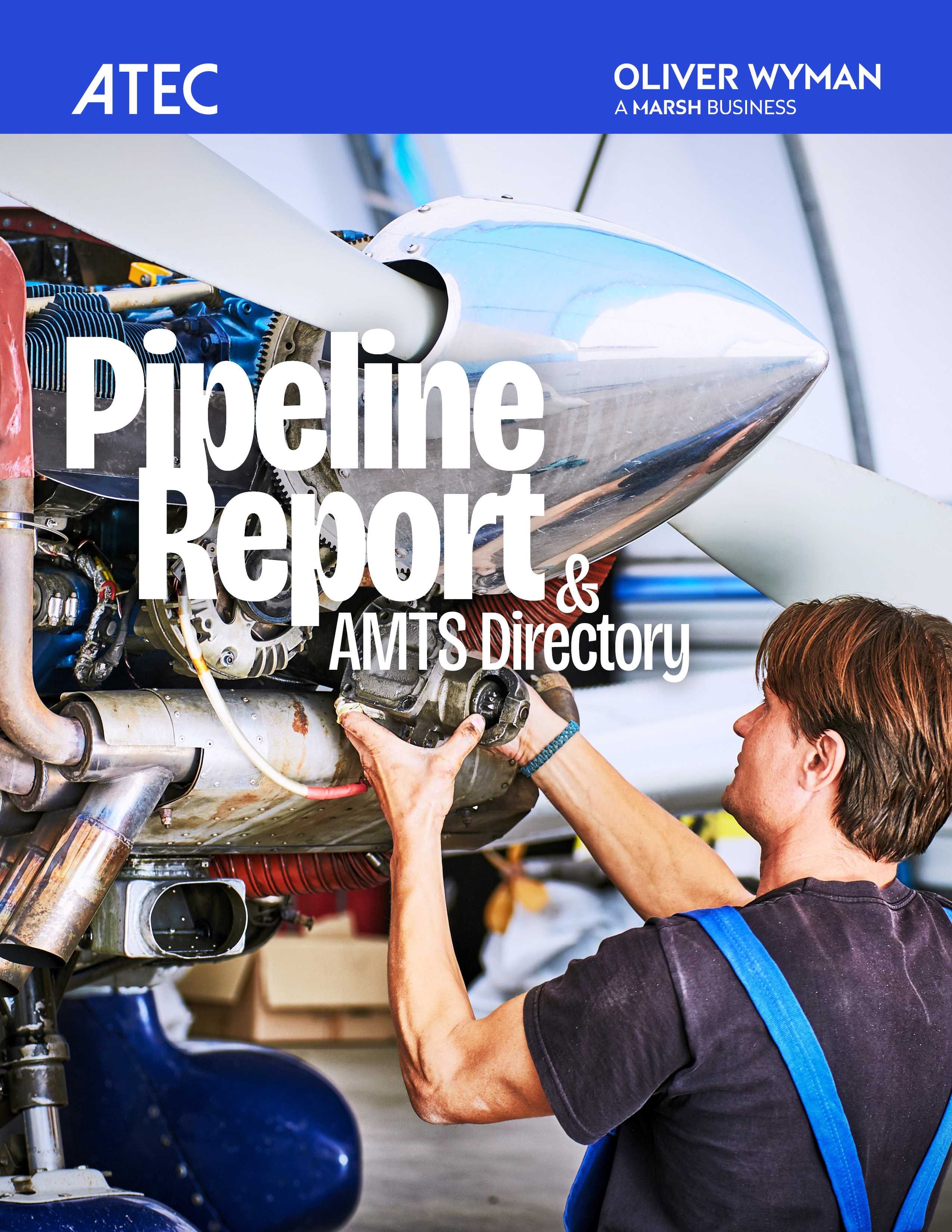
Click for the report release.
The 2026 Technician Workforce Pipeline Report jointly produced by the Aviation Technician Education Council and Oliver Wyman Vector was released during ATEC’s Annual Fly-In in September. The population of FAA-certificated mechanics is growing. Efforts to develop skilled workers from multiple sources are paying dividends. Unfortunately, industry’s expansion and looming retirements continue to pressure the skilled labor supply.
In addition to mechanic certification data, employment analysis, and qualitative information regarding student preferences, the report also conveyed total maintenance employment including non-certificated personnel and repairman working at repair stations, air carriers, and in general aviation.
The FAA issued a record 11,103 new mechanic certificates in 2025, 23.2 percent more than in 2024 and the highest annual total since the agency began publishing the data. The number of mechanics certificated after attending a part 147 school reached an all-time high of 7,496.
More exciting for repair stations, of certificates issued in 2025, 21 percent were based on civilian experience – including work performed through apprenticeship style earn-to-learn programs – and more than 1,300 were based on military service. The report reveals women reached 3 percent of the certificated mechanic population for the first time, continuing a steady but slow year-over-year increase.
Trends & Challenges
- The aviation mechanic population continues to grow older, with 44 percent over the age of 60 – a 3 percent increase over the previous year’s report. The aging population will create a retirement wave during the next 10 years of more than 39,000 mechanics.
- The report projects a North American shortfall of approximately 25,000 aviation technical personnel this year, including 9,100 certificated mechanics. By 2030, the certificated mechanic deficit is projected to reach approximately 20,000 – 12 percent of anticipated demand.
- More than one-third of certificated mechanics were engaged in general aviation or working for repair stations, air carriers, or schools. This group represents 66 percent of the air operator maintenance workforce, 20 percent of the repair station workforce, and 86 percent of the general aviation workforce.
To download the complete report, click here or visit www.atec-amt.org/pipeline-report.
Regulatory Compliance Training
Test your knowledge 14 CFR §§ 21.75 and 21.77, application for and duration of provisional type certificates.
Click here to download the training sheet.

Membership
This is Us
Based on an overview provided by ARSA Director Art Smith, the association produced this 50 second commercial for its work and its industry. Members are encouraged to go to the source and link or embed the piece on websites and other online communications.
For ideas on sharing ARSA’s media and its value, contact Brett Levanto.
As a Reminder
When the membership tracking system is fully operational, members will become part of an enhanced renewal procedure. It entails repetitive reminders to keep membership registration information up to date. Members can register every employee that has a company email address with the association so that the individual has access to ARSA benefits.
The benefit of receiving periodicals, registering for training or an event, of asking regulatory compliant questions, or becoming involved in the legislative process is invaluable to the workforce, not just primary contacts.
The hardest part of membership management is ensuring members’ information is current. While “ASK ARSA” is the quickest way to let us know about needed changes, the new process will remind renewing members of the benefits of keeping current.
We greatly appreciate those members that stay engaged by getting the most out of the membership.
Advertising – Choose Joy
No reason joy can’t be chosen
ARSA’s team uses its advertisements advertising page to share jokes and punchlines.
This exercise demonstrates the visibility produced by an advertisement in ARSA’s publications and on-line presence
With considerable good humor but even more tenacity in its commitment to quality, ARSA provides a unique venue for those serving the aviation community.
In the spirit of community, ARSA invites its members to participate in expanding the punchlines. Share your favorite joke or wisecrack via the Ask ARSA portal. The team’s favorites will be featured in association communications and the jokesters supplying them will be celebrated in a manner befitting their contribution (perhaps more periodical content, access to training sessions, or acknowledgement during the Annual Conference).
While you’re at it, spare a moment to learn about how ARSA engages the maintenance community through advertising and sponsorship opportunities for its members and industry partners.
Ready to see your company in ARSA’s communications? Visit arsa.org/news-media/advertising for more information.
Not interested in advertising? Don’t forget to send your news releases and other media information to arsa@arsa.org.
Welcome & Welcome Back – New & Renewing Members
ARSA’s members give the association life – its work on behalf of the maintenance community depends on the commitment of these organizations. Here’s to the companies that joined or renewed in September:
New Members
EL AL Israel Airlines LTD, R06
Ewing Legal Group PA dba Aero Law Center, Assoc
Helitech Solutions, LLC, R01
Kabbelliya, Chaye D., Gov
Mazzarese, Matthew, Affil
Prime Propulsion LLC, Affil
Returning Members
Aerospace Welding Minneapolis, Inc., R01, 2020
Aero Hydraulics, Inc., R01, 2024
AerSale Goodyear Aircraft Operations Center, R05, 2015
Airforce Turbine Service, Ltd., R02, 2010
ATI Aviation Services LLC, R03, 2025
Aviation Brake Services, Inc., R02, 2025
Bridger Aviation Repair LLC dba Bridger Aerospace, R03, 2019
Calvin Taff Electronics Inc., R01, 2003
Citadel Completions LLC, R04, 2018
Commercial Jet, Inc., R04, 1999
CorpAir Supply Company, Inc. dba AVMATS Component Support, R02, 2001
Eagle Creek Aviation Services, Inc., R04, 2016
Fieldtech Avionics & Instruments, Inc., R04, 2016
Heritage Turbines, Inc., R01, 2025
Hong Kong Aircraft Engineering Company Limited, Enterprise, 2025
Hot Section Technologies, Inc., R02, 2017
Jet Center MFR dba Southern Oregon Skyways, R02, 2006
Jordan Propeller Service, Inc., R02, 2002
Miami Aircraft Structures, Inc., R03, 2003
Nampa Valley Helicopters, Inc., R02, 1993
Safran Nacelles Services Americas, LLC, R02, 2017
Tech Aire Instruments, Inc., R01, 2012
The Zee Company, Inc., R02, 2019
Turbine Standard Ltd., R03, 2003
Unical 145, LLC, R02, 2012
VSE Aviation Services, LLC, R03, 2020
A Member Asked…What is equivalent?
Q: Is there a legal interpretation regarding “determination of equivalency” for special equipment and tooling recommended by the manufacturer? When is it invoked? Who is responsible for performing the determination?
A: Although not a legal interpretation, the best explanation for determining equivalency in tools, tooling, equipment, and test apparatus is in FAA Order 8900.1, Vol. 6 (“Surveillance”), Ch. 9 (“Part 145 Inspections”), Sec. 9 (“Inspect a Part 145 Repair Station’s Tools and Equipment”). Subsection C of paragraph 6-1800 (page 4).
Among other things, it states,” A repair station may substitute a manufacturer’s tooling with one that is its equivalent. If the repair station uses equivalent tooling, it is responsible for the determination of equivalency. The repair station must provide a means to the FAA that will demonstrate that the tool meets the manufacturer’s standards and specifications with all respects regarding tolerances and accuracy.” (Emphasis added.) Subsection C then provides further detail about how demonstration/evaluation should be made.
It also states, “Neither the FAA nor a DER may approve equipment or test apparatus. The FAA and DERs may only make a finding that the functional equivalency for special equipment or test apparatus is acceptable. It is important to emphasize that the repair station, not the FAA, bears the burden of demonstrating equivalency.” (Emphasis added.)
Hopefully, that summary and a thorough review of Sec. 9 will get you pointed in the right direction.
Have questions? Take advantage of ARSA’s most valuable resource and use the “Ask ARSA First!” system to get help.
Conference Corner
Persistence Creates Awareness
ARSA’s Annual Conference grabs attention. Companies jockey for position on the loaded sponsor list. Speakers share key programmatic updates and regulatory insights. Attendees make real progress through direct discussion. The event’s four days provides needed time for issues that matter.
The specifics of those issues are often familiar as the association tackles ongoing problems. Year over year, the details evolve as the core purpose remains the same. As an example, the Conference (in various forms) included legislative advocacy and regulatory analysis related to the misguided expansion of drug & alcohol testing requirements to repair stations located outside the United States. Attendees next March will benefit from that continuous work, begun before the first legislative language appeared in 2012 and set to continue through either implementation or reconsideration of the final rule issued in 2024.
The 2027 event will include additional attention for designees, who ARSA plans to welcome for a special day of sessions opposite the Executive to Executive Briefings on Tuesday, March 9. This special invitation gathering will provide a venue for the industry to support ongoing effort to recover due process rights of persons holding delegated authority from the FAA. Stay tunes for more information about this special invitation event.
Set your schedule to participate in the ARSA Conference. Through in person attendance and an online stream sent back to your facility, give your organization’s attention to the event that bolsters awareness of the problems impacting repair stations…and makes progress toward solving them.
Check out the event information to get your plan together. 2027 Annual Conference Registration opens in December.
Executive to Executive Briefings: Tuesday, March 17, 2026
Participation by industry executives with senior executive branch officials is limited to annual conference sponsors at the Administratium, Platinum, Gold, or Silver levels. In past years, meeting participants included representatives from the U.S. Departments of Commerce, Defense, Labor, State, and Transportation as well as the fellow trade associations and industry interest groups.| 8:30 a.m. | Coffee & Light Breakfast |
| 9:15 a.m. | Introductory Briefing
Christian A. Klein, ARSA Executive Vice President Klein will review the association’s antitrust statement, discuss the purposes and agenda of the 2026 E2E, and review recent ARSA initiatives. |
| 10:00 a.m. | Tariffs, Refunds, and Enforcement
Cortney Morgan, Esq. and Cormac Connor, Esq., Partners, Husch Blackwell Morgan and Connor will discuss the Supreme Court’s recent tariff decision, its implications, and opportunities to seek refunds. They will also review the Trump Administration’s general legal enforcement posture. |
| 10:45 a.m. | U.S. Department of State
Marco M. Sylvester, Deputy Assistant Secretary for Transportation Affairs, Bureau of Economic and Business Affairs With an eye on the volatile geopolitical environment, Deputy Assistant Secretary Sylvester will discuss issues impacting international relationships, the negotiation process, and opportunities to influence bilaterals in these times. |
| 11:30 a.m. | TBD |
| 12:15 p.m. | Lunch/Midday Break |
| 1:15 p.m. | Trade and Labor
Jennifer Bang, Assistant U.S. Trade Representative for Intergovernmental Affairs and Public Engagement, Invited Ms. Bang will explain the rationale for the Trump administration’s sweeping tariffs and how trade policy will evolve over the remainder of President Trump’s term. |
| 2:00 p.m. | Solving the Workforce Crisis: Grants, Apprenticeships, and Growth
Ryan Goertzen, Vice President of Workforce, AAR and Etain Connor, Director of Community Affairs, FEAM What are leading aerospace maintenance companies doing to address the technician shortage? What can industry do together? |
| 3:00 p.m. | Break with Coffee, Tea, Soda, Iced Tea |
| 3:15 p.m. | Economic Impacts
Livia Hayes, Director, Market Intelligence Team, Transportation and Services Practice, Oliver Wyman and Paul Harper, Vice President, Oliver Wyman Vector Hayes and Harper will reveal the findings of the most recent Oliver Wyman MRO industry forecast and lead a roundtable discussion of factors and trends impacting demand for aerospace maintenance services. |
| 4:00 p.m. | Wrap up Discussion
Participants will discuss key takeaways and opportunities for collective action. |
Legislative Day: Wednesday, March 18, 2026
The day dedicated to educating both the aviation maintenance industry and elected officials. Learn (or brush up) on what ARSA does and what you can do so you're ready for afternoon visits with targeted Capitol Hill legislators and staff.| 7:30 a.m. | Registration and Breakfast |
| 8:00 a.m. | Welcome and Introductions
Christian Klein, Executive Vice President, ARSA Alex De Gunten, Vice President of Government & Industry Affairs, HEICO and ARSA 2026 Government Affairs Chairman |
| 8:15 a.m. | It’s All About Your Industry and Your Company
Christian Klein, Executive Vice President, ARSA Last year was another banner year for the maintenance industry on Capitol Hill. We will discuss recent accomplishments, the political landscape, industry priorities for 2026, and building on our success. |
| 9:00 a.m. | The View from the Hill
Karen Huggard, Vice President of Government Affairs, National Air Transportation Association, invited Jarrod Thompson, Vice President for Legislative and Regulatory Policy, Airlines for America, invited Moderator: Christian Klein, Executive Vice President, ARSA The looming air traffic control reform bill provides opportunities to adjust FAA policy and related congressional mandates before the next FAA reauthorization. |
| 9:45 a.m. | Break |
| 10:00 a.m. | Playing the Political Game
Naveen Rao, Principal, H4 Advisors LLC Madison Smith, Principal, Ridge Path Strategies Christian Klein, Executive Vice President, ARSA The 2026 congressional elections provide an opportunity for the aviation maintenance industry to further build its political visibility and effectiveness. Klein will review individual campaign law finance contribution limits, discuss ways companies can build relationships with candidates, and explain how members can tap into ARSA PAC resources. |
| 11:00 a.m. | Release of ARSA's 2026 Global Fleet & MRO Market Report
Livia Hayes, Director, Market Intelligence Team, Transportation and Services Practice, Oliver Wyman Vector |
| 11:30 a.m. | Wrap up Discussion
Christian A. Klein, ARSA Executive Vice President A quick review of topics for this afternoon’s Hill meetings with an opportunity to ask questions. |
| 12:00 p.m. | Adjournment and Box Lunch |
| 1:00 p.m. – 4:00 p.m. | Congressional Meetings |
| TBD | Presentation of 2026 ARSA Legislative Leadership Award to Sens. Elizabeth Warren (D-Mass.) and Tim Sheehy (R-Mont.) |
| TBD | House Aviation Subcommittee Staff Briefing |
| 4:00 p.m. | Symposium Registration Open (for non-Legislative Day attendees) |
| 5:30 p.m. | Ice Breaker Reception |
| 7:00 p.m. | Special Invitation Dinner |
Annual Repair Symposium: Thursday, March 19, 2026
The centerpiece of Conference week, ARSA convenes a full day of substantive panel discussions covering key regulatory compliance and business issues. After the keynote address, regulators from across the world join the full-morning "Opening Salvo" conversation, followed by lunch and an afternoon of practical regulatory and business discussion.| 7:30 a.m. | Registration and Breakfast |
| 8:00 a.m. | Welcome and Introductory Remarks
Sarah MacLeod, Executive Director, ARSA Christian Klein, Executive Vice President, ARSA Find out how the association is advocating for your interests with legislators, regulators, and the media. Information on how you can help advance the industry’s collective work. |
| 8:30 a.m. | Session 1: Fireside Chat with the FAA
Tina Amereihn, Associate Administrator, Aviation Safety Oversight and Certification Organization Moderator: Sarah MacLeod, Executive Director, ARSA |
| 9:00 a.m. | Break with Coffee/Tea |
| 9:30 a.m. | Session 2: Opening Salvo—Conversations with the Regulators
Stuart Algar, Chief Surveyor, Head of Airworthiness, United Kingdom Civil Aviation Authority Lawrence Josuá Fernandes Costa, Continuing Airworthiness Certification Manager, Department of Flight Standards, ANAC Brazil Ludovic Aron, Washington Representative, EASA Karl Specht, Principal Coordinator Organisation Approvals, EASA, Invited Mallory Naill, Executive Director, Aircraft Certification Service, FAA Chris Parfitt, Manager, General Aviation Group (AFS-340), Flight Standards Service, FAA Moderator: Christian Klein, Executive Vice President, ARSA International aviation safety agencies will provide updates on the regulations, policies, and procedures of importance to the global aerospace sector. |
| 10:45 a.m. | Networking Break (Approximate) – Coffee/Tea |
| 12:30 p.m. | Lunch with Lessons from a Hall of Famer John Goglia, Member, National Aviation Hall of Fame |
| 2:00 p.m. | Session 3: Foreign Repair Station D&A/SMS implementation
Ric Peri, Vice President, Government & Industry Affairs, Aircraft Electronics Association Chris Parfitt, Manager, General Aviation Group (AFS-340), Flight Standards Service, FAA Stuart Algar, Chief Surveyor, Head of Airworthiness, United Kingdom Civil Aviation Authority Moderator: Brett Levanto, Vice President of Operations, ARSA Foreign and domestic part 145 certificate holders are dealing with new regulatory mandates. The panel will discuss lessons learned in the implementation of SMS requirements for U.S. repair stations and ARSA’s compliance, advocacy, and education efforts related to foreign repair station D&A. |
| 3:00 p.m. | ARSA Quiz Show |
| 3:30 p.m. | Networking Break |
| 4:00 p.m. | Session 4: Perspectives on Career Growth
Adam Flynn-Tabloff, Director of Policy, Research, and Evaluation, Office of Career and Technical Education, U.S. Department of Education Tristan McDonald, President, Federal Aerospace Institute Andrew Rachmell, Director, Educational Partnerships, Purdue Global Brett Levanto, Vice President of Operations, ARSA Many call a mechanic’s certificate a “license to learn,” but any career in aerospace maintenance – certificated or not – is a “license to grow.” Engage three different perspectives on how individuals and companies can turn entry level into life long. |
| 5:00 p.m. | The Aerospace Happy Hour |
Member Day: Friday, March 20, 2026
ARSA's leadership briefs members on the state of the association as well as goals and priorities for the coming year. Participants then close out the event by participating in breakout and/or training sessions focused on key aerospace topics. The Conference ends by 12:00 p.m. EDT.| 8:00 a.m. | Annual Membership Meeting & Breakfast |
| 9:30 a.m. | Break |
| 10:00 a.m. | Breakout Sessions
Integrate or Overlay A training/discussion session on “designing, implementing, and maintaining” a safety management system that integrates with existing quality programs. Foreign D&A Waivers and ExemptionsA training/discussion session to help repair stations get ahead of new drug & alcohol testing requirements while understanding rule applicability regardless of location. |
| 12:00 p.m. | Conference Ends |
In-Person
All substantive and social activities were hosted at the Ritz-Carlton, Pentagon City in Arlington, Virginia. Legislative Day participants will head to Capitol Hill for meetings with congressional offices as appropriate.
Livestream
The majority of Conference events will be available to livestream viewers via a Vimeo web-player embedded into a page on ARSA.org. All in-person registrants will be able to name a "Conference Ambassador" as a contact to access the livestream and bring the event back to their home facilities.
Pricing
| Executive to Executive Briefings – Tuesday, March 17 | ||||
| Open to Administratium, Platinum, Gold, and Silver-level sponsors.(1) | ||||
| Legislative Day – Wednesday, March 18 | ||||
| Members | Non-Members | |||
| In Person or Livestream | $450 | $750 | ||
| Symposium – Thursday, March 19 | ||||
| In Person or Livestream(2) | $925 | $1,500 | ||
| Legislative Day & Symposium Bundle | ||||
| In Person or Livestream | $1,250 | $2,000 | ||
| The Super Bundle (Silver Sponsorship, E2E, Legislative Day, & Symposium) | ||||
| In Person or Livestream | $4,200 | $4,500 | ||
| Member Meeting & Training/Breakouts – Friday, March 20 | ||||
| In-person | Free with Symposium registration. | |||
| Livestream | ||||
(2) Registration fees may be waived for government personnel, members of the media, speakers, and other support personnel or special guests upon approval by the ARSA event team.
Administratium – $15,000
What is Administratium? An element aerospace professionals see every day (click here to learn more). Notation in all publicity, marketing and periodicals (e.g., the hotline, Dispatch, ARSA team email signatures, conference attendee contact list, specific email alerts to association contacts), recognition in event materials and from the podium, specific thank you in ARSA periodicals, additional advertising placement via ARSA’s communications, complimentary registrations for three (3) participants in the Executive to Executive Briefings as well as three (3) in Legislative Day, and free livestream access for personnel unable to attend in person. At the Administratium Level, sponsors may select one of the following* to specifically support (please note the list in this document does not reflect current availability):- Annual Repair Symposium – Ice Breaker Reception
- Annual Repair Symposium – Thursday Happy Hour
- General Sponsorship
Platinum – $10,000
Notation in all publicity, marketing and periodicals (e.g., the hotline, Dispatch, ARSA team email signatures, conference attendee contact list, specific email alerts to association contacts), recognition in event materials and from the podium, specific thank you in ARSA periodicals, complimentary registrations for three (3) participants in the Executive to Executive Briefings as well as three (3) in Legislative Day, and free livestream access for personnel unable to attend in person. At the Platinum Level, sponsors may select one of the following to specifically support (may not reflect current availability for 2025):- Online Conference Experience
- Executive to Executive Briefings
- Legislative Day – All Day
- Congressional Directories/Resources
- General Sponsorship
2025 Platinum Sponsors
 |
 |
 |
 |
 |
 |
 |
 |
Gold – $7,500
Notation in all publicity, marketing and periodicals (e.g., the hotline, Dispatch, ARSA team email signatures, conference attendee contact list, specific email alerts to association contacts), recognition in event materials and from the podium, specific thank you in ARSA periodicals, complimentary registrations for two (2) participants in the Executive to Executive Briefings as well as two (2) in Legislative Day, and free livestream access for personnel unable to attend in person. At the Gold Level, sponsors may select one of the following to specifically support (may not reflect current availability for 2025):- Legislative Priorities Brochures/Resources
- Digital Companion/Electronic Materials
- Legislative Day – Continental Breakfast
- Legislative Day – Congressional Briefing and Luncheon
- Annual Repair Symposium – Continental Breakfast
- Annual Repair Symposium – Luncheon with Special Guest
- Nametag Lanyards
- Hotel Room Keys
- General Sponsorship
2025 Gold Sponsors
 |
 |
 |
 |
 |
 |
Silver – $3,500
Notation in all publicity, marketing, and periodicals (e.g., the hotline, Dispatch, ARSA team email signatures, conference attendee contact list, specific email alerts to association contacts), recognition in event materials and from the podium, complimentary registrations for one (1) participant in the Executive-to-Executive Briefings as well as one (1) in Legislative Day. At the Silver Level, sponsors may select one of the following to specifically support (may not reflect current availability for 2024):- Annual Repair Symposium – Coffee Break (5)
- General Sponsorship
2025 Silver Sponsors
 |
 |
|
Supporter – $2,500
Notation in all publicity, marketing, and periodicals (e.g., the hotline, Dispatch, ARSA team email signatures, specific email alerts to association contacts), and recognition in event materials and from the podium.Contributor – $500 to $2,499 (or equivalent support)
Notation in some publicity, marketing, and periodicals (e.g., the hotline, Dispatch), and recognition in event materials and from the podium.
2025 Contributor
 |
 Those seeking other options may consider these hotels (there are no ARSA-related specials or promotions at these locations):
Embassy Suites by Hilton Crystal City National Airport 1393 S Eads St. Arlington, Virginia, 22202
Residence Inn Arlington Capital View 2850 South Potomac Avenue Arlington, Virginia, 22202
DoubleTree by Hilton Hotel Washington DC – Crystal City 300 Army Navy Drive Arlington, Virginia, 22202
Crowne Plaza Washington National Airport 1480 Crystal Drive Arlington, Virginia, 22202
Hampton Inn & Suites Reagan National Airport 2000 Richmond Highway Arlington, Virginia, 22202
Radisson Hotel Reagan National Airport 2020 Richmond Hwy Arlington, VA 22202
Holiday Inn National Airport/Crystal City 2650 Richmond Highway Arlington, Virginia, 22202
The Leo Weston Award for Excellence in Government Service
First bestowed on Leo Weston himself in 2005, the Weston award honors an instrumental figure in ARSA's birth by recognizing individuals who embody his commitment to the industry's safety and success. The symposium provides a venue for association members and invited guests from around the world to network and discuss issues that matter to the aviation maintenance industry. It is the perfect time to respect the history of the repair station community and honor the good works of those who support it.
Click here to learn more about Leo, the award bearing his name, and those who have received it.The Legislative Leadership Award
The association regularly recognizes members of Congress who have provided outstanding support to the aviation maintenance community by supporting policies beneficial to the industry. Honorees have each been key in moving forward specific legislation advancing priorities championed by ARSA on behalf of its members.
Click here to see past updates regarding Legislative Leadership Award recipients.The "Golden Shovel" Award
From time to time, ARSA recognizes individuals – usually at the time of their retirement – who have spent their careers in steadfast devotion to good business, good safety, and good oversight. In the colorful illustration of Executive Director Sarah MacLeod, these professionals have spent their lives shoveling against the tide of government bureaucracy; their achievement in never giving up is acknowledged through the "Golden Shovel Award."
Click here to learn more about the "Shovel" and see who has received it.Photos
ARSA has created a Google Album including photos taken during the 2026 Annual Conference, which allows participants to share their own photos (Sharing event photos constitutes consenting to their use/distribution in association with Conference-related publicity for this or future events, at ARSA’s discretion). To see the album, click here.Recordings
The following excerpts were provided to ARSA members via the hotline newsletter. They are included here as examples of the event's content.
From Legislative Day – Playing the Political GameLooking ahead to November’s midterm elections, this ARSA-led discussion helped set the stage for Legislative Day participants and is provided for the benefit of members getting politically active back home.
From Legislative Day – Market Report ReleaseLeaders from Oliver Wyman Vector presented report findings to Legislative Day participants on March 18, illustrating the current and projected states of the North American and global aircraft fleets and related impacts on maintenance demand. The briefing is provided in its entirety for the benefit of members.
From the Symposium – What ARSA Has Done LatelyOn March 19, ARSA Executive Director Sarah MacLeod and Executive Vice President Christian Klein opened the Symposium portion of the Annual Conference with their regular review of ARSA’s work and a challenging question: How does ARSA measure up?
From the Symposium – Lessons from a Hall of FamerAfter accepting the Weston Award on March 19, Goglia shared the benefit of his experience and enthusiasm with Conference participants. His presentation and subsequent Q&A are provided for the benefit of ARSA members.
From the Symposium – Reciprocal AcceptanceThe FAA’s Chris Parfitt made a big announcement on March 19. He officially reported, in the presence of international CAA colleagues and ARSA members, the FAA has begun the rulemaking process to institute an amendment to part 43 requested in 2020 by ARSA.
From the Symposium – Perspectives on Career DevelopmentThe third day of the Annual Conference consistently closes with a session considering career growth and continuous learning opportunities for maintenance professionals. Workforce-focused discussions never end in aerospace, so this session is provided for the benefit of ongoing member engagement and action.
Annual Member MeetingOn Friday, March 20, ARSA Vice President of Operations Brett Levanto conducted the association’s Annual Member Meeting. A recording of Levanto’s presentation is provided for the benefit of all members.
Resources
ARSA strives to provide resources to educate the general public about the work of the association’s member organizations; should you need to provide a quick reference or introductory overview to the global MRO industry, please utilize AVMRO.ARSA.org.
ARSA Member Benefits
From access to industry expertise to growing your own through education and training, ensure your company gets the most out of its investment in ARSA.
About ARSA PAC
The Aeronautical Repair Station Association Political Action Committee (ARSA PAC) is a special fund designed to allow the collection of funds from qualified individuals that will become financial contributions to U.S. House and Senate candidates that support the legislative goals of the civil aviation industry.
Industry Meetings & Events
| Event/Meeting | Dates | Location |
| NBAA BACE | 10/20-22/2026 | Las Vegas, Nevada |
| MRO Europe | 10/27-29/2026 | Amsterdam, Netherlands |
| Aero-Engines Americas | 1/19-21/2027 | Scottsdale, AZ |
| ARSA Annual Conference | 3/9-12/2027 | Washington, D.C. |
| VERTICON 2027 | 3/15-18/2027 | Anaheim, CA |
| MRO Americas | 4/13-15/2027 | Orlando, FL |
| Aircraft Interiors Expo | 4/6-8/2027 | Hamburg, Germany |
| NBAA Maintenance Conference | 5/4-6/2027 | Charlotte, NC |
the hotline is the monthly publication of the Aeronautical Repair Station Association (ARSA), the not-for-profit international trade association for certificated repair stations. It is for the exclusive use of ARSA members and federal employees on the ARSA mailing list. For a membership application, please call 703.739.9543 or visit arsa.org/membership/join. For information about previous editions, submit a request through arsa.org/contact. This material is provided for educational and informational purposes only. It does not constitute legal, consulting, tax or any other type of professional advice. Law, regulations, guidance and government policies change frequently. While ARSA updates this material, we do not guarantee its accuracy. In addition, the application of this material to a particular situation is always dependent on the facts and circumstances involved. The use of this material is therefore at your own risk. All content in the hotline, except where indicated otherwise, is the property of ARSA. This content may not be reproduced, distributed or displayed, nor may derivatives or presentations be created from it in whole or in part, in any manner without the prior written consent of ARSA. ARSA grants its members a non-exclusive license to reproduce the content of the hotline. Employees of member organizations are the only parties authorized to receive a duplicate of the hotline. ARSA reserves all remaining rights and will use any means necessary to protect its intellectual property.
© 2026 Aeronautical Repair Station Association