


2025 – Edition 7 – August 1
Table of Contents
Note: The order of material varies in hotline emails, but is always presented the same on this landing page. Readers scrolling through content on or printing this page will find it organized consistent with the table of contents.
ARSA’s Lead
We’re Ready When You Are
By Brett Levanto, Vice President of Operations
In early July, former Republic Airways CEO Bryan Bedford was confirmed by the U.S. Senate to serve as FAA administrator. Washington stakeholders ranging from members of Congress to ARSA’s fellow aviation trade associations followed the capital city custom of issuing quick congratulations. Bedford has committed the beginning of his service to prioritizing “public safety and restoring the public’s confidence in flying,” specifically related to ATC concerns stemming from a January incident very near to the site of his confirmation vote.
ARSA’s “welcome” to the new administrator abstained from the usual “we look forward to working with you” enthusiasm and got to the point: When the Honorable Mr. Bedford is ready to take real action to improve safety oversight, restore the agency’s global leadership, and make good on the Trump administration’s mission to reduce regulatory burden, ARSA has already done the prep.
From the expansive list of “ARSA Works” providing opportunity to benefit both the agency and its certificate holders, the team gave the administrator these five:
(1) Refocus on the rules and halt enforcement through guidance by acting on the five recommendations provided by ARAC’s part 145 working group, particularly the adoption of a single “means of compliance” document for the repair station rule.
(2) Eliminate the agency’s burdensome inclusion of unnecessary Operations Specifications paragraphs on all certificate holders by directing the Flight Standards Service to respond to an April 2018 letter seeking objective OpSpecs criteria.
(3) Give the FAA flexibility to build true international partnerships by formally responding to the 2020 petition to give the agency discretion to enter into reciprocal acceptance agreements with bilateral partners.
(4) Supporting stakeholder bodies like ARAC relying on public insight through the exchange requested in an October 2024 industry letter.
(5) Adopting the educational approach proposed by the Safety Oversight and Certification Advisory Committee (SOCAC) to build FAA and industry knowledge in regulatory compliance, technology, and professionalism.
Each of these specific steps – many developed at the request of agency personnel or Congress – give the FAA options to mitigate the government’s negative effects on the aerospace supply chain. The message in providing them to the new administrator is clear: We’re ready to get things done when you are.
Conference 2026
Plan Ahead
March 17-20, 2026
Registration for 2026 opens with the hotline’s Dec. 5 distribution. You can’t be first in line if you’re not planning now. Budget for sponsorship, attendance, and travel. The event will again center around the Ritz-Carlton, Pentagon City in Arlington, Virginia with supporting activities around the nation’s capital.
Basic Schedule
Executive to Executive Briefings: Tuesday, March 17, 2026
Participation by industry executives with senior executive branch officials and key aerospace allies is limited to annual conference sponsors.
Legislative Day: Wednesday, March 18, 2026
Dedicated to educating both the aviation maintenance industry and elected officials. Learn (or brush up) on what ARSA does and what you can do to prepare for afternoon visits with targeted Capitol Hill legislators and staff.
Annual Repair Symposium: Thursday, March 19, 2026
The centerpiece of Conference week, ARSA convenes a full day of substantive panel discussions covering key regulatory compliance and business issues. After the keynote address, regulators from across the world join the “Opening Salvo” conversation, followed by lunch, and an afternoon of practical regulatory and business discussion.
Member Day: Friday, March 20, 2026
ARSA’s leadership briefs members on the state of the association as well as goals and priorities for the coming year. Participants then close out the event by participating in breakout and/or training sessions focused on key aerospace topics. The Conference ends by 12:00 p.m. EDT.
2025 in Review
Look back at last year to bask in the memories or see what you’ve been missing.
Executive to Executive Briefings: Tuesday, March 17, 2026
Participation by industry executives with senior executive branch officials is limited to annual conference sponsors at the Administratium, Platinum, Gold, or Silver levels. In past years, meeting participants included representatives from the U.S. Departments of Commerce, Defense, Labor, State, and Transportation as well as the fellow trade associations and industry interest groups.| 8:30 a.m. | Coffee & Light Breakfast |
| 9:15 a.m. | Introductory Briefing
Christian A. Klein, ARSA Executive Vice President Klein will review the association’s antitrust statement, discuss the purposes and agenda of the 2026 E2E, and review recent ARSA initiatives. |
| 10:00 a.m. | Federal Aviation Administration
Bryan Bedford, Administrator, Invited The Administrator will discuss his vision for improving FAA’s professionalism and effectiveness and invite feedback on the agency’s current challenges. |
| 11:00 a.m. | Break with Fruit & Muffins |
| 11:15 a.m. to 12:00 p.m. | U.S. Department of State
Marco M. Sylvester, Deputy Assistant Secretary for Transportation Affairs, Bureau of Economic and Business Affairs With an eye on the volatile geopolitical environment, Deputy Assistant Secretary Sylvester will discuss issues impacting international relationships, the negotiation process, and opportunities to influence bilaterals in these times. |
| 12:00 p.m. to 1:00 p.m. | U.S. Department of War
James Ruocco, Deputy Assistant Secretary for Acquisition, Invited Concern is growing about concentration and a lack of competition in the defense industrial base. Mr. Ruocco will discuss the Department’s efforts to improve access to the data needed to bid on and perform aircraft maintenance contracts and status of regulatory reforms to enhance use of FAA Parts Manufacturer Approval. |
| 1:00 p.m. to 2:00 p.m. | Lunch/Midday Break |
| 2:00 p.m. to 3:00 p.m. | Trade and Labor
Jennifer Bang, Assistant U.S. Trade Representative for Intergovernmental Affairs and Public Engagement, Invited
Ms. Bang will explain the rationale for the Trump administration’s sweeping tariffs and how trade policy will evolve over the remainder of President Trump’s term. |
| 3:00 p.m. | Break with Coffee, Tea, Soda, Iced Tea |
| 3:15 p.m. | Economic Impacts
Livia Hayes, Director, Market Intelligence Team, Transportation and Services Practice, Oliver Wyman and Paul Harper, Vice President, Oliver Wyman Vector Hayes and Harper will reveal the findings of the most recent Oliver Wyman MRO industry forecast and lead a roundtable discussion of factors and trends impacting demand for aerospace maintenance services. |
| 4:00 p.m. | Wrap up Discussion
Participants will discuss key takeaways and opportunities for collective action. |
| Additional Content Options | ARSA's team is working with colleagues and government contacts to lead discussion on workforce and career development issues as well as to get top-level aviation policy guidance from the Department of Transportation. |
Legislative Day: Wednesday, March 18, 2026
The day dedicated to educating both the aviation maintenance industry and elected officials. Learn (or brush up) on what ARSA does and what you can do so you're ready for afternoon visits with targeted Capitol Hill legislators and staff.| 7:30 a.m. | Registration and Breakfast |
| 8:00 a.m. | Welcome and Introductions
Christian Klein, Executive Vice President, ARSA Alex De Gunten, Vice President of Government & Industry Affairs, HEICO and ARSA 2026 Government Affairs Chairman |
| 8:15 a.m. | It’s All About Your Industry and Your Company
Christian Klein, Executive Vice President, ARSA Last year was another banner year for the maintenance industry on Capitol Hill. We will discuss recent accomplishments, the political landscape, industry priorities for 2026, and building on our success. |
| 9:00 a.m. | The View from the Hill
Karen Huggard, Vice President of Government Affairs, National Air Transportation Association, invited Jarrod Thompson, Vice President for Legislative and Regulatory Policy, Airlines for America, invited Moderator: Christian Klein, Executive Vice President, ARSA The looming air traffic control reform bill provides opportunities to adjust FAA policy and related congressional mandates before the next FAA reauthorization. |
| 9:45 a.m. | Break |
| 10:00 a.m. | National Defense Authorization Act: Accomplishments and Opportunities
Josh Krotec, Senior Vice President, First Aviation and ARSA Board Member Alex De Gunten, Senior Vice President for Government & Industry Affairs, HEICO and 2026 ARSA Government Affairs Chairman Mandy Smithberger, Senior Adviser, National Security, Sen. Elizabeth Warren (D-Mass.) Moderator: Christian Klein, Executive Vice President, ARSA The annual Pentagon budget and policy bill can be used to enhance competition and opportunities for small aerospace businesses in Department of Defense maintenance contracting. Panelists will discuss 2025 accomplishments and 2026 opportunities. |
| 10:30 a.m. | Playing the Political Game
Christian Klein, Executive Vice President, ARSA Holly Woodruff-Lyons, President, HWL Aerospace Policy, Invited The 2026 congressional elections provide an opportunity for the aviation maintenance industry to further build its political visibility and effectiveness. Klein will review individual campaign law finance contribution limits, discuss ways companies can build relationships with candidates, and explain how members can tap into ARSA PAC resources. |
| 11:00 a.m. | Release of ARSA's 2026 Global Fleet & MRO Market Report
Livia Hayes, Director, Market Intelligence Team, Transportation and Services Practice, Oliver Wyman |
| 11:30 a.m. | Wrap up Discussion
Christian A. Klein, ARSA Executive Vice President A quick review of topics for this afternoon’s Hill meetings with an opportunity to ask questions. |
| 12:00 p.m. | Adjournment and Box Lunch |
| 1:00 p.m. – 4:00 p.m. | Congressional Meetings |
| TBD | Presentation of 2026 ARSA Legislative Leadership Award to Sens. Elizabeth Warren (D-Mass.) and Tim Sheehy (R-Mont.) |
| TBD | House Aviation Subcommittee Staff Briefing |
| 4:00 p.m. | Symposium Registration Open (for non-Legislative Day attendees) |
| 5:30 p.m. | Ice Breaker Reception |
| 7:00 p.m. | Special Invitation Dinner |
Annual Repair Symposium: Thursday, March 19, 2026
The centerpiece of Conference week, ARSA convenes a full day of substantive panel discussions covering key regulatory compliance and business issues. After the keynote address, regulators from across the world join the full-morning "Opening Salvo" conversation, followed by lunch and an afternoon of practical regulatory and business discussion.| 7:30 a.m. | Registration and Breakfast |
| 8:00 a.m. | Welcome and Introductory Remarks
Sarah MacLeod, Executive Director, ARSA Christian Klein, Executive Vice President, ARSA Find out how the association is advocating for your interests with legislators, regulators, and the media. Information on how you can help advance the industry’s collective work. |
| 8:30 a.m. | Session 1: Fireside Chat with the FAA
Tina Amereihn, Associate Administrator, Aviation Safety Oversight and Certification Organization Moderator: Sarah MacLeod, Executive Director, ARSA |
| 9:00 a.m. | Break with Coffee/Tea |
| 9:30 a.m. | Session 2: Opening Salvo—Conversations with the Regulators
Stewart Algar, Chief Surveyor, Head of Airworthiness, United Kingdom Civil Aviation Authority Lawrence Josuá Fernandes Costa, Continuing Airworthiness Certification Manager, Department of Flight Standards, ANAC Brazil Ludovic Aron, Washington Representative, EASA Karl Specht, Principal Coordinator Organisation Approvals, EASA, Invited Caitlin Locke, Executive Director, Aircraft Certification Service, FAA Tim Adams, Acting Deputy Director, Office of Safety Standards, Flight Standards Service, FAA, Invited Moderator: Christian Klein, Executive Vice President, ARSA International aviation safety agencies will provide updates on the regulations, policies, and procedures of importance to the global aerospace sector. |
| 10:45 a.m. | Networking Break (Approximate) – Coffee/Tea |
| 12:30 p.m. | Lunch with Lessons from a Hall of Famer John Goglia, President, Professional Aviation Maintenance Association |
| 2:00 p.m. | Session 3: Foreign Repair Station D&A/SMS implementation
Ric Peri, Vice President, Government & Industry Affairs, Aircraft Electronics Association Karl Specht, Principal Coordinator Organisation Approvals, EASA, Invited Chris Parfitt, Manager, General Aviation Group (AFS-340), Flight Standards Service, FAA Moderator: Brett Levanto, Vice President of Operations, ARSA Foreign and domestic part 145 certificate holders are dealing with new regulatory mandates. The panel will discuss lessons learned in the implementation of SMS requirements for U.S. repair stations and ARSA’s compliance, advocacy, and education efforts related to foreign repair station D&A. |
| 3:00 p.m. | ARSA Quiz Show |
| 3:30 p.m. | Networking Break |
| 4:00 p.m. | Session 4: Perspectives on Career Growth
Adam Flynn-Tabloff, Director of Policy, Research, and Evaluation, Office of Career and Technical Education, U.S. Department of Education Tristan McDonald, President, Federal Aerospace Institute, Invited Andrew Rachmell, Director, Educational Partnerships, Purdue Global Brett Levanto, Vice President of Operations, ARSA Many call a mechanic’s certificate a “license to learn,” but any career in aerospace maintenance – certificated or not – is a “license to grow.” Engage three different perspectives on how individuals and companies can turn entry level into life long. |
| 5:00 p.m. | The Aerospace Happy Hour |
Member Day: Friday, March 20, 2026
ARSA's leadership briefs members on the state of the association as well as goals and priorities for the coming year. Participants then close out the event by participating in breakout and/or training sessions focused on key aerospace topics. The Conference ends by 12:00 p.m. EDT.| 8:00 a.m. | Annual Membership Meeting & Breakfast |
| 9:30 a.m. | Break |
| 10:00 a.m. | Breakout Sessions
Integrate or Overlay A training/discussion session on “designing, implementing, and maintaining” a safety management system that integrates with existing quality programs. Foreign D&A Waivers and ExemptionsA training/discussion session to help repair stations get ahead of new drug & alcohol testing requirements while understanding rule applicability regardless of location. |
| 12:00 p.m. | Conference Ends |
In-Person
All substantive and social activities were hosted at the Ritz-Carlton, Pentagon City in Arlington, Virginia. Legislative Day participants will head to Capitol Hill for meetings with congressional offices as appropriate.
Livestream
The majority of Conference events will be available to livestream viewers via a Vimeo web-player embedded into a page on ARSA.org. All in-person registrants will be able to name a "Conference Ambassador" as a contact to access the livestream and bring the event back to their home facilities.
Pricing
| Executive to Executive Briefings – Tuesday, March 17 | ||||
| Open to Administratium, Platinum, Gold, and Silver-level sponsors.(1) | ||||
| Legislative Day – Wednesday, March 18 | ||||
| Members | Non-Members | |||
| In Person or Livestream | $450 | $750 | ||
| Symposium – Thursday, March 19 | ||||
| In Person or Livestream(2) | $925 | $1,500 | ||
| Legislative Day & Symposium Bundle | ||||
| In Person or Livestream | $1,250 | $2,000 | ||
| The Super Bundle (Silver Sponsorship, E2E, Legislative Day, & Symposium) | ||||
| In Person or Livestream | $4,200 | $4,500 | ||
| Member Meeting & Training/Breakouts – Friday, March 20 | ||||
| In-person | Free with Symposium registration. | |||
| Livestream | ||||
(2) Registration fees may be waived for government personnel, members of the media, speakers, and other support personnel or special guests upon approval by the ARSA event team.
Administratium – $15,000
What is Administratium? An element aerospace professionals see every day (click here to learn more). Notation in all publicity, marketing and periodicals (e.g., the hotline, Dispatch, ARSA team email signatures, conference attendee contact list, specific email alerts to association contacts), recognition in event materials and from the podium, specific thank you in ARSA periodicals, additional advertising placement via ARSA’s communications, complimentary registrations for three (3) participants in the Executive to Executive Briefings as well as three (3) in Legislative Day, and free livestream access for personnel unable to attend in person. At the Administratium Level, sponsors may select one of the following* to specifically support (please note the list in this document does not reflect current availability):- Annual Repair Symposium – Ice Breaker Reception
- Annual Repair Symposium – Thursday Happy Hour
- General Sponsorship
Platinum – $10,000
Notation in all publicity, marketing and periodicals (e.g., the hotline, Dispatch, ARSA team email signatures, conference attendee contact list, specific email alerts to association contacts), recognition in event materials and from the podium, specific thank you in ARSA periodicals, complimentary registrations for three (3) participants in the Executive to Executive Briefings as well as three (3) in Legislative Day, and free livestream access for personnel unable to attend in person. At the Platinum Level, sponsors may select one of the following to specifically support (may not reflect current availability for 2025):- Online Conference Experience
- Executive to Executive Briefings
- Legislative Day – All Day
- Congressional Directories/Resources
- General Sponsorship
2025 Platinum Sponsors
 |
 |
 |
 |
 |
 |
 |
 |
Gold – $7,500
Notation in all publicity, marketing and periodicals (e.g., the hotline, Dispatch, ARSA team email signatures, conference attendee contact list, specific email alerts to association contacts), recognition in event materials and from the podium, specific thank you in ARSA periodicals, complimentary registrations for two (2) participants in the Executive to Executive Briefings as well as two (2) in Legislative Day, and free livestream access for personnel unable to attend in person. At the Gold Level, sponsors may select one of the following to specifically support (may not reflect current availability for 2025):- Legislative Priorities Brochures/Resources
- Digital Companion/Electronic Materials
- Legislative Day – Continental Breakfast
- Legislative Day – Congressional Briefing and Luncheon
- Annual Repair Symposium – Continental Breakfast
- Annual Repair Symposium – Luncheon with Special Guest
- Nametag Lanyards
- Hotel Room Keys
- General Sponsorship
2025 Gold Sponsors
 |
 |
 |
 |
 |
 |
Silver – $3,500
Notation in all publicity, marketing, and periodicals (e.g., the hotline, Dispatch, ARSA team email signatures, conference attendee contact list, specific email alerts to association contacts), recognition in event materials and from the podium, complimentary registrations for one (1) participant in the Executive-to-Executive Briefings as well as one (1) in Legislative Day. At the Silver Level, sponsors may select one of the following to specifically support (may not reflect current availability for 2024):- Annual Repair Symposium – Coffee Break (5)
- General Sponsorship
2025 Silver Sponsors
 |
 |
 |
Supporter – $2,500
Notation in all publicity, marketing, and periodicals (e.g., the hotline, Dispatch, ARSA team email signatures, specific email alerts to association contacts), and recognition in event materials and from the podium.Contributor – $500 to $2,499 (or equivalent support)
Notation in some publicity, marketing, and periodicals (e.g., the hotline, Dispatch), and recognition in event materials and from the podium.
2025 Contributor
 |
 Those seeking other options may consider these hotels (there are no ARSA-related specials or promotions at these locations):
Embassy Suites by Hilton Crystal City National Airport 1393 S Eads St. Arlington, Virginia, 22202
Residence Inn Arlington Capital View 2850 South Potomac Avenue Arlington, Virginia, 22202
DoubleTree by Hilton Hotel Washington DC – Crystal City 300 Army Navy Drive Arlington, Virginia, 22202
Crowne Plaza Washington National Airport 1480 Crystal Drive Arlington, Virginia, 22202
Hampton Inn & Suites Reagan National Airport 2000 Richmond Highway Arlington, Virginia, 22202
Radisson Hotel Reagan National Airport 2020 Richmond Hwy Arlington, VA 22202
Holiday Inn National Airport/Crystal City 2650 Richmond Highway Arlington, Virginia, 22202
The Leo Weston Award for Excellence in Government Service
First bestowed on Leo Weston himself in 2005, the Weston award honors an instrumental figure in ARSA's birth by recognizing individuals who embody his commitment to the industry's safety and success. The symposium provides a venue for association members and invited guests from around the world to network and discuss issues that matter to the aviation maintenance industry. It is the perfect time to respect the history of the repair station community and honor the good works of those who support it.
Click here to learn more about Leo, the award bearing his name, and those who have received it.The Legislative Leadership Award
The association regularly recognizes members of Congress who have provided outstanding support to the aviation maintenance community by supporting policies beneficial to the industry. Honorees have each been key in moving forward specific legislation advancing priorities championed by ARSA on behalf of its members.
Click here to see past updates regarding Legislative Leadership Award recipients.The "Golden Shovel" Award
From time to time, ARSA recognizes individuals – usually at the time of their retirement – who have spent their careers in steadfast devotion to good business, good safety, and good oversight. In the colorful illustration of Executive Director Sarah MacLeod, these professionals have spent their lives shoveling against the tide of government bureaucracy; their achievement in never giving up is acknowledged through the "Golden Shovel Award."
Click here to learn more about the "Shovel" and see who has received it.Photos
ARSA has created a Google Album including photos taken during the 2025 Annual Conference, which allows participants to share their own photos (Sharing event photos constitutes consenting to their use/distribution in association with Conference-related publicity for this or future events, at ARSA’s discretion). To see the album, click here.Recordings
The following excerpts were provided to ARSA members via the hotline newsletter. They are included here as examples of the event's content.
Legislative Day Briefing – Market Report ReleaseLeaders from Oliver Wyman Vector presented report findings to Legislative Day participants on March 19, illustrating the current and projected states of the North American and global aircraft fleets and related impacts on maintenance demand. This data illustrates the current state of the aerospace marketplace and provides insight for future business considerations. The briefing is provided in its entirety for the benefit of members.
Symposium Briefing – What Has ARSA Done LatelyThe brief session includes updates about key work performed by the association in the last year as well as instruction for maximizing membership value while helping move the enterprise forward.
Symposium Q&A – Foreign D&A TestingThe three-hour “Opening Salvo” is unlike anything else in the aerospace event cycle: Four regulatory authorities from three continents providing updates and engaging in substantive discussion with attendees. In this clip from the 2025 panel, a participant question produces more than ten minutes of discussion from the panelists.
Weston Award Recognizes Crowley’s Commitment to LearningOn March 20, ARSA recognized Jerry Crowley with its Leo Weston Award for Excellence in Government Service. Crowley is a long time FAA aviation safety inspector who was a professional protégé and friend to the award’s namesake.
Planning Ahead
Help ARSA’s team put together the 2026 Annual Conference by answering a few questions at www.surveymonkey.com/r/ARSAConferencePlan.
ARSA Works
What ARSA Has Done Lately – Q2 2025
Each quarter the board of directors receives reports on the association’s activities and fiscal health. Step into a board member’s shoes with this overview of the financial, operations, legislative, and regulatory reports highlighting advocacy on behalf of aerospace safety for the second quarter of 2025.
Fiscal Health
ARSA is on budget through half of the year and forecasting strong second half based on projected membership income and lower expenses.
Membership
The association brought in 19 new members in the second quarter – the same number as in the first. The dues revenue from new members far exceeds the potential loss of those in the lapsed program.
| Q2 Membership Renewal Rate | YTD Membership Renewal Rate | ||
| Total Renewed | 67 | Total Renewed | 140 |
| Total Recovered | 3 | Total Recovered | 10 |
| Total Paid Memberships | 70 | Total Paid Memberships | 150 |
| Total in Lapsed/Cancelled | 9 | Total in Lapsed/Cancelled | 18 |
| Total Memberships Invoiced | 79 | Total Memberships Invoiced | 168 |
| Renewal Rate | 88.6% | Renewal Rate | 89.3% |
Regulatory Advocacy
- Recommended (through the Small Business Administration) that the Department of Transportation rescind Operation Specification A025, “Electronic Signatures, Electronic Recordkeeping Systems, and Electronic Manual Systems.”
- Encouraged members to connect with DOT Office of Inspector General team auditing FAA oversight of supplemental type certificates.
- Foreign repair station drug and alcohol (D&A) testing:
- Developed draft toolkit to support member waiver applications and exemption petitions (will be released Oct. 2025).
- Unveiled D&A toolkit framework and presented related “Flash Talk” at 2025 EASA-FAA Safety Conference.
- Met with FAA Drug Abatement Division to review Toolkit, present ARSA’s compliance concerns, and make guidance recommendations.
- Submitted rewrite of FAA Draft Order 8130.21J, “Completion of FAA Form 8130-3 under 14 CFR part 21.”
- Engaged FAA and surveyed members regarding updates to Advisory Circular 43.13-1B.
- Reported, engaged agencies, and followed up on release of change 10 to the FAA-EASA Maintenance Annex Guidance.
- Participated in repair station Safety Management Systems (SMS) panel at 2025 FAA-EASA Conference.
Legislative and Lobbying
- Urged inclusion of Warrier Right to Repair Act in FY 2026 National Defense Authorization Act (S. 2296).
- Tariffs:
- Participated in industry briefing for congressional staff on negative impact of tariffs on aerospace sector.
- With coalition partners, met with U.S. Department of Commerce (DOC) and International Trade Administration to urge return to tariff free treatment of civil aviation products and articles.
- Submitted comments in response to DOC investigation of national security implications of aerospace imports.
- Supported successful coalition efforts to enact additional funding for air traffic control investment as part of the One Big Beautiful Bill Act (H.R. 1).
- Made first ARSA PAC contribution of the 2026 election cycle ($1,000) to Travis Grantham (R-5-Ariz.), former aviation maintenance technician, owner of ARSA member International Air Response, and speaker pro-tempore of the Arizona State Legislature.
Communications and Surveys
ARSA in the News – Selected Industry Coverage
Bilateral Change Formalizes SMS Rule For Some U.S. Repair Stations
AviationWeek | May 28, 2025
The push to get U.S. repair stations with European approvals to adopt an internationally recognized organizational safety program was codified in February, clearing the way for a Dec. 31, 2025, deadline for the shops to show compliance.
Make Sustainment Competitive Again
Project on Government Oversight | June 3, 2025
The military should be in control of equipment sustainment, including when, how, and by whom its equipment is maintained and repaired.
Trump wants to bring manufacturing jobs back. The aviation industry can’t hire fast enough
Business News | June 8, 2025
President Donald Trump has said he wants to bolster manufacturing jobs and other technical employment in the United States. But in the aviation industry, finding skilled workers to make airplanes and engines — and maintaining those jobs for years to come — has been a struggle.
ARSA-placed Industry Editorials and Content
| AMT Magazine | Living to Learn: Who Is Jerry Crowley? May/June 2025 | Brett Levanto |
| Aviation Week | Getting Internationally Tipsy April 2025 | Brett Levanto |
| Look for the Signs May 2025 | Brett Levanto |
|
| The Real Red Tape June 2025 | Brett Levanto |
|
| DOM Magazine | Repair Station SMS for EASA Approval April 2025 | Sarah MacLeod |
| From the Floor May 2025 | Brett Levanto |
|
| Complain Better June 2025 | Brett Levanto |
Advertising
- Overhauling sales process to provide new terms, cost, placement, etc.
- Introduced training sponsorship opportunities.
Surveys
AC 43.13-1B Review Survey (Respond)
Workforce Development
- Took action to get involved with local schools, targeting elementary aged students for introduction to aerospace careers.
- Began periodical series by interviewing Bob Ryan of Ryan Strategies International to share tools and lessons learned for engaging educators, students, and parents.
- Celebrated 2025 ARSA Scholarship winner Daniel Lucerne.
- Highlighted Lynden Air Cargo hosting 24 students from Alaska EXCEL.
Events & Meetings
Leadership Roundtables
Began planning for 2025 Industry Roundtables and Annual Board Meeting.
External Meetings
- Sarah held recurring meetings with both the FAA Flight Standards and Aircraft Certification Services.
- Sarah held recurring meetings with Ric Peri of AEA.
- Sarah and Christian participated in plenary sessions and multiple weekly meetings supporting working groups associated with the Instructions for Continued Airworthiness Aviation Rulemaking Committee.
- Christian held recurring meetings with the Industry Digitalization Working Group.
- Sarah, Brett and Christian initiated recurring meetings with ATEC on career/workforce development collaborative issues.
- Christian and Brett participated in monthly collaboration calls with Oliver Wyman Vector.
- Christian participated in weekly and monthly meetings with ARSA trade association allies on tariffs.
- Brett was interviewed by “The Lever” (Apr. 3).
- Brett met with Ben Goodheart of Safety for Humans (Apr. 4).
- Brett attended the MRO Systems Integration Summit and MRO Americas (with the Aerospace Maintenance Council Competition) in Atlanta (Apr. 7-10).
- Christian met with Andrew Langer of CPAC to discuss media production (Apr. 10).
- Brett was interviewed regarding skills assessments and credentials by Jeran Culina from National Skills Coalition (Apr. 23).
- Sarah and Brett met with GAO’s Kieran McCarthy regarding High School recruitment for aviation careers (Apr. 23).
- Christian met with staff from Senator Warren’s office and members of POGO and PIRG to discuss NDAA maintenance data access (Apr. 29).
- Sarah and Brett facilitated an instructional workshop on part 21 for the Aircraft Certification “farm team” (Apr. 30).
- Brett met with Francis Danielski and others from DOT OIG’s office to discuss the status of the STC audit (Apr. 30).
- Christian met with Zachary Jarvis from Rep. Gimenez’s office to discuss Defense Acquisition Reforms (May 2).
- Christian attended a “Lunch & Learn” event with GAMA/A4A and the House Aerospace Caucus Trade/Supply Chain (May 2).
- Christian met with Evan Hanson from Rep. Ronny Jackson’s office regarding EO’s and Oversight of MDAPs (May 2).
- Christian and Sarah met with multiple members regarding the ICA ARC (May 9).
- The ARSA management team had its quarterly lunch with Aron Ludovic of EASA (May 14).
- Sarah and Christian me with A4A regarding foreign repair station D&A testing (May 15).
- Christian participated in a conference call with T&I supporters and the GOP Whip’s office on Budget Reconciliation (May 16).
- Sarah and Brett facilitated an instructional workshop on airworthiness standards for the Aircraft Certification “farm team” (May 21).
- Christian attended a NATA fly -in and NATA Day on the Hill, presenting during a panel on tariffs (May 21).
- Christian attended an NATA Capitol Connection reception (May 21).
- Christian attended the EASA Maintenance Activity Group meeting and presented on foreign repair station D&A (May 22).
- Brett was interviewed by the Greeley Tribune about the maintenance workforce (May 22).
- Brett introduced aerospace careers to students at Bush Hill Elementary School (May 30).
- Christian attended and presented at the FAA-EASA Global Aviation Safety Conference in Cologne (Jun. 10-12).
- Brett and Sarah met with Ric Peri/AEA and Justin Madden of A4A regarding general radiotelephone operator licenses for maintenance personnel (Jun. 23).
- Sarah, Marshall, Christian, and Brett met with the FAA Drug Abatement Division regarding foreign drug & alcohol testing requirements (Jun. 25).
ARSA Tool Supports “Traceability” and “Conformity” for U.S./EU Bilateral Compliance
The FAA and EASA’s most-recent update to the Technical Implementation Procedures issued under their bilateral agreement (TIP rev. 7.1) clarified language for acceptability of new modification and replacement parts consumed in maintenance for which an FAA/EASA dual release will be issued. ARSA has released an updated “New Article Inspection Form” template to support compliance by U.S. repair stations holding EASA approval under the U.S./EU bilateral agreement.
Association members should go to arsa.org/publications to request the complete set of “Tools for Members” containing the updated New Article Inspection Form.
Bilateral parts documentation controversy first arose in 2015. That year’s update to the Maintenance Annex Guidance (MAG) issued under the bilateral agreement included the requirement that new parts consumed in maintenance must possess an FAA Form 8130-3 issued by the PAH despite no regulatory authority in part 21 for issuance of the form. ARSA led a coalition of industry groups to first press the FAA for an orderly implementation of that authority under § 21.137(o) and then to provide for new article inspections under part 43.
When the FAA capitulated in 2022 and rescinded the acceptability of that inspection process, ARSA again pressed for working group action to re-establish parts documentation rationality. In a January 2023 letter, ARSA and its allies highlighted the problems resulting from the agencies’ confusion over MAG and TIP requirements:
“The agencies’ misinterpretation has resulted in the inclusion of improper, impractical, and unnecessary parts documentation requirements in the MAG. Repair stations are in an untenable position, squeezed on one side by [EASA] documentation rules for European Union PAH’s and on the other by the FAA’s regulatory system, which does not require an FAA Form 8130-3 for new parts…. As a consequence, new parts from U.S. PAH’s received without a Form 8130-3 are supposedly ineligible for installation in work performed under the MAG by U.S.[-based] repair stations. This has created considerable inefficiencies, undermined the effectiveness of the bilateral relationship, and added to challenges resulting from recent supply chain disruptions,” the letter said.
Paragraph 7.10.4.2 of the TIP now provides that except for critical PMA and life-limited parts which still must be accompanied by FAA Form 8130-3s, all other parts need to be:
… accompanied by documentation that ensures both traceability to the FAA-approved Production Approval Holder (manufacturer) of the part and conformity to its approved design. Such documentation has to be acceptable under the quality system required to comply with U.S. 14 CFR section 43.13 paragraphs (a) and (b), section 145.211(c)(1)(i). FAA Advisory Circular 145-9 provides additional information that can be used as an acceptable means to meet quality system requirements. Examples of this documentation are purchase orders, shipping documents, certificates or statements of conformity, part markings, technical or design data (or a combination thereof).
When documentation is missing, but part marking and/or technical or design data is available, ARSA’s New Article Inspection Form documents an inspection and determination, and provides the regulatory and guidance references supporting the assessment. The form is a component of the association’s Model Repair Station and Quality Manual (RSQM) system and is available for free to members in good standing.
To review the entire TIP rev. 7.1, click here.
For complete background on bilateral parts documentation issues, go to arsa.org/mag.
Association members should go to arsa.org/publications to request the complete set of “Tools for Members” containing the updated New Article Inspection Form.
Respond to “First of Kind” Survey on Female Aerospace Leadership
 ARSA partner Oliver Wyman has invited association members to support its survey updating the “Lift off to Leadership” report published in 2021 as a joint initiative with the International Aerospace Womens Association (IAWA). The report highlighted and proposed strategies for addressing systemic challenges impacting women’s aerospace careers. This 2025 survey (“volume 2”) marks the first global study of its kind on female leadership in the aerospace industry.
All aerospace professionals are encouraged to complete the 2025 survey. To begin, go to: https://oliverwyman.co1.qualtrics.com/jfe/form/SV_6zKJB6TpnZfN0Dc
Estimated time: 30–35 minutes
Participants: Open to all – understanding diverse leadership experiences is essential. Please forward to other participants.
Deadline: July 31, 2025. Respond as soon as possible.
Confidentiality: All responses are anonymous. No identifying information will be collected, and no quotes will be attributed to individuals.
Findings will be presented at the IAWA Annual Conference in São Paulo, Brazil (Oct. 28–30, 2025). The full report will be published jointly by Oliver Wyman and IAWA.
To participate, click the “qualtrics” link above or utilize the following QR Code:

Final Documents/Your Two Cents
This list includes Federal Register publications, such as final rules, Advisory Circulars and policy statements, as well as proposed rules and policies of interest to ARSA members.
Regulatory Update
FAA Confirms SMS Compliance Dates Under U.S./EU Bilateral
On July 8, the FAA published InFO 24007 confirming the compliance dates for U.S. repair stations either applying for or holding EASA approval under the bilateral agreement between the United States and European Union to establish, implement, and maintain a Safety Management System (SMS). New applicants have been required to demonstrate SMS compliance since the Feb. 10 update to Annex 2. Current certificate holders must be following MAG 10 by the Oct. 10 effective date or submit a change to their supplement as outlined below.
ARSA and multiple industry allies engaged the FAA after the June 20 publication of the MAG, noting it was unclear regarding compliance between the Oct. 10 effective date of change 10 and the previously-reported deadline requiring SMS compliance before the beginning of 2026:
In order to meet the requirements of the Special Condition… certificate holders will:
(1) For new applicants, including reinstatement after surrender or suspension, after February 10, 2025, the Special Condition establishing, implementing, and maintaining an integrated SMS must be met at the time of application.
(2) Existing EASA part 145 certificate holders by October 10:
(a) For EASA part 145 certificate holders that have not established an SMS that meets the Special Condition by the October 10, 2025, deadline. The EASA Supplement revision required by that date must include a statement similar to: “SMS policies and procedures will be developed and implemented and the SMS declaration of compliance will be submitted to the FAA no later than December 31, 2025.” This means on or before December 31, the SMS must be developed, implemented, and integrated into the repair station’s manuals, including the EASA supplement, and operations.
(b) For certificate holders that have developed, integrated, and implemented an SMS. Submit a SMS declaration of compliance signed by the certificate holder’s accountable manager containing the information shown in AC 120-92, page 3-6, paragraph 3.2.5.3.2 (PDF, page 20). The declaration of compliance must contain the company’s name, physical address, certificate number, and a statement that the company has developed and implemented an SMS that meets the SMSVP.
The association is preparing more detailed information for members, particularly for those that have yet to implement an SMS that meets 14 CFR part 5, and the guidance referenced in the InFO. In the meantime, the see the “NOTE” on arsa.org/mag regarding newly available matrices tracking the differences between MAG 9 and 10.
To read the InFO, click here.
Legal Brief
Editor’s note: This material is provided as a service to association members for educational and informational purposes only. It does not constitute legal or professional advice and is not privileged or confidential.
Selling Certificates?
By Sarah MacLeod, Executive Director
In the United States approximately eighty percent of aviation maintenance facilities are small businesses. The founders are usually of two varieties: excellent technicians that start a business or smart investors that hire and then depend upon excellent technicians to obtain and maintain a repair station certificate. In either case, the value of a repair station business is not in its certificate that cannot be transferred but in the elements necessary to hold and maintain the government issued document.
The FAA issues repair station certificates to “persons” as that word is defined in 14 CFR § 1.1, mostly they are entities formed under the laws of the state in which business is conducted. The form could include a partnership, limited liability company, corporation, or any other state-sanctioned enterprise. Whatever the structure, once the certificate is issued to that person, a sale or transfer of assets triggers 14 CFR § 145.57(b), which requires the new owner apply for an amended or new repair station certificate. That section is not triggered by every financial transaction. For example, stock sales do not trigger the requirement, nor do some mergers, although a name change does demand amending the certificate.
Even when a sale or transfer of assets takes place, the new owner can apply for an amended certificate rather than a new one under § 145.51. That section focuses on the elements that are required to apply for, obtain, and hold the certificate, which are the housing, facilities, tools, tooling, equipment, test apparatus, materials, quality systems, technical and implementation data, and qualified personnel. When none of those “assets” are changing, and the quality system is fully operational, the application for an amended certificate need only include that information necessary to substantiate the change in ownership of those assets (see, § 145.51(d)). That can be as simple as a change in name, which may require the submission of proof that the new owner is appropriately registered to do business in the state.
The association often gets calls after a “sale” has taken place and a company is told that it cannot work under the existing certificate. Since continuity of work is an important element to the value of the business, any hiccup creates finger pointing and sometimes legal threats and lawsuits. The consternation can be eliminated if the holder of the repair station certificate and the buyer understand section § 145.51(d) and whether the transaction was truly a “transfer or sale of assets.”
Corporate lawyers and accountants understand the nuances among and between sale of assets and other financial transactions that won’t trigger the possibility of the new owner having to apply for a “new” certificate. A new certificate does not benefit from only having to provide enough information to substantiate the change and with the current waiting list can take over a year from application to issuance.
When considering a business sale or purchase, recognize where the rules place the real “value” of the repair station. By properly handling the certificate, those excellent technicians (and whatever investors support them) can keep the work going and maintain that value.
Layman Lawyer
Editor’s note: This material is provided as a service to association members for educational and informational purposes only. It does not constitute legal or professional advice and is not privileged or confidential.
Compliance Tips
By Brett Levanto, Vice President of Operations
ARSA’s July update to its “New Article Inspection Form” was the culmination of years of analysis, lessons learned, debate, and development. While the history is well chronicled at arsa.org/mag, the decade-plus effort to mitigate parts documentation disagreement within the U.S./EU bilateral aviation safety agreement is a case study in working an issue front to back.
This chronicle of the “MAG mess” shares highlights of ARSA’s work over the last 11 years along with general lessons in regulatory compliance from each.
Problem Identification
When Maintenance Annex Guidance (MAG) change 5 became effective in September 2015, the association’s regulatory team immediately identified the problem. The webpost reporting the MAG’s update listed as chief among many revisions the requirement for an FAA Form 8130-3 to accompany all new components to be consumed in maintenance subject to the bilateral:
“ARSA is disappointed the agencies have yet to recognize the equivalent nature of the two regulatory systems as it relates to the manner in which airworthiness approval is evidenced for new articles.”
Regulatory compliance demands quick problem identification. Long experience, like the association’s international aviation law work stretching back to before EASA’s birth, allows for a first read to highlight potential issues.
Long Term Strategy
That same initial 2015 update on the change included the eventual solution. Using the FAA’s analysis of a separate question covering continue-in-service determinations, ARSA began a logical progression:
“On a positive note as the mandated requirement relates to used parts installed during maintenance under EASA jurisdiction, per the FAA’s letter to ARSA of Aug. 25 repair stations may issue Form 8130-3s in a parts recovery (i.e., continue in service) situation to document an inspection of articles provided they are rated to perform maintenance on the associated top assembly (i.e., aircraft, engine, accessory, etc.). To remove this Catch-22 [of requiring unavailable documentation] ARSA will now ask for similar recognition for new parts.”
There’s nothing new in aviation regulation, just new questions to which compliance professionals apply wise and established thinking.
Short Term Instruction
While working through the “catch-22,” ARSA provided practical business options for continuing work. Within a month of change 5’s effective date, the association provided P/O language for parts orders, explaining:
“Since the requirements for the PAH to issue an FAA Form 8130-3 for new components transferring from the FAA to EASA are found in the TIP and MAG, most PAHs that sell internationally are set up to accommodate this request. If the repair station notifies the PAH that the articles will be used for export to a bilateral partner, the issuance of the FAA Form 8130-3 will become a contractual requirement for the PAH.”
Business can’t stop while waiting on a final solution. Practical, regulatory compliant workarounds are found through focus on what’s possible, not what’s prohibited.
Industry Coordination
While communicating options to members, ARSA built a coalition of 13 industry organizations pursuing an “orderly transition.” The group requested time for production approval holders to institute newly allowed procedures for issuing FAA Form 8130-3 and clear guidance that parts released prior to the MAG change wouldn’t require such documentation:
“We believe that granting our requests would help ensure standardized and uniform compliance by U.S. PAHs and repair stations. It will also provide the FAA time to ensure compliance with the PAH’s ability to issue the FAA Form 8130-3 under the new [§ 21.137(o)].”
The association’s team teaches the “regulatory chain” as interweaving airworthiness requirements across the rules for design, production, operations, and maintenance. Regardless of where specific work may fall – under parts 43 and 145 and the special conditions for maintenance providers under the bilateral – you must see how every element of 14 CFR (and beyond) impacts compliance.
Solution (at First)
In 2016, the FAA confirmed ARSA’s first “New Article Inspection Form” (the “E100) was an acceptable method of compliance for inspecting new parts under the MAG:
“ARSA developed Form E100 for its members to record an inspection of a new article received without the documentation required by the MAG. The FAA’s confirmation of the form’s acceptability guarantees that the U.S. aviation maintenance industry will have an another method of compliance at its disposal.”
Seeing through the initial strategy demands diligence. Compliance strategies or tools must be tested, communicated, and implemented.
Adjustment
Six years after confirming the E100’s acceptability, the FAA backtracked:
“The agency’s failure to stand up for its own rules is disappointing,” a June 2022 letter from ARSA Executive Director Sarah MacLeod said. “The E100 results in a safety outcome fully consistent with FAA’s regulatory system, which EASA deemed equivalent to its own when entering into the underlying bilateral aviation safety agreement.”
Without an underlying regulatory change, a new interpretation or guidance preventing a compliant action can’t be accepted. In response to a sudden change from an inspector or manager, identify the inconsistency and continue demonstrating compliance.
Re-analysis
ARSA remained confident in its “New Article Inspection” after the FAA’s reversal. Once again gathering its coalition, the association highlighted for the FAA and EASA their problematic confusion between exporting a part and exporting maintenance in which that part was consumed. Though the problem began with the MAG, it could be solved with the Technical Implementation Procedures (TIP):
“The agencies have misinterpreted the TIP’s definition of “export” to apply to all new replacement parts although it is the maintenance on the article being approved for return to service that is being exported. Finally, the agencies have denied a privilege granted to repair stations by FAA regulations to inspect any part to determine its suitability for installation in articles for which the repair station is rated. This misdirection is indefensible given the plain language of the BASA and its intent to make compliance more efficient by accepting the geographic authority’s regulatory system when it produces an equivalent safety outcome.”
Every reading of a rule teaches a lesson. Never stop building nuanced understanding – and arguments as necessary – to reach the necessary conclusion.
Agreement
While details of new SMS requirements captured attention in change 10 to the MAG, TIP revision 7.1 clarified language for acceptability of new modification and replacement parts consumed in maintenance for which an FAA/EASA dual release will be issued. That language should be carefully reviewed rather than quoted here; it allowed the association to update and re-release its renumbered “New Article Inspection Form” (now Form 103 under ARSA’s model RSQM).
The strategy was recognized in 2015, realized in 2016, rejected in 2022, and rejuvenated in 2025. See the finished product at arsa.org/form-103 and in this edition of the hotline.
ARSA on the Hill
Senate NDAA Tackles Maintenance Data Access
By Christian Klein, Executive Vice President
Policymakers are looking closely at the U.S. Department of Defense (DOD) procurement practices that restrictive maintenance data access.
The Aerospace Supply Chain Resiliency Task Force Report delivered to Congress late last year conveyed concerns about DOD “acquisition policies that make it difficult or impossible for new suppliers to enter the marketplace, limiting competition, and resulting in fewer suppliers.” The report specifically noted that “companies wishing to provide maintenance services to the DOD report challenges accessing critical data necessary to perform the work.”
In April, Defense Secretary Pete Hegseth directed the Army to identify and propose contract modifications “where intellectual property constraints limit the Army’s ability to conduct maintenance and access to appropriate maintenance tools, software and technical data” and “seek to include right to repair provisions in all existing and new contracts.” On Capitol Hill, Senators Elizabeth Warren (D-Mass.) and Tim Sheehy (R-Mont.),members of the Senate Armed Services Committee (SASC) ordinarily at opposite ends of the political spectrum, in July introduced the Warrior Right to Repair Act (S. 2209).
The FY 2026 National Defense Authorization Act (NDAA) (S. 2296) reported by SASC July 11 seeks to address these bipartisan concerns. The NDAA, which provides DOD’s annual budget and spending authority, is one of the few “must pass” pieces of legislation Congress considers every year.
|
August Recess – Time for Congressional Visits Congress is in recess for all of of August, which means it’s time to invite your elected representatives for a facility visit to learn more about your company and the maintenance industry. ARSA helps members to organize facility visits by identifying contacts with congressional offices, drafting an invitation email, providing talking points, and a proposed visit agenda. Start by learning how to find your elected officials, and where to go from there, in this edition of the hotline. |
Section 836 of the Senate bill seeks to improve DOD and maintenance provider access to repair data for “covered defense equipment,” defined to include “any system, subsystem, or component procured by the Secretary, including aircraft, ships, ground vehicles, electronic systems, and other systems, that require contractor-provided maintenance or repair data to ensure operational readiness, excluding any excluded commercial items.” The provision would:
- Prohibit DOD from entering into procurement agreements unless the contractor delivers (or offers at a negotiated price) “Instructions for Continued Operational Readiness” (ICOR) when the equipment is delivered.
- Require that contractor provide DOD with the rights to diagnose, maintain, and repair covered defense equipment.
- Require the DOD to withhold payment to a contractor until it furnishes a complete set of ICOR.
- Define ICOR to mean “contractor-provided technical data, software, and other information, including maintenance instructions and manuals, operational limitations, parts identification, record-keeping procedures, safety-related provisions, engineering drawings, schematics, software, service bulletins, wiring diagrams, diagnostic procedures, and other data or information necessary to maintain and repair covered defense equipment in a condition for safe and effective operation.”
- Establish procedures for DOD’s acceptance of ICOR.
- Prohibit contractors from imposing restrictions on the use of ICOR by DOD’s authorized maintenance providers, including requirements to use only contract-supplied parts unless the DOD deems the restrictions necessary for safety or operational reliability.
- Address when the DOD may utilize alternative maintenance or repair actions (g., if the contractor does not deliver or restricts access to ICOR) and provide the data necessary to support the alternative action.
Contractors who fail to comply may have contract payments withheld, be subject to penalties or legal action to enforce the contract or may be barred from doing business with the DOD in the future.
SASC is clearly concerned that the ossified DOD procurement bureaucracy may not abide by the spirit of the law. While DOD may exclude certain equipment purchases from the ICOR requirement, DOF is required to annually provide Congress with a list of those excluded items. Similarly, the Government Accountability Office (GAO) is required to report biennially on both DOD and contractor compliance. Finally, to enhance transparency, DOD is required to issue implementation guidance within 180 days of the bill’s enactment.
Secs. 403 and 404 of the House Armed Services Committee’s (HASC) NDAA bill (H.R. 3838), reported on July 15, also addresses maintenance data access but is far less comprehensive than the Senate bill and may actually add to the confusion about what information contractors must provide.
The NDAA is still a long way from becoming law. Both chambers of Congress must pass a version of the bill. Then a conference committee must negotiate a new bill based on the House and Senate versions. Both chambers must pass the conference report and the president must sign it. It’s therefore likely that, as in past years, the NDAA process will continue well into December.
ARSA will be using this time to build support for the Senate language. Learn more and become involved, reach out to ARSA.
Finding Your Members of Congress
Senators and congressmen use the summer to meet constituents. ARSA members need to take advantage of this interest to schedule facility visits, attend town halls, meet and greets, or any other excuse to spend time with the person representing your business in Congress.
Building an ongoing relationship with elected officials is a matter of simple effort. The most successful constituents are patient and persistent…and they know how to use a few simple tools.
Who represents you?
Using ARSA’s Legislative Advocacy Tools – provided all year by Conference sponsor Aircraft Electric Motors – find your elected officials. Remember to search your personal and all professional zip codes; there may be multiple officials/offices with an interest in your needs. Get started at arsa.org/congress.
When will they be home?
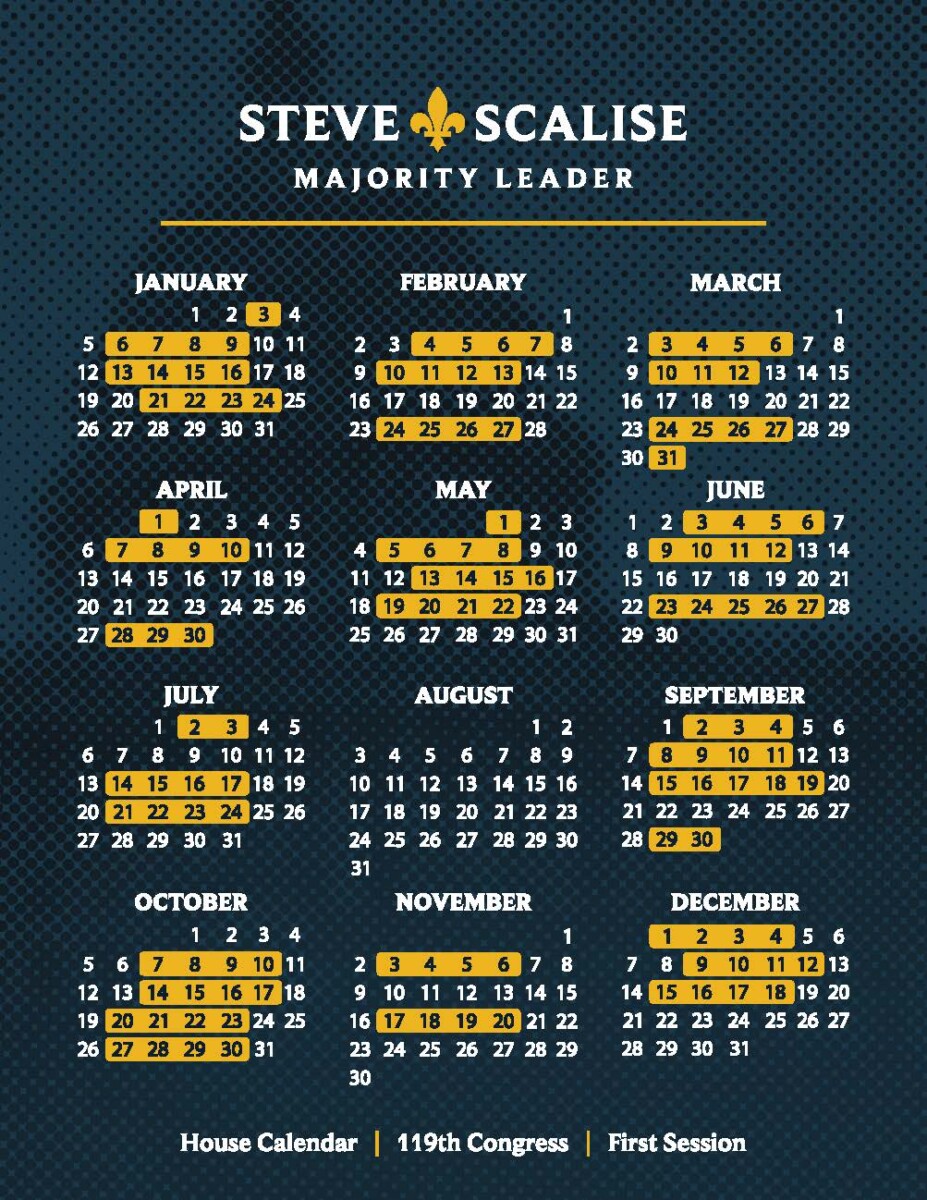
Members of the U.S. Congress try to spend as much time in their states/districts as possible. Both the House and Senate leadership have published session calendars for 2025. By reviewing these calendars, you can determine when your senators and congressman are likely to be “back home” by looking for dates not in session. Review the schedule documents below and find updated information at www.congress.gov/calendars-and-schedules.
House |
Senate |
|
 |
 |
What do you do now?
Use the instructions available at arsa.org/congress to get in touch with the offices that represent you and invite them to visit your facility on one of the dates for “district work.” For talking points and other guidance, visit arsa.org/legislative or contact ARSA.
Training & Career Development
Make ARSA Training Work
ARSA’s online training program represents its most-valuable benefit to the aviation industry: knowledge gained through training and experience. The association’s team has turned its decades of work on behalf of aviation maintenance into more than 80 hours of on-demand content.
While sessions are available for registration at any time – ARSA member discounts available – companies can also incorporate the association’s training into their regular programs:
(1) Subscription. Make up-front, bulk purchases of training hours. The details of each subscription can be customized, including focus on specific subject areas (e.g., human factors) or options for specially-priced session access after the initial hours have been used.
(2) “Championing” a session. Guarantee a certain number of attendees for training in a particular topic that will also be made available for general registration. Variations include open registration for a live session (i.e., company personnel participate at the same time as general registrants) or a company-specific live event for which a recorded version (not including any company-specific information) is made available for on-demand registration.
(3) Tailored training. Contract ARSA’s management firm Obadal, Filler, MacLeod & Klein, P.L.C. to produce or modify training specific to your organization. The team can then re-record it (or offer it as a separate live session) for ARSA’s training program. Tailored programs are priced differently from ARSA’s hourly rate and are administered by OFM&K, which allows for a client engagement and related attorney-client privilege for all discussion.
For more information about ARSA’s training program, review the menus below. If you have questions or would like to learn more about ways to integrate ARSA training into your own program, contact Vice President of Operations Brett Levanto (brett.levanto@arsa.org).
Government employees: Contact ARSA directly for auditing opportunities.
Registration: Registration and payment may be processed directly through the training platform/course catalog (free account creation required).
Technical questions and assistance: Click here for FAQ and technical support from training platform vendor.
Refunds: No refunds are granted for ARSA training sessions. When classes are canceled, registrants can choose from future courses of equal value. If a registrant is unable to attend a live session, their registration allows access to the on-demand, recorded version of the webinar.
IA Approval: A number of ARSA training sessions have been accepted for Inspection Authorization (IA) renewal credit. These sessions are denoted on their registration page with their FAA course acceptance number (in red).
Benefits: Registration for an ARSA-provided training session includes:
- Access to the live class session on the scheduled date (if applicable).
- Unlimited access to the on-demand, recorded version of the webinar to be made available after the live session is complete (or at time of purchase, for on-demand classes).
- A copy of the presentation and all reference material with links to relevant resources and citations.
- A certificate* upon completion of the session as well as any required test material.
OFM&K Training Portal: All of ARSA's training sessions are provided through OFM&K's training portal. As the training provider of choice for ARSA and a trusted resource for the aviation community, the firm's training materials represent a vital tool for entities pursuing regulatory compliance and business success. All of the courses are administered via PotomacLaw.InreachCE.com, which is not part of ARSA's website.
Complying with Part 145 – “Soup to Nuts” (Four Hours) Instructor: Sarah MacLeod Description: Specially recorded with a hand-picked audience for interactive discussion, this session thoroughly reviews 14 CFR part 145, discusses the application of the rule and overviews some practical implications of obtaining and maintaining a repair station certificate. Pricing Note: This is a four-hour session and is $300 for members and $600 for non-members. Click here to register and get access for 90 days.
Sessions Accepted for IA Renewal Credit Eight of ARSA's on-demand training sessions have been accepted by the FAA for Inspection Authorization renewal credit under 14 CFR § 65.93. Each session is currently available for registration and immediate access:Click here to purchase all eight sessions (plus one required prerequisite) at a “bundled” discount – let ARSA take care of your IA renewal requirements this year. Click here to purchase all eight sessions (plus one required prerequisite) at a “bundled” discount.
Aircraft Parts
Audit Activism & Prophylactic Lawyering
Drug & Alcohol Testing
Human Factors
Instructions for Continued Airworthiness
Parts 21, 43, 65, 145 (and others)
Public Aircraft"Going Global" - International Regulatory Law
Grassroots Advocacy
Recordkeeping – "Finishing the Job with Proper Paperwork"
The Fourth Branch of Government (Administrative Agencies and Procedures)
Self Disclosure Programs and Practices
(1) Subscription. Make up-front, bulk purchases of training hours. The details of each subscription can be customized, including focus on specific subject areas (e.g., human factors) or options for specially-priced session access after the initial hours have been used.
(2) “Championing” a session. Guarantee a certain number of attendees for training in a particular topic that will also be made available for general registration. Variations include open registration for a live session (i.e., company personnel participate at the same time as general registrants) or a company-specific live event for which a recorded version (not including any company-specific information) is made available for on-demand registration.
(3) Tailored training. Contract ARSA's management firm Obadal, Filler, MacLeod & Klein, P.L.C. to produce or modify training specific to your organization. The team can then re-record it (or offer it as a separate live session) for ARSA’s training program. Tailored programs are priced differently from ARSA’s hourly rate and are administered by OFM&K, which allows for a client engagement and related attorney-client privilege for all discussion.
For more information about ARSA's training program, review the menus below. If you have questions or would like to learn more about ways to integrate ARSA training into your own program, contact Vice President of Operations Brett Levanto (brett.levanto@arsa.org).The association’s training program is provided through Obadal, Filler, MacLeod & Klein, P.L.C., the firm that manages ARSA. To go directly to OFM&K’s online training portal, visit potomaclaw.inreachce.com. To learn more about the association’s training program and see course availability, visit arsa.org/training.
What training do you need? Contact ARSA to let the association know and help get it developed.
From the Ground Up – The Awareness Problem
By Robert Ryan, President, Ryan Strategies International
Note: This ongoing series kicked off in the June 2025 edition of the hotline.
Awareness is the main obstacle to aviation maintenance technical workforce development. Very few in the general public know how many roles contribute to the safety of aircraft on the ground and in the air.
Bias towards trades or “blue collar work” that involve people “getting dirty” is prevalent. Many young people are never made aware of the vast career opportunities in the trades due to exclusion from early education. Boys and girls may be given steam shovels, bulldozers, cranes, and other “tools” for play, but they are not taught, let alone encouraged, to believe they could or should turn play into enduring careers.
As adults, we think about aviation in basic terms from books, magazines, films, and classroom discussion. Smart, professional, highly regarded pilots and amicable flight attendants are front and center, supported by ticket agents and others on the ground.
Rarely, if ever, do any of us give real attention to these people. No time is invested in the many individuals and businesses who skillfully take care of each aircraft and component, working together in a complex international network to maintain airworthiness. It is as if this preparation “happens” without human beings being involved. One never sees technicians taking apart an engine or replacing worn parts in the middle of the night or the many professionals outside of hangars and off airport ramps that perform work on components in specialized facilities. This work is performed out of sight of passengers.
Building awareness of the need for technicians demands showing who they are, what they do, and the importance of their 24×7 attention to detail and adherence to high standards. Perfection and precision don’t “just happen.” They are the result of many minds over many years refining the working of each aircraft’s many components and systems.
Education has not kept up with many career choices and opportunities. Young people pursuing college education do not learn of the trades, their complexity and importance, until they realize the degree that cost so much and took so long isn’t suited to their aptitude and lifestyle. When they do become aware and explore on their own, they are amazed and confused as to why they weren’t taught more options sooner.
The need for new manpower is vast and existent (Boeing now projects the need for 710,000 new technicians to meet explosive aerospace growth). Breaking bias demands building awareness beyond the classroom, parents and other caregivers must be enlisted to show children about aviation’s many opportunities.
Here are some ways to counter the bias and build awareness:
(1) Openly encourage employees to get the word out to schools, parent, and teacher groups. Many existing professionals have student age children or are connected to them but have not thought critically about how to share their experiences.
Once in contact with the local schools, parents, and teachers, offer:
(a) Information on the scope of need for technical talent in aviation.
(b) Data on career opportunities for students and young adults.
(c) Industry resources (like avmro.arsa.org/careers).
(d) “Giveaway” items like flyers, pamphlets, toys, or trinkets for distribution to students, their parents, and teachers (if you go to industry conventions, think about what would be on a booth table).
(2) Contact school principals and counselors within a ten-mile radius of your business to discuss aviation careers (use resources like the National Center for Education Statistics to find schools).
(3) Contact leaders or advisors of after-school on campus clubs. Many are always looking for new material to explore and share. Clubs centered around tools and mechanics, science, and careers of the future are good bets.
(4) Contact media about sharing public service messages. Many radio and television stations provide this service free of charge. These can be messages as short as ten seconds, to a full-on interview of five minutes stating the need, the pathways, and the great careers waiting for graduates, or anyone interested in a new career.
(5) Post flyers on community message boards in high volume supermarkets, distribute e messages to groups such as Boys and Girls Clubs, YMCA/YWCA’s, sports leagues leadership (soccer, baseball, softball, basketball, and bowling).
(6) Place advertisements in local and regional media. These publications have a lot of small space available free of charge as a public service.
Remember that word-of-mouth is the most successful form of referral and public service advertising. If you can get an employee who will share their experience, it will boost credibility and greatly extend the success of your message.
Biases and lack of awareness can be overcome with openness and information. At the very least your efforts will boost public understanding and appreciation for the hard workers in the industry and will in all probability plant seeds in the field of student candidates to become aerospace professionals.
Robert “Bob” Ryan is president of Ryan Strategies International, which provides business development for companies and non-profit entities to accelerate commerce and capture revenues in growing supply chain markets. The firm is based in Vancouver, Washington. For more information, visit www.ryanii.com or call 503.250.2337.
Free Member-led SUP Webinar
On Aug. 5, ARSA Enterprise Member StandardAero will lead a webinar on “Best Practices for Strengthening Training Programs to Identify Suspected Unapproved Parts.” The session is presented through StandardAero’s participation in the Aviation Supply Chain Integrity Coalition, formed to address concerns about aviation parts in the wake of the AOG Technics parts documentation scandal in 2023.
The coalition’s 2024 report recommended 13 actions for industry to improve supply chain integrity. The Aug. 5 webinar is part of the group’s recommendation for improved training materials and programs promoting best practices for preventing SUP introduction.
Webinar Information
Description: Aerospace stakeholders must ensure knowledge and competence for both internal personnel and external suppliers related to parts purchasing, receiving, and inspection processes. Brent Ostermann, StandardAero vice president of product assurance and quality, will discuss best practices and provide examples of training programs the company has created to enhance suspected unapproved parts identification.
Date & Time: Tuesday, Aug. 5, 2025 from 12:30 – 1:00 p.m. EDT.
Price: Free
Platform: Zoom
Registration: https://us06web.zoom.us/webinar/register/WN_lIMImkw_RvyWuWf7dy0XnQ (A confirmation with calendar appointment is sent after registration)
ARSA supports the development and sharing of effective business practices based in knowledge of the plain language of the regulations. The association encourages all persons dealing in aircraft parts to form that regulatory foundation in addition to learning from the experiences of other members:
(1) To read the ARSA-supported, DOT-organized Aerospace Supply Chain Resiliency Task Force – which operated separately from the private Integrity Coalition – visit arsa.org/ascr.
(2) To see ARSA’s training series on the regulations impacting aircraft parts purchase and sale, arsa.org/parts-training.
Regulatory Compliance Training
Test your knowledge of 14 CFR § 21.33, inspections and tests for TC applications.
Click here to download the training sheet.

Membership
A Strong Half
As reported to the board, ARSA has been blessed by two strong quarters of new members, both quarters brought in 19 members, for a total of 38.
Eight of those new members were referrals from current members, which blessed the latter with total savings of almost twelve thousand dollars.
A shout out to the referring and new members!
|
MGM Program YTD 2025 |
|||
| Referring Member | New Member | Dues Discount | Month |
| Southwest Aerospace Technologies, LLC | Axcess Aviation Maintenance Services, Inc. | $120.00 | January |
| Air Transport Components, LLC | Tulsa Aerospace Component Overhaul and Repair Inc. | $120.00 | January |
| Southwest Aerospace Technologies, LLC | California Radomes, Inc. | $120.00 | February |
| Diversified Aero Repair, LLC | HIGH CLASS MRO INC | $60.00 | March |
| Compressed Gas Systems, LLC | DRJ Technologies | $120.00 | April |
| Diversified Aero Repair, LLC | Alliance Aeronautical Composites, LLC | $60.00 | April |
| Compressed Gas Systems, LLC | Tym’s LLC | $50.00 | April |
| Tym’s LLC | Corporate Air Parts, Inc. | $180.00 | April |
| Continental Aircraft Support, Inc. | Turbo Technologies, L.L.C. | $120.00 | April |
| Continental Aircraft Support, Inc. | Jet Air MRO, LLC | $120.00 | May |
| Alliance Aeronautical Composites, LLC | General Airframe Support, Inc. | $120.00 | June |
ARSA’s Member Getting Member (MGM) program is a great way to help ARSA and yourself.
The new member applicant need merely place your company’s name in the “how did you hear about ARSA” field of the membership application and the membership team does the rest.
Welcome & Welcome Back – New & Renewing Members
ARSA’s members give the association life – its work on behalf of the maintenance community depends on the commitment of these organizations. Here’s to the companies that joined or renewed in July:
New Members
Astrodyne International, Inc., R01
Charles Samsel, Affil
Renewing Members
Aero-Mark MRO, LLC dba Fairhope Aerospace, R02, 2015
AllFlight Corporation, R03, 2011
Aircraft Ducting Repair, Inc., R03, 2002
Airborne Aviation Hawaii, R01, 2023
Aviation Fabricators, Inc., R03, 2024
Cross-Check Aviation, R02, 2003
GA Telesis Component Repair Group Southeast, LLC, R04, 2022
General MRO Aerospace, Inc., R03, 2015
Koturov, Myrat, Affil, 2024
MTI Aviation, Inc., R02, 2011
National Flight Services, Inc., R03, 1991
Performance Repair Group, LLC, R02, 2013
Rotorcraft Repair & Manufacturing, LLC, R01, 2019
Southwest Airlines, R06, 2005
Summit Aerospace, Inc., R05, 2003
Thrust Tech Accessories Inc., R03, 2023
Twin Manufacturing Co., dba TWIN MRO, R04, 1993
Unical 145 Inc., R04, 2012
Vanguard Aerospace, LLC, R01, 2022
A Member Asked…A good TIP?
Q: A customer is stating that new parts no longer require an FAA Form 8130-3 or EASA Form 1 under the NOTE in MAG Change 10, Section B; Appendix 1, Paragraph 10.1. The note states that the TIP takes precedence over the MAG and new part requirements are identified in the TIP paragraph 7.10. I think our customer is stretching the limits of the section 7.10.4.
Here is the TIP paragraph 7.10.4 language:
7.10 New Modification and Replacement Parts
7.10.1 Except as provided in paragraphs 7.10.3, 7.10.4 and 7.10.5, each new modification and replacement part exported to the importing State with the EA’s airworthiness approval will have an EA’s Authorized Release Certificate.
The importing Authority will accept standard parts exported from the other party when accompanied by a manufacturer’s Certificate of Conformity verifying the part’s compliance to an officially recognized standard, e.g. a U.S. or EU industry, U.S. or European government or international specification.
7.10.4 The importing Authority will accept the EA’s Authorized Release Certificate issued by the U.S. based repair stations holding EASA Approved Maintenance Organization certificates upon release of a part, when:
7.10.4.1 The new modification and replacement parts (subcomponents) incorporated in that part during maintenance, preventive maintenance, or alteration are not FAA critical PMA parts or life-limited parts; and
7.10.4.2 The new modification and replacement parts are accompanied by documentation that ensures both traceability to the FAA-approved Production Approval Holder (manufacturer) of the part and conformity to its approved design. Such documentation has to be acceptable under the quality system required to comply with U.S. 14 CFR section 43.13 paragraphs (a) and (b), section 145.211(c)(1)(i). FAA Advisory Circular 145-9 provides additional information that can be used as an acceptable means to meet quality system requirements. Examples of this documentation are purchase orders, shipping documents, certificates or statements of conformity, part markings, technical or design data (or a combination thereof).
The way we interpret the MAG, for new parts used in EASA dual release work, nothing has changed between Change 9 and 10. Is this correct?
A: The customer is correct, the TIP clearly states that the only articles used during maintenance destined for an EASA/FAA dual release that will require an “authorized release”, i.e., FAA Form 8130-3 or EASA Form 1 from the production approval holder are critical PMA parts and life limited parts.
I have been reviewing the update a little more and have a few clarifications.
Q1: The TIP is only for US repair stations and methods would not apply for repair stations in a non-bilaterial country?
A: Correct; bilateral is between two “states”, in this case, the United States and the European Union.
Q2: TIP 7.10 in general is only to be used by repair stations to consume new parts during maintenance, correct?
The TIP language applies to new parts that will be used in dual releases under the MAG, which do not have an FAA Form 8130-3 from the PAH.
Q3: For 7.10.4 the parts still need to be traced to a PAH/PMA holder, so I am not seeing an advantage of this clause; is this the correct thought?
The “trace” is less stringent and more in alignment with U.S. business laws and practices. It also acknowledges, indirectly, that establishing airworthiness is a “trace” to the PAH through meeting an approved design, a concept reinforced by § 3.5(d) of the U.S. safety regulations.
So, now, other than critical or life limited parts, new parts without FAA Form 8130s or EASA Form 1s can be processed under part 43 and § 145.211(c)(1)(i) for use in dual release work, if those parts have purchase orders, shipping documents, certificates or statements of conformity, part markings, technical or design data (or a combination thereof).
ARSA’s New Article Inspection Form (available in the association’s free “Tools for Members”) documents the “part markings, technical or design data (or a combination thereof)” required by the TIP through the §§ 43.13(a), (b) and 145.211(c)(1)(i) receiving process.
Have questions about aviation regulatory compliance, legislative policy, or ARSA resources? Ask ARSA first!
Advertising – Term Flexibility
Going to a trade show and wanting people to know a couple months or weeks in advance?
Need a special process?
Need a special person?
ARSA’s periodicals and websites provide first and last minute announcements at reasonable prices and lengths. Flexible advertising terms and statistical feedback on ad engagement allows targeting around key activities.
Check out the variety of ways your company can shine while the association delivers daily, weekly, and monthly news and updates to members, customers, service providers, and to the aviation maintenance worldwide web.
Have a new way you wish to use advertising space? Give us a call or submit through “Ask ARSA” so we can help.
Resources
ARSA strives to provide resources to educate the general public about the work of the association’s member organizations; should you need to provide a quick reference or introductory overview to the global MRO industry, please utilize AVMRO.ARSA.org.
Careers in Aviation Maintenance
How do you share the industry’s story with the people who could be its future? Teach them about the great work done every day to keep the world in flight. (Even if we can’t recruit somebody, we sure can make them thankful for our work.)
ARSA Member Benefits
From access to industry expertise to growing your own through education and training, ensure your company gets the most out of its investment in ARSA.
U.S. Legislative Action Center
ARSA requests its members’ assistance to keep FAA reauthorization front and center on the congressional agenda and ensure our workforce priorities are included. Please use ARSA’s grassroots action center (sponsored by Aircraft Electric Motors) to send a quick note to your elected representatives in support of our efforts.
Industry Meetings & Events
| LABACE | 8/5-7/2025 | Sao Paulo, Brazil |
| ATEC Fly In | 9/16-19/2025 | Washington, DC |
| MRO Europe | 10/14-16/2025 | London |
| NBAA BACE | 10/14-16/2025 | Las Vegas, Nevada |
| UAFA Annual Conference | 11/19-20/2025 | Boise, Idaho |
| Aerial Works Safety Conference | 12/7-9/2025 | Boise, Idaho |
| ARSA Annual Conference | 3/17-20/2026 | Arlington, Virginia |
the hotline is the monthly publication of the Aeronautical Repair Station Association (ARSA), the not-for-profit international trade association for certificated repair stations. It is for the exclusive use of ARSA members and federal employees on the ARSA mailing list. For a membership application, please call 703.739.9543 or visit arsa.org/membership/join. For information about previous editions, submit a request through arsa.org/contact. This material is provided for educational and informational purposes only. It does not constitute legal, consulting, tax or any other type of professional advice. Law, regulations, guidance and government policies change frequently. While ARSA updates this material, we do not guarantee its accuracy. In addition, the application of this material to a particular situation is always dependent on the facts and circumstances involved. The use of this material is therefore at your own risk. All content in the hotline, except where indicated otherwise, is the property of ARSA. This content may not be reproduced, distributed or displayed, nor may derivatives or presentations be created from it in whole or in part, in any manner without the prior written consent of ARSA. ARSA grants its members a non-exclusive license to reproduce the content of the hotline. Employees of member organizations are the only parties authorized to receive a duplicate of the hotline. ARSA reserves all remaining rights and will use any means necessary to protect its intellectual property.
© 2025 Aeronautical Repair Station Association