


2026 – Edition 6 – July 2

Table of Contents
Note: The order of material varies in hotline emails, but is always presented the same on this landing page. Readers scrolling through content on or printing this page will find it organized consistent with the table of contents.
President’s Desk
The Joy of the Future
Last month, I shared ARSA’s joy in representing members at government meetings, so members don’t have to attend.
The association’s team attended the FAA/EASA International Safety Conference (see the update in this month’s “ARSA Works” section) event that ping pongs between the United States and Europe, this year’s American installment followed a familiar template:
(1) The agencies celebrated great partnership.
(2) Presenters shared successes in evolving compliance.
(3) New technologies captured attention.
Based on the ARSA team’s yearly reports, those three statements sum up every one of the Conferences since the days of FAA and JAA. It is turning the adage that the “more things change, the more they stay the same” into an unfortunate reality. Even Administrator Bryan Bedford, in his welcoming remarks, showed some self-deprecation about the duplication of previous initiatives: Every administrator shows up, he said, trying to re-organize and modernize the agency. Here we go again.
The association focuses on practical improvements without rhetoric or apology. Executive Vice President Christian Klein led a panel on “Digital Maintenance and the Aviation Supply Chain.” That discussion continued years of work through the Maintenance Management Team with ARSA pushing down barriers to digital recordkeeping. Progress is slow but clear, as here in the United States the FAA is finally making admitting it can’t impose unnecessary certificate requirements for the sake of keeping records using media other than paper and ink. ARSA continues its long effort to prevent such complication.
While real progress is rarely reported, there is plenty of excitement over the next magical solution. The plenary sessions gave the sense that there is no problem, from ATC reform to rulemaking, that can’t be solved through artificial intelligence. Apparently, the AI on which aviation safety will depend should be designed and developed by…well, AI. Advanced technologies provide tools for humans to utilize, but these new systems only serve if humans’ original and real intelligence keeps national and international airspace safe.
Observing ARSA’s representation is a joy for me…allowing focus on the real, right-now work of aviation safety. Taking joy in the future demands attention to the regulatory language that affords flexibility in demonstrating compliance. That flexibility, in support of safety and business, is the true joy of ARSA and benefit of its membership.
 |
John Riggs 2025 ARSA president | Director of Airworthiness, Chromalloy |
ARSA Works
Digital Attention Dominates FAA/EASA Conference
The 2026 FAA/EASA International Safety Conference returned to the United States with outsized focus on digitalization and artificial intelligence. ARSA’s Christian Klein and Brett Levanto joined several member company representatives to participate on behalf of the maintenance community, with Klein leading a panel discussion on “Digital Maintenance and the Aviation Supply Chain: From Data to Deployment.”
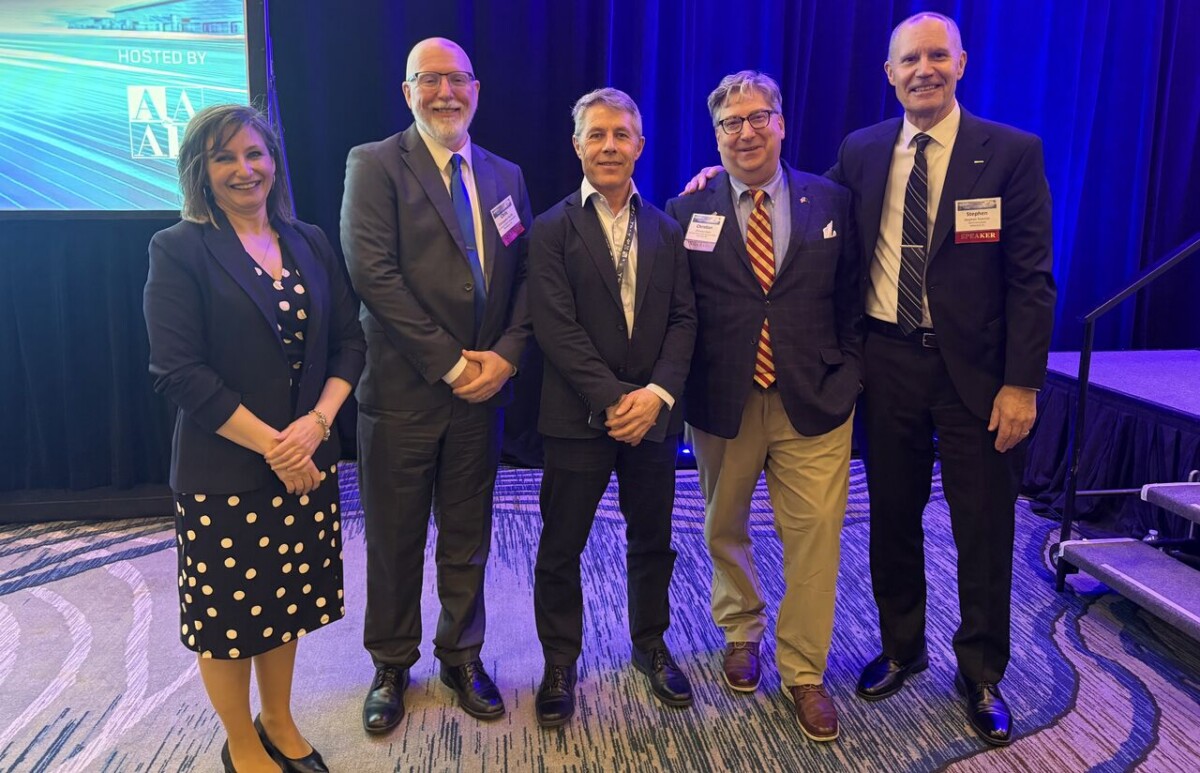
ARSA EVP Christian Klein (second from right), after his “Digital Maintenance” panel with (from left) Eugenia Diaz Alcazar (EASA), Chris Parfitt (FAA), Stuart Fox (IATA), and Steve Szpunar (HEICO).
In his opening of the Conference, FAA Administrator Bryan Bedford announced the promotion of Cailtin Locke to Associate Administrator for Aviation Safety. Locke, well known to ARSA and a regular speaker at the association’s Annual Conference, can provide a permanent leadership voice to the agency’s safety arm as its top leadership pursues reorganization and modernization. Bedford admitted his early focus on these initiatives reflected early goals of every appointed administrator upon arrival at the regulator.
Across the event’s three days, both the FAA and EASA’s focus on advancing technology, particularly AI. In particular, American leaders celebrated machine learning and other agentic technologies as solutions for countless challenges to the National Air Space, including air traffic control and rulemaking. Putting humans “on the loop” rather than in it is clearly a target of the current administration, supported by hefty congressional investments.
In a short “flash talk,” the FAA’s Drug Abatement Division repeated previously available updates on the agency’s development of guidance supporting implementation of drug and alcohol testing requirements at repair stations outside of the United States. While the agency works on yet-to-be-released instructions for inspectors and certificate holders, affected repair stations must coordinate internally with compliance, legal, human resources, quality, and operational personnel as well as customers and suppliers.
ARSA members should refer to arsa.org/regulatory/faa/operations/drug-and-alcohol-testing for background. Impacted international companies are encouraged to assist in building compliance resources using the cross-reference tools created by ARSA.
The 2026 FAA/EASA Conference was hosted by AAAE at the Westfields Marriott in Chantilly, Virginia. The 2027 Conference will return to Europe as the agencies continue to alternate hosting responsibilities – stay tuned for updates.
Were you (or a colleague) at the FAA/EASA Conference? Would you like more information about the event and ARSA’s representation of the industry there? Contact the association with questions or comments.
To see coverage a previous International Aviation Safety Conferences, review the content at arsa.org/faa-easa-conference.
UK Aligns Renewal Process with MAG Language
On June 22, the UK CAA confirmed to ARSA it had corrected its renewal process under the bilateral agreement between the United States and United Kingdom. U.S.-based repair stations holding CAA approval under the bilateral should utilize the link referenced in Section B, Paragraph 3.1.3 of the FAA/UK CAA MAG and follow the process outlined in the guidance.
UK Part 145 approvals are valid for two years. Each applicant is responsible for submitting a renewal application in a timely manner, which should be done 90 days prior to their certificate expiration date. An August 2025 ARSA member query noted the MAG pointed to a non-existent web option. After providing a work around while correcting its resources, the UK CAA has activated the application and renewal portal referenced in the guidance.
ARSA members holding UK approval under the bilateral are encouraged to schedule their application for renewal well in advance of the 90 day mark. To confirm continued acceptability of a UK CAA supplement, use the matrices tracking compliance with the special conditions and supplement guidance (click here for more information).
To download a copy of CAA Form SRG 1783, which is necessary for both initial application and renewal, click here.
To access the current version of the MAG, which CAA officials indicate will be updated in the near future, click here.
Final Documents/Your Two Cents
This list includes Federal Register publications, such as final rules, Advisory Circulars and policy statements, as well as proposed rules and policies of interest to ARSA members.

Legal Brief
Editor’s note: This material is provided as a service to association members for educational and informational purposes only. It does not constitute legal or professional advice and is not privileged or confidential.
Is the FAA’s Repair Station Database Legal?
By Christian Klein, Executive Vice President
AVinfo Find a Facility Dashboard allows users to search for part 145 repair stations by name, certificate number, rating, or location. The public record for each certificated facility also includes the name and contact information for the accountable manager. Given restrictions on the federal government sharing personal data, is this permissible?
When it comes to making information publicly, federal agencies must balance two laws.
In the interest of transparency, the Freedom of Information Act requires government information to be released upon request unless it falls into one of the FOIA exceptions.
On the other hand, the Privacy Act limits the release of personal information contained in an agency’s records without permission, unless the record falls into one of 13 exceptions.
The Privacy Act exceptions cover a wide range of permissible disclosures, including sharing the information within an agency on a need to know basis, with other agencies for legally authorized civil or criminal law enforcement, with Congress, the Government Accountability Office, the Bureau of the Census, the National Archives, or based on a court order.
Other permissible disclosures include “routine use” (i.e., the disclosure of a record for a purpose compatible with the purpose for which it was collected), to a consumer reporting agency if the individual owes the government money, for statistical research (if the personal information is not individually identifiable), and those otherwise required (or allowed) by law.
In the case of the repair station database, the FAA’s authority to release the information on the repair station, i.e., the certificate holder derives from the powers Congress has granted the agency and from the FAA’s own regulations. The FAA developed 14 CFR part 145 based on that statutory authority. 14 CFR § 145.5(b) opens the door to public scrutiny of repair stations (literally!) by requiring that, “The certificate and operations specifications issued to a certificated repair station must be available on the premises for inspection by the public and the FAA.” (Emphasis added.) The air agency certificate does not require the name of the accountable manager or any other individual associated with the certificate holder.
The name and contact information for the accountable manager (whose contact information is shared in the FAA database) may be defined by § 145.3(a) but it is not “collected” by the agency. Rather the name is provided on the repair station’s roster, which need not be provided to the agency. Therefore, ARSA questions if the individual’s name and contact should be made public by the federal government.
Like the ability for a mechanic or pilot to withhold contact information, the name and contact information for an accountable manager or any other representative of a certificate holder should not be revealed to the public without the individual’s permission.
Legal or not, the online availability of information on repair station personnel heightens the individuals’ risk of being targets of harassment or fraud. Knowing the federal government is sharing this data is the first step to protecting yourself. Be cautious and stay vigilant.
Layman Lawyer
Editor’s note: This material is provided as a service to association members for educational and informational purposes only. It does not constitute legal or professional advice and is not privileged or confidential.
Less than Major Digitalization
By Brett Levanto, Vice President of Operations
The Major Repair and Alteration Modernization Act (H.R. 9037), introduced in May by Texas Representative Troy Nehls, would not impact the rules or technical standards; rather it would mandate the FAA to improve its digital tools associated with the FAA Form 337.
Section 43.9(d) requires major repairs and alterations be entered on a form to be disposed of “in the manner prescribed in Appendix B [of part 430. The 337 is to be used except by repair stations that perform major repairs “in accordance with a manual or specifications acceptable to the Administrator.”
The Act directs the FAA to accept digital 337s. Though there is an electronic submission option available via the agency’s eForms portal, Rep. Nehls is pushing the agency to integrate that resource with industry recordkeeping tools through Application Programming Interfaces (APIs) with third party software tools. The result should allow the submission of major repair or alteration records directly from their own electronic systems, rather than navigating the FAA portal. It also would streamline the government’s storage and publication of related data through the Civil Aviation Registry Electronic Services (CARES).
The proposed legislation does not change the underlying recordkeeping requirements associated with major repairs and alterations. As an industry required to understand compliance obligations, maintenance organizations must confirm the plain language of the rules to ensure that any system used, however it interfaces with the FAA, complies with the minimum standards of 14 CFR.
Major repairs and alterations are defined in § 1.1. Neither can be done according to accepted practices or elementary operations and each might appreciably affect weight, balance, structural strength, performance, powerplant operation, flight characteristics, or other qualities affecting airworthiness.
When a Form 337 is required, Part 43 Appendix B directs the person executing it to forward a copy to the FAA Aircraft Registration Branch in Oklahoma City within 48 hours after the work is approved for return to service. Repair stations using a work order must provide a signed copy to the aircraft owner including a statement that the work was performed in accordance with the current regulations. When owners or operators receive documentation of a major repair or alteration, §§ 91.417(a)(2)(vi) and 91.417(b)(2) requires them to maintain copies of the forms until the aircraft is sold. Upon sale, the records must be transferred to with the aircraft.
H.R. 9037 is merely a bill; should it succeed in becoming law, the FAA would need implementation time to update digital resources. Regardless of whether action is taken or results in promised improvement to submission procedures and availability of aircraft registry data, the regulatory demands on repair stations performing major repairs or alterations remain the same:
(1) Make a major/minor determination.
(2) Complete the appropriate maintenance documentation as required by § 43.9.
(3) Provide the required form (on an FAA Form 337 or work order) to the customer and submit a copy to the FAA as applicable.
(4) Retain copies according to the requirements of Part 43 Appendix B and § 145.219.
ARSA on the Hill
A Summer of Action
By Christian Klein, Executive Vice President
The congressional August recess from July 24 to Aug. 3 is the time to meet with House and Senate candidates “back home” to build relationships and raise visibility. With the competition this election cycle, contenders will be eager to meet constituents.
Hosting a facility visit will have the most impact; setting one up is easy. ARSA’s Legislative Action Center has resources to identify your representatives and senators and contact information for congressional schedulers. An invitation email gets things started:
I write in my capacity as YOURTITLE of YOURCOMPANY in YOURCITY to invite [Sen./Rep.] CANDIDATE/LEGISLATORLASTNAME for a visit to our aviation maintenance facility during the August recess or at his earliest convenience.
The visit will be an excellent opportunity for [Sen./Rep.] CANDIDATE/LEGISLATORLASTNAME to learn firsthand how YOURCOMPANY contributes to YOURSTATE’s economy and fits into the global aerospace sector. It will also allow [Sen./Rep.] CANDIDATE/LEGISLATORLASTNAME the opportunity to discuss business conditions with leadership, tour the facility, and meet employees.
Thank you for considering this invitation. We look forward to hosting [Sen./Rep.] CANDIDATE/LEGISLATORLASTNAME.
Please propose dates and times for a visit this summer or at the earliest convenience.
Personalize the note as necessary, and copy any of the candidate’s or legislator’s staff with whom you have had contact.
Once the meeting is set, let ARSA know. The association provides a proposed agenda, talking points, and suggestions to make the meeting successful.
Hosting a facility visit isn’t the only way to get the candidate’s attention. Attending local fundraisers for congressional candidates (usually found on the campaign websites) or volunteering for a campaign. The investment of your personal money and time will be noticed and remembered.
With the next FAA reauthorization rapidly approaching it’s imperative that legislators (new and incumbent) understand how decisions in the nation’s capital affect the aerospace maintenance.
ARSA is standing by to help turn the summer heat on the legislative branch of government.
Finding Your Members of Congress
Senators and congressmen use the summer to meet constituents. ARSA members need to take advantage of this interest to schedule facility visits, attend town halls, meet and greets, or any other excuse to spend time with the person representing your business in Congress.
Building an ongoing relationship with elected officials is a matter of simple effort. The most successful constituents are patient and persistent…and they know how to use a few simple tools.
Who represents you?
Using ARSA’s Legislative Advocacy Tools, find your elected officials. Remember to search your personal and all professional zip codes; there may be multiple officials/offices with an interest in your needs. Get started at arsa.org/congress.
When will they be home?
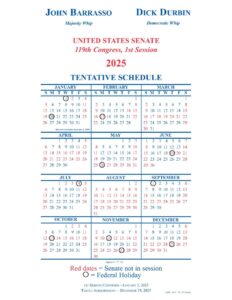
Members of the U.S. Congress try to spend as much time in their states/districts as possible. Both the House and Senate leadership have published session calendars for 2026. By reviewing these calendars, you can determine when your senators and congressman are likely to be “back home” by looking for dates not in session. Review the schedule documents below and find updated information at www.congress.gov/calendars-and-schedules.
House |
Senate |
|
 |
 |
Training & Career Development
Series – Part 145 in Total
In July and August, ARSA will administer a series of online training sessions combining to walk through every section of 14 CFR part 145, “Repair Stations.” The new series replaces the association’s previous sessions focusing exclusively on the rule, providing new context and analysis of the current regulatory language.
The sessions will be available as on-demand recordings after the live training sessions are complete. Interested registrants may select individual hours or purchase a discounted “bundle” to get complete access:
Session 1: Complying with Part 145 – Subparts A & B
Date: Thursday, July 16 @ 11:00 a.m. EDT
Registration & More Information: Click Here
Session 2: Complying with Part 145 – Subpart C
Date: Wednesday, July 29 @ 11:00 a.m. EDT
Registration & More Information: Click Here
Session 3: Complying with Part 145 – Subpart D
Date: Wednesday, Aug. 19 @ 11:00 a.m. EDT
Registration & More Information: Click Here
Session 4: Complying with Part 145 – Subpart E
Date: Wednesday, Aug. 26 @ 11:00 a.m. EDT
Registration & More Information: Click Here
To purchase the discounted “bundle” and register for all four sessions, click here.
Registration for an ARSA-provided training session includes:
- Unlimited access for 90 days to the recording available after the live session is complete.
- A copy of the presentation and all reference material with links to relevant resources and citations.
- A certificate upon completion of the class, as well as any test material.
The association’s training program is provided through Obadal, Filler, MacLeod & Klein, P.L.C., the firm that manages ARSA. To go directly to OFM&K’s online training portal, visit PotomacLaw.inreachce.com. To learn more about the association’s training program and see course availability, visit arsa.org/training.
On Demand – Employee Reporting & Root Cause Analysis
Two Safety Management Systems Training Sessions are now available through ARSA’s training program for registration and immediate on-demand viewing. The trainings were co-administered by ARSA and the Aircraft Electronics Association as part of its ongoing webinar series covering integration of SMS into a repair station’s quality system. Live attendance to the ongoing series is free and the association makes select on-demand resources available as part of its paid online training program, including access to session materials and a completion certificate.
Employee Reporting in a Repair Station
This session reviews procedures related to employee reporting under a repair station’s Safety Management System. It uses specific tools to examine communication, documentation, analysis, and action associated with hazards identified by personnel.
Click here for more information and to register.
Root Cause Analysis in a Safety Management System
This session describes procedures and tools for performing root cause analysis within a repair station’s safety management system.
Click here for more information and to register.
Registration for an ARSA-provided training session includes:
- Unlimited access for 90 days to the recording available after the live session is complete.
- A copy of the presentation and all reference material with links to relevant resources and citations.
- A certificate upon completion of the class, as well as any test material.
The association’s training program is provided through Obadal, Filler, MacLeod & Klein, P.L.C., the firm that manages ARSA. To go directly to OFM&K’s online training portal, visit PotomacLaw.inreachce.com. To learn more about the association’s training program and see course availability, visit arsa.org/training.
July SMS Webinar – Change Management
On Tuesday, July 21, ARSA and the Aircraft Electronics Association (AEA) will co-host the next session in their webinar series explaining integration of a safety management system within the operations of an FAA-certificated repair station. This is the ninth installment in the ongoing series begun last October will focus on change management under an SMS.
Session Details
Date & Time: Tuesday, July 21, 2026 @ 1:00 p.m. EDT
Title: Change Management in a Repair Station SMS
Description: This session reviews methods for managing change associated with process and program improvement in a repair station.
Price: Free
Registration: Click here
The initial series of six sessions (see March 2026 update below) introduced SMS requirements and walked through performing a gap analysis between an existing quality system and the requirements of 14 CFR part 5. ARSA and AEA have planned set of monthly installments continuing to explore elements of SMS compliance:
- May 26, 2026 – Employee Reporting in a Repair Station – COMPLETE
- June 23, 2026 – Root Cause Analysis in a Repair Station SMS – COMPLETE
- July 21, 2026 – Change management – Register Now
- August 18, 2026 – Topics from member examples
- September 29, 2026 – AEA SMS Improvements
- October 27, 2026 – What are CAA Audits Finding
- November 17, 2026 – What are CAA Audits Finding
- December 15, 2026 – Discussion with FAA
Questions about webinar administration should be directed to AEA’s Ric Peri (ricp@aea.net). Interested ARSA members should learn about access to SMS tools available through the association’s partnership with AEA:
On Demand Workshop – It All Starts with the Law
The recording of ARSA’s special workshop providing the regulatory and statutory foundation for compliance is available on demand. The resource was presented to FAA personnel as part of the association’s broader industry education efforts and is a valuable tool for aerospace professionals to understand the basics of the aviation safety rules.
| Workshop Title | It All Starts with the Law Constructing Compliance and Oversight |
| Workshop Description | This session introduces the key elements of the United States Code (Title 49) and the Code of Federal Regulations (Titles 14 and 49) driving aviation safety compliance and oversight. It also reviews other laws of interest to regulators, particularly those constraining government action, e.g., the Administrative Procedure Act, the Paperwork Reduction Act. |
| Registration | Click here to register and get access for 90 days. Government personnel (with valid .gov or equivalent international email addresses) may access the session for free, contact ARSA for instructions. Individuals who participated in the live session on May 26 get 90 days of access to the recording. |
The session is the second in a planned series that will cover industry and regulatory issues, providing baseline instruction and references for agency personnel. A recording will be available for general registration after each workshop is complete.
The year-long workshop series will also cover:
- Administrative Agencies & their Powers.
- Understanding Design, Production, Operations, and Maintenance as a “Cycle of Airworthiness.”
- Resources and actions associated with agency findings.
Teaching With a Challenge – Can You Land?
 Can you take off and land a Cessna 172 in a free online flight simulator?
The challenge is a fun diversion and an easy entry into a conversation that can spark a career.
In addition to honoring aerospace pioneers – including 2026 Weston Award winner John Goglia – the National Aviation Hall of Fame is committed to building the industry’s future. Its tools include educational resources for students and educators from kindergarten through high school that introduce the aerospace industry, stoke, and sustain interest.
Organized by target age group, the Hall of Fame’s website provides free activities including games, videos, and projects as well as recommendations for book purchases. See how these are presented at nationalaviation.org/learning.
One of those is a simple flight simulator hosted at crazygames.com. Click here to play…can you take off and land? The hotline’s editor did (after some struggles with the rudder while taxiing).
ARSA members must use these resources to engage youth, through professional and personal connections. Regardless of their interests, someone in an aviation business is doing work they’d love.
Don’t love starting with a flight simulator? Makes sense for a maintenance professional. How would you introduce aerospace in a fun way? Click here to tell ARSA.
Regulatory Compliance Training
Test your knowledge of 14 CFR part 21, subpart B. The packet contains every compliance training sheet produced by ARSA since July 2024.
Click here to download the packet of training sheets.

Membership
Who Uses What?
ARSA is interested in what tools, services, resources, and systems its members use to manage and track compliance, safety procedures and events, customer and vender information, inventory management, etc.
In ARSA’s experience, there is no “one size fits all” system, which prompted us to build one to our needs. Did your company go down this path as well?
ARSA is asking members to provide the pros and cons of the tools, services, and systems they use to help others determine what fits.
To share the information use “ASK ARSA” website form. Under the “I’m contacting ARSA because…” chose the “Something else…” option to comment under “Okay, let’s hear it.”
A Good Why
Compliance in aviation demands understanding. Turning the plain language of the rules into an underlying “why” that drives performance. Just as the “five why’s” are an essential tool in root cause analysis (see ARSA’s recent training on that subject), knowing “the big why” is essential to right action every day.
ARSA advertising is a mechanism to reach an audience focused on quality that aligns with your professional interests. The global network of repair stations, operators, manufacturers, service providers, and other aerospace professionals reading the association’s communications are the front-line decision makers.
Whether to sell or be respected, an ad placement with ARSA is a clear choice.
ARSA offers credibility; aligning your brand with a trusted industry association reinforces a commitment to safety and professionalism. Advertising in ARSA newsletters or website, or sponsoring training or events positions your company as an active participant in advancing the maintenance community.
A good why drives meaningful results. Advertising with ARSA doesn’t just promote a business, it builds relationships, strengthens recognition and supports a safer, stronger aviation community.
Learn more and request a placement by visiting the advertising page.
Welcome & Welcome Back – New & Renewing Members
ARSA’s members give the association life – its work on behalf of the maintenance community depends on the commitment of these organizations. Here’s to the companies that joined or renewed in June:
New Members
AeroTech Engineering Consultants, Affil
Heritage MRO LLC, R01
Phillip Bogard, Mil
Unicorp Systems, Inc., R03
Returning Members
AAR Corp., Enterprise, 1985
Aerospace Engineering Group, S.L., R03, 2014
Airborne Aviation Hawaii, R01, 2023
Ametek Ameron, LLC dba Ameron Global Product Support, MO, R01, 1989
General Airframe Support, Inc., R02, 2025
Florida Jet Center, Inc., R02, 2013
Heliblade International, LLC, R01, 2022
ITT Aerospace Controls LLC, R02, 2025
Lynden Air Cargo, LLC, Assoc, 2000
Mid-Jet Repair, LLC, R02, 2025
Performance Repair Group, LLC, R02, 2013
Rexair Maintenance, LLC, R01, 2025
Rice Lake Weighing System dba Measurement Systems International, R01, 2025
S & T Aircraft Accessories, Inc., R02, 2003
Scott Richard Aircraft Maintenance, R02, 2010
Stein Seal Company, R01, 2024
Tassili Airlines, Assoc, 2025
Twin Manufacturing Co., dba TWIN MRO, R04, 1993
Quick Question – SMS Lessons
ARSA and the Aircraft Electronics Association continue to explore safety management system integration.
Share your repair station’s SMS implementation experiences in this month’s “quick question.” Feedback will be used, without identifying the company or individual, to inform the associations’ ongoing webinar series as well as in construction of tools, forms, and other guidance for maintenance providers.
If the embedded survey does not appear/load, open the survey independently by visiting: https://www.surveymonkey.com/r/sms_lessons
Click here to see what questions have been asked and answered…and keep a lookout for more.
A Member Asked…So many serial numbers?
Q: I am requesting guidance regarding the proper use of serial numbers on FAA Form 8130-3.
We repair and overhaul engine components, understanding that certain parts like those with a life limit are serialized by a manufacturer require tracking. However, some customers assign internal serial/tracking numbers to parts that do not appear to be serialized by the manufacturer and then request that those numbers be added to the FAA Form 8130-3.
We are looking to standardize internal process and would appreciate ARSA’s feedback on the best approach. Our current position is that if the manufacturer data does not identify the part as serialized, we should not list a customer-assigned internal tracking number as the serial number on the FAA Form 8130-3. If needed, we would consider referencing the customer tracking number separately in the remarks or supporting documentation.
Could you please provide guidance on whether this approach is appropriate, or if there is a better recommended practice for handling customer-assigned tracking numbers?
A: If the type design of a product has a “critical” part, it must be serialized according to § 45.15(c) and listed in the airworthiness limitation section of the instructions for continued airworthiness. Now, don’t get confused, a critical part to the design approval holder translates into a life-limited part for the maintenance provider/owner/operator.
For maintenance providers, the regulation governing “tracking” of life-limited parts is § 43.10. It applies to the person removing the part from the type certificated product (aircraft, aircraft engine, or propeller) and to the first transfer or sale of that part by the remover, (see, § 43.10(d)). Since it appears that you are not the person removing the part from the product, the tracking of life-limited parts on a maintenance record is for your customer’s convenience and because you use the FAA Form 8130-3 to record your work.
There is no regulation prohibiting anyone from assigning a unique identification through a serial number to a part – whether that part originally had one or not. In fact, if your customer is an airline, you must follow its maintenance program under § 145.205, including any requirements for recordkeeping. Ironically, there is no requirement for a part number or serial number in a maintenance record (see, § 43.9). Since the FAA Form 8130-3 only satisfies §§ 43.9(a)(1)(2), and (4) and thus § 145.219(b) (and EASA special conditions), it would seem contrary to safety to prohibit the use of an customer (or repair station) assigned serial number whether the part was life-limited or not.
If the article is a life-limited part as defined in § 43.10(a), the serial number assigned by the design approval holder would be entered in Block 10 and the customer assigned unique identification in Block 12. If the part isn’t really life limited, FAA guidance for completing an FAA Form 8130-3 as a maintenance release (AC 43-9D) states for Block 10: “If 14 CFR part 45 requires a serial number to identify the product or article, enter it here. Additionally, any other serial number not required by regulation also may be entered. If no serial number is entered in this block, enter “N/A.” (Emphasis added.)
There is always the caveat that you must follow your repair station and quality procedures, so the instructions for completing maintenance inspections forms required by § 145.211(c)(3) must align with whatever decision you make.
Have questions? Take advantage of ARSA’s most valuable resource and use the “Ask ARSA First!” system to get help.
Conference Corner
Investing in Good Lessons
Registration for the 2027 ARSA Annual Conference opens in 154 days. Budget now to ensure complete participation from your team.
Plan registration, travel, and accommodations for both experienced and new personnel and consider joining the “who’s who” of industry leaders represented on the event’s list of sponsors.
For event information, review the 2026 resources on the Conference webpage. To see an example of the value of attendance, relive this moment from this year’s event:
After accepting the Weston Award on March 19, the Hon. John Goglia shared the benefit of his experience and enthusiasm with Conference participants. Goglia’s presentation and subsequent Q&A are provided for the benefit of ARSA members.
12:30 p.m. | Lunch with a Hall of Famer 
Goglia Endowment Campaign information
John Goglia, Member, National Aviation Hall of Fame
Note: There is some turbulence in the early video resulting from the original stream that dissipates after the introduction.
Resources
ARSA strives to provide resources to educate the general public about the work of the association’s member organizations; should you need to provide a quick reference or introductory overview to the global MRO industry, please utilize AVMRO.ARSA.org.
Careers in Aviation Maintenance
How do you share the industry’s story with the people who could be its future? Teach them about the great work done every day to keep the world in flight. (Even if we can’t recruit somebody, we sure can make them thankful for our work.)
ARSA Member Benefits
From access to industry expertise to growing your own through education and training, ensure your company gets the most out of its investment in ARSA.
Industry Meetings & Events
| Event/Meeting | Dates | Location |
| Farnborough International Airshow | 7/20-24/2026 | Farnborough, United Kingdom |
| EAA Airventure | 7/20-26/2026 | Oshkosh, Wisconsin |
| LABACE | 8/4-6/2026 | Sao Paolo, Brazil |
| AeroEngines Europe | 9/1-2/2026 | Lisbon, Portugal |
| ATEC Fly In | 9/22-25/2026 | Washington, D.C. |
| NBAA BACE | 10/20-22/2026 | Las Vegas, Nevada |
| ARSA Annual Conference | 3/9/-12/2027 | Arlington, Virginia |
the hotline is the monthly publication of the Aeronautical Repair Station Association (ARSA), the not-for-profit international trade association for certificated repair stations. It is for the exclusive use of ARSA members and federal employees on the ARSA mailing list. For a membership application, please call 703.739.9543 or visit arsa.org/membership/join. For information about previous editions, submit a request through arsa.org/contact. This material is provided for educational and informational purposes only. It does not constitute legal, consulting, tax or any other type of professional advice. Law, regulations, guidance and government policies change frequently. While ARSA updates this material, we do not guarantee its accuracy. In addition, the application of this material to a particular situation is always dependent on the facts and circumstances involved. The use of this material is therefore at your own risk. All content in the hotline, except where indicated otherwise, is the property of ARSA. This content may not be reproduced, distributed or displayed, nor may derivatives or presentations be created from it in whole or in part, in any manner without the prior written consent of ARSA. ARSA grants its members a non-exclusive license to reproduce the content of the hotline. Employees of member organizations are the only parties authorized to receive a duplicate of the hotline. ARSA reserves all remaining rights and will use any means necessary to protect its intellectual property.
© 2026 Aeronautical Repair Station Association